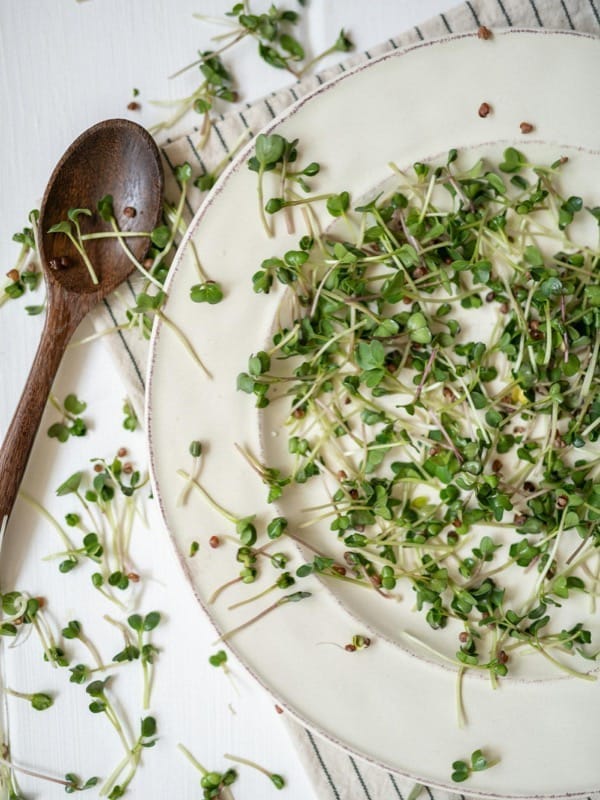
The "40 times more nutritious" headline is real but does not apply to every microgreen. It is a specific finding from a specific study about a specific variety. Knowing which microgreens deliver the high-density numbers, and which are just nice salad greens, matters for anyone choosing what to grow based on nutrition rather than flavour.
- Source: University of Maryland / USDA study (2012)
- Top performers: broccoli (sulforaphane), red cabbage (vitamin E), radish (vitamin C)
- Numbers are per gram, not per total volume
The complaint we hear most often
The question we get most often is whether the 40x number applies to all microgreens. It does not. The claim comes from one study comparing 25 varieties, and the densest varieties (red cabbage, broccoli, coriander) cluster in specific compounds. Most microgreens are nutritionally comparable to small amounts of mature greens; only a few stand out at the 30x-40x level for specific nutrients.
This guide lists which varieties actually justify the marketing.
Where the number comes from
A 2012 study from the University of Maryland and the USDA, published in the Journal of Agricultural and Food Chemistry, compared vitamin and antioxidant content in 25 microgreens varieties against the same plants at maturity.
Key findings:
- Red cabbage microgreens: 40 times more vitamin E than mature red cabbage.
- Coriander microgreens: 6 times more beta-carotene.
- Broccoli microgreens: 40 times more sulforaphane gram-for-gram.
The 40x figure is most commonly attributed to broccoli microgreens because sulforaphane is the most-studied compound in this category, with separate research linking it to cellular detoxification pathways.
Why microgreens are nutrient-dense
1. Concentration
Seeds pack concentrated reserves into the first leaves: sugars, amino acids, vitamins. As the plant matures, these reserves spread across stems, roots, and eventually fruits. The cotyledons and first true leaves of a microgreen are essentially condensed nutrient storage from the seed.
2. Active synthesis
At 7 to 14 days, the plant is in maximum synthesis mode. The enzymes that build nutrients (chlorophyll, vitamins, polyphenols) operate at peak efficiency before the plant redirects energy to flowering, fruiting, and reproductive growth.
3. No defence compounds yet
Mature plants develop bitter, fibrous compounds as a defence against insects and herbivores. Microgreens have not started producing these yet. The absence of defence compounds also means microgreens are easier for the body to absorb nutrients from than the equivalent mature plant.
A 30-gram bowl of broccoli microgreens delivers roughly the sulforaphane of 1.2 kg of mature broccoli. Per gram, the difference is real. Per meal, the comparison only makes sense if you are eating microgreens in quantity.
What the 40x number does not mean
The headline is widely misunderstood. Five common misconceptions:
- Per gram, not per serving. A standard microgreen garnish (5 to 10g) provides less total nutrition than a serving of mature greens, despite the higher density.
- Per nutrient, not overall. Different microgreens are high in different compounds. Broccoli is sulforaphane-dense; red cabbage is vitamin E-dense; coriander is beta-carotene-dense. No microgreen is 40x in everything.
- Not all microgreens are dense. Methi, basil, and pea microgreens have modest nutritional advantages over their mature counterparts; the 40x claim does not apply.
- Cooking reduces density. Vitamin C and many polyphenols degrade with heat. Microgreens added to a finished dish retain more nutrients than those cooked into the dish.
- Freshness matters. Microgreens lose nutritional density rapidly after harvest. Three days in the fridge is roughly the half-life for vitamin C in most varieties.
Which microgreens are highest-density
In order of supporting research:
- [Broccoli microgreens](/guides/broccoli-microgreens/): highest sulforaphane concentration of any common variety.
- Red cabbage: high in vitamin E and anthocyanins.
- Radish: vitamin C and isothiocyanates.
- Coriander: beta-carotene and vitamin K.
- Mustard: glucosinolates and vitamin K.
- Kale: lutein and beta-carotene.
- Cilantro: similar nutrient profile to coriander.
- Amaranth: iron and calcium.
If you are choosing microgreens for nutrition first, broccoli is the consistent winner across compounds. For Indian kitchens, sunflower microgreens also punch well above their weight: high yield, high vitamin E, and mild enough to add to smoothies without changing the taste.
The honest caveat
Most of what the marketing says about microgreens is true at the per-gram level. Almost none of it translates directly into "eating microgreens makes you healthier than eating vegetables." For a broader look at how microgreens compare to moringa and other Indian superfoods, that framing is covered separately. Microgreens are a useful kitchen addition; they are not a meal replacement.
How to use microgreens for nutrition
Practical advice for getting the nutritional benefit:
- Eat raw. Cooking degrades vitamin C and many polyphenols.
- Add at the end. Sprinkle on a finished dish, not into the cooking pot.
- Consistent, small servings. A daily 10 to 20g handful on a salad, dal, or sandwich delivers more cumulative nutrition than an occasional larger serving.
- Variety. Different microgreens are high in different compounds. Rotate between broccoli, radish, mustard, methi across the week.
- Fresh. Eat within three days of harvest.
Is sulforaphane real, or is it marketing?
Real. Sulforaphane is a sulfur-containing compound formed when glucoraphanin breaks down. It has been extensively studied since the 1990s for its role in cellular detoxification pathways and possible cancer-prevention effects. Broccoli microgreens are the most concentrated dietary source by weight.
Do microgreens lose nutrients when cooked?
Yes, like all vegetables. Vitamin C and many polyphenols degrade with heat. Sulforaphane is also somewhat heat-sensitive. For maximum nutritional benefit, eat microgreens raw or add at the very end of cooking; for taste, you can add them earlier but accept the nutrient loss.
How long do microgreens stay nutrient-rich after harvest?
Roughly five to seven days refrigerated. Nutrient density drops significantly after that. The visible green colour stays for longer than the actual vitamin content; a microgreen that still looks fresh may have lost half its vitamin C by day five. Eat soon after harvest for best results.
Should I take microgreens supplements instead of growing them?
Probably not. Most microgreen supplements are dried powders that lose much of the nutritional density during processing. Fresh microgreens are nutritionally superior. If you want the nutritional benefit, a small home-grown tray every week beats any supplement.
Are some microgreens unsafe to eat?
A few are. Microgreens of nightshade family plants (tomato, potato, eggplant) contain solanine and should be avoided. Rhubarb microgreens are also toxic. Stick to the eight to ten common Indian-kitchen varieties (radish, mustard, methi, broccoli, sunflower, pea, basil, alfalfa, coriander, amaranth) and food safety is not a concern.
The 40x nutrition claim is real for specific varieties and specific compounds, not for microgreens as a category. Broccoli microgreens consistently deliver the highest nutrient density across studies. The practical takeaway: eat microgreens fresh, raw, often, and in small quantities, and you get a real nutritional boost; expect them to replace mature vegetables and you will be disappointed. They are an addition, not a substitute.