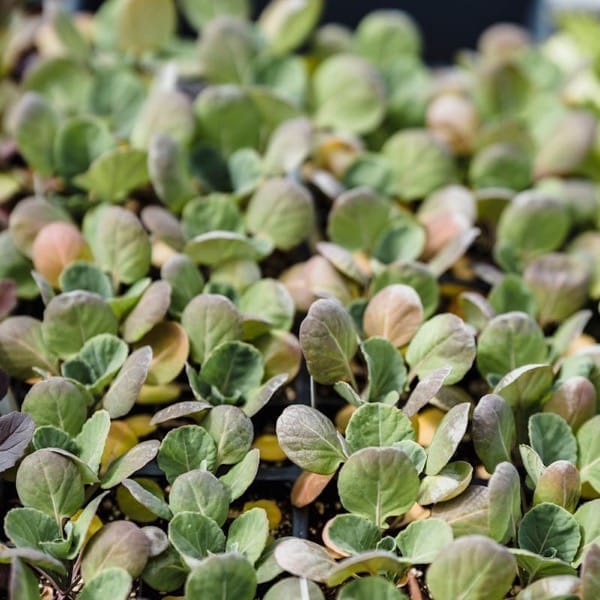
Microgreens Kit
Two trays. A pinch of seed. Seven days to a kitchen full of microgreens.
What it is
A two-tray growing kit for microgreens. Top tray has drainage holes so excess water can run out and air can reach the roots. Bottom tray is solid and catches that water, doubles as the base. Both are 9 by 9 inches and made from virgin food-grade PP plastic, so they're safe for edibles and last hundreds of harvest cycles.
Your first kit ships with seeds bundled (a starter mix that gives you about three batches). After that, seeds are sold separately, by variety, so you can pick exactly what your kitchen actually uses.
Why microgreens
- 40 to 100 times more nutrient-dense than the adult plant. Broccoli microgreens have 40 times the sulforaphane of mature broccoli, sunflower microgreens beat baby spinach on protein.
- Seven to fourteen days from seed to harvest. No patience tax. No garden needed.
- Costs a fraction of buying them. ₹120 a small box at the supermarket vs ₹15 to grow the same amount at home.
- Works on any kitchen window. No soil, no mess, no balcony required.
What you can grow on it
Almost any seed you'd eat as a baby leaf. Common choices, with rough yield per tray:
- Radish (mooli), 7 to 9 days, ~80 g per tray
- Mustard (sarson), 8 to 10 days, ~70 g per tray
- Methi (fenugreek), 10 to 12 days, ~60 g per tray
- Broccoli, 9 to 12 days, ~50 g per tray, the highest nutrient density
- Sunflower, 10 to 14 days, ~120 g per tray, beginner-friendly and crunchy
- Peas, 10 to 14 days, ~100 g per tray, sweet and tendril-y
- Basil, 14 to 21 days, ~40 g per tray, fragrant garnish
- Alfalfa, 7 to 10 days, ~50 g per tray, classic salad mix
How to grow microgreens in seven days
- Day 0, evening. Soak seeds in water for 6 to 8 hours. Larger seeds (sunflower, pea) soak longer.
- Day 1, morning. Hydrate a coco peat disc in 500 ml water. Fluff it across the drainage tray in an even 1 cm layer. Place the drainage tray inside the solid one.
- Day 1. Drain the seeds, spread them densely across the peat. Crowded is fine for microgreens, unlike full-grown plants.
- Day 1 to 3. Cover with the solid tray flipped on top to block light. Mist twice a day. Roots reach down, white stems push up in the dark.
- Day 3 or 4. Uncover. Move to a bright spot with indirect sunlight. The pale stems green up within hours.
- Day 4 to 7. Mist daily. Watch them grow. Harvest when the first true leaves appear (the second pair, after the round cotyledons).
- Harvest day. Snip just above the peat with kitchen scissors. Rinse, dry, eat. The peat itself is single-use for microgreens, but it can go straight into your other pots as a soil amendment afterwards.
Pairs with our coco peat discs
The kit is designed around our Coco Peat Discs. One disc fills one tray, and the peat is the right depth for microgreen roots. Buying both together is the cheapest, cleanest way to grow at home. Avoid using regular potting soil in the tray, it carries fungal spores that wipe out microgreen batches.
Common questions
When does the kit launch?
Within the next fortnight. Pre-order on WhatsApp or sign up for email and we'll send you the link the day it goes live on Amazon.
What seeds come with the first kit?
A starter mix: radish, mustard, methi and sunflower. Enough for about three batches of microgreens. After that, you can buy individual seed packs from us by variety, or any seed brand of your choice (we don't lock you in).
How many harvests will the tray last?
The tray itself lasts for hundreds of cycles if you rinse and dry it after each harvest. The peat is single-use per microgreens batch (the roots stay tangled in it). One disc of coco peat per tray per cycle.
Is it safe for kids and pets?
Yes. Virgin food-grade PP is the same plastic used in baby bottles and food storage. The seeds and peat are organic. No chemicals at any stage.
Can I grow microgreens without a kit, just in any container?
Technically yes. But you need (a) a shallow container 2 to 3 cm deep, (b) drainage somewhere, and (c) a way to keep humidity high in the first three days. The kit solves all three. People who try it with a Tupperware lid usually come back to a proper tray.
What's the bulk pricing for nurseries and resellers?
₹200 per kit for orders of 1000 kits or more, ex-Delhi. Get a quote on IndiaMART or WhatsApp the workshop directly.