Iron deficiency is the most common nutritional problem among school-age children in India, and most picky eaters will not touch a plate of saag or a bowl of dal with visible greens in it. Microgreens do not look like vegetables. Blended into paratha dough or folded into chilla batter, they are invisible. That is the point.
- Best varieties: sunflower (mild, slightly nutty), pea shoots (sweet, easiest to eat raw), radish (mildly spicy, for kids who like chaat)
- Iron per 100g: sunflower ~2.2mg, pea shoots ~1.5mg
- Vitamin C: pea shoots 40mg per 100g (helps absorb iron from the same meal)
- A 30g daily serving is enough to make a consistent dietary difference
Why iron matters for school-age children specifically
Iron is required for haemoglobin production and for neurological function. Deficiency in school-age children shows up as fatigue, difficulty concentrating, and lower academic performance. The National Family Health Survey (NFHS-5) found anaemia in over 67% of children under five in India, and the rate remains elevated in the six to fourteen age group.
The problem for Indian parents is that the richest iron sources, red meat and organ meats, are not part of most vegetarian households, and plant-based iron (non-haem iron) has lower bioavailability than haem iron. The workaround is to pair iron-rich plant foods with vitamin C, which significantly increases non-haem iron absorption. Pea shoot microgreens offer both in the same food: iron and vitamin C together. Adding them to a lemon-dressed salad or a meal with tomatoes amplifies the effect further.
How to get microgreens into food children will eat
The most useful starting point is invisibility. Children who reject "green things" on a plate rarely object to green things in something they already like.
Paratha dough: blend a handful of sunflower or pea shoot microgreens with water, use this green liquid to knead the dough instead of plain water. The paratha looks slightly green but not vegetable-green, and the flavour is essentially neutral. Sunflower microgreens have a mild, slightly buttery flavour that does not read as leafy or bitter.
Chilla (besan cheela): add 30 to 40g of blended microgreens to the batter. The standard chilla batter absorbs the colour and the greens cook through entirely. Pea shoots work best here because their sweetness balances the slight earthiness of besan.
Dosa batter: blend a small handful into the fermented batter just before cooking. The live bacteria in fermented dosa batter do not interact with the raw microgreens in any meaningful way during the short rest period before it hits the tawa.
Smoothies: if your child takes a morning smoothie, sunflower microgreens blend almost completely smooth in a high-speed blender. Combined with banana, peanut butter, and milk, the green colour is faint and the flavour is undetectable.
Roti sandwich filling: mix finely chopped pea shoots with paneer, a pinch of chaat masala, and some tomato. Children who will not eat a bowl of greens will often eat them when they are part of a familiar flavour combination with enough seasoning.
Why radish microgreens are for the adventurous ones
Radish microgreens are the spicy option. They taste like a mild version of mooli, with a sharp peppery bite that some children love and others hate. If your child eats mooli paratha, chaat, or anything with a sharp flavour, radish microgreens are worth trying. They are nutritionally distinct from sunflower and pea shoots: higher in vitamin C and with a stronger glucosinolate profile. But do not force them on a child who finds them too strong.
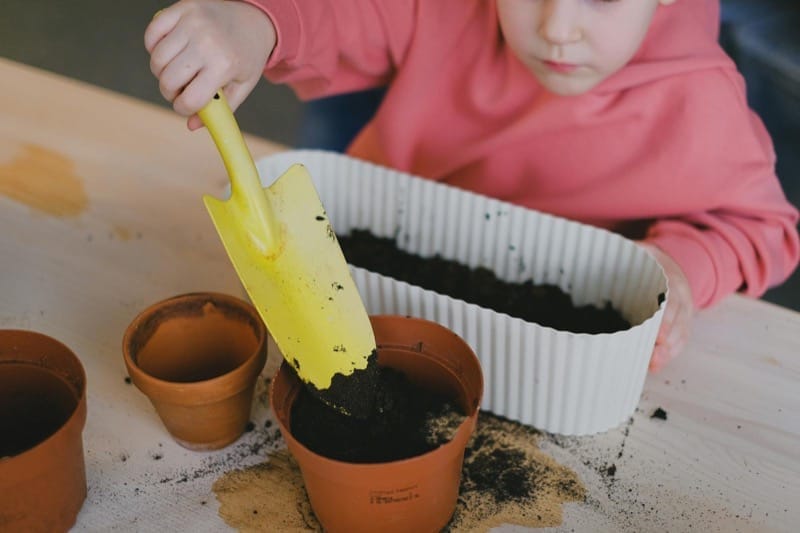
The most reliable way to get a child to eat microgreens is to let them grow the tray themselves. A child who checked on the seeds every day, misted them in the morning, and cut them at harvest is invested in the food in a way no amount of explaining nutrition will achieve.
Growing microgreens as a school activity
Several schools in Gurgaon have introduced microgreen growing as a STEM project in the past two years, and the pattern teachers report is consistent: children who grow the tray eat more of the harvest than children who are simply given the greens. The growing cycle is fast enough to fit inside a school week, sunflower microgreens go from seed to cotyledon in four to five days, and the materials are inexpensive enough for a classroom setting.
At home, the same principle applies. Give a six to ten year old the responsibility of misting the tray each morning. The task is simple enough to be manageable and the results are fast enough to be satisfying. A child who has grown a tray of pea shoots is more likely to eat them in a chilla than a child who found them on a plate with no context.
- Start with: pea shoots or sunflower seeds (forgiving of imprecise misting)
- Growing medium: coco peat disc - absorbs water evenly, harder to overwater
- Harvest on day 5 to 7
The nutrition case, without overclaiming
Microgreens will not resolve iron deficiency on their own. A child who is clinically anaemic needs medical evaluation, and dietary changes are a supplement to, not a replacement for, treatment. What microgreens do is add nutritional density to meals a child is already eating, without requiring new food acceptance. That is a meaningful contribution to a daily diet, not a cure.
The PotsAlive microgreens kit at 399 includes the tray, coco peat growing medium, and instructions. It is sized for a kitchen counter and the growing window is short enough to hold a child's attention through the whole cycle.
Which microgreens are safe for young children under three?
Pea shoots and sunflower microgreens are the safest starting point for young children. Both are mild in flavour and have no known issues for toddlers. Wash thoroughly before serving. Avoid radish microgreens for very young children as the sharp flavour can be startling. If your child has any food allergies, check whether the seed family (legumes for pea shoots, sunflower family for sunflower) is relevant.
How much microgreens should I add to a child's meal?
A 20 to 30g serving per day is enough to add measurable nutritional value. This is roughly one large handful. Blended into batter or dough, it does not need to be eaten as a separate food.
Do microgreens need to be cooked before giving to children?
No. Raw microgreens are safe when grown in a clean medium like coco peat and handled with clean hands. Cooking reduces some vitamin C content. For children who are strongly averse to any texture, blending raw microgreens into batter that then gets cooked is a practical middle ground.
Can growing microgreens actually improve a child's willingness to eat them?
The evidence is largely observational, but consistent: children who participate in growing food eat more of that food. The microgreens growing cycle is fast enough to sustain a young child's attention, unlike vegetable gardens that take months. The involvement effect is real and worth using.
My child refuses anything green. Will this work?
Blended into paratha dough or chilla batter, microgreens are genuinely invisible. Start there rather than serving them as a visible ingredient. Once a child is used to the flavour (even unknowingly), visible serving becomes easier over time.
The goal is consistency, not a single nutritious meal. A daily 30g of sunflower or pea shoot microgreens blended into food a child already eats adds up to real nutritional contribution over weeks. Grow the first tray together, keep the expectation low, and let the harvest routine build from there.