Walk into any garden shop and you will find coco peat sold in at least three formats: small round discs, big rectangular bricks, or loose in a bag. Same material, three shapes, three different jobs. Picking the wrong one means either wasting money or running out at the wrong moment.
Here is when to buy which.
What Coco Peat Actually Is
Coco peat is the brown, soil-like fibre left over when coir mills process coconut husks. The long fibres go into doormats and rope. The fine dust left behind is coco peat, also called coir pith. It holds about 8 times its own weight in water, has a near-neutral pH, and is essentially sterile. Three properties that make it ideal for seedlings and a useful mix-in for any potting soil.
The Three Formats Explained
All three are the same material compressed to different degrees, nothing more. Pick the format by the size of the job and how often you need it.
Discs
Small round pucks, usually 5 to 8 cm across, weighing about 35 grams each. One disc expands to roughly 500 ml of loose peat. Cleanest format, ships in a paper packet, expands in five minutes.
Best for: starting seeds, small kitchen-window batches, gifting, microgreens. Our discs sell for ₹4 each.
Blocks (Bricks)
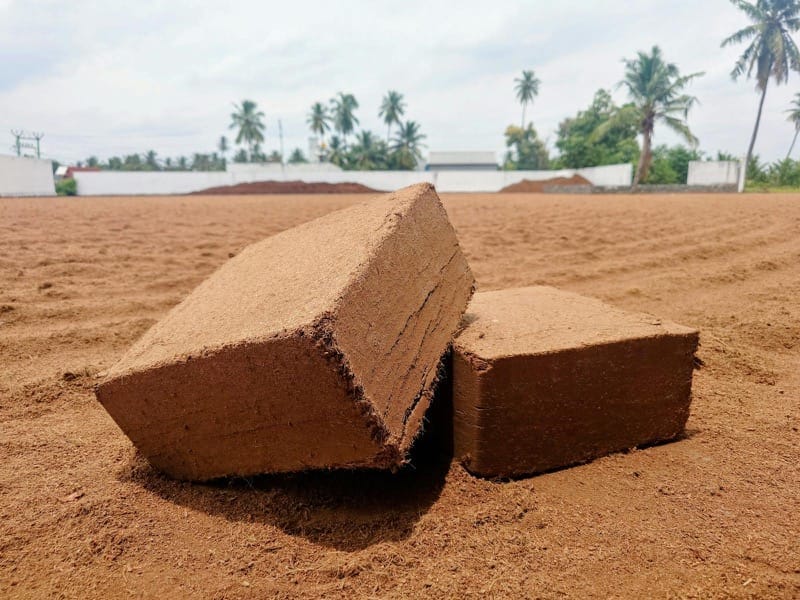
Big rectangular slabs, usually 5 kg compressed. One block expands to about 70 litres of peat. You need a wheelbarrow or a large bucket to soak it. Cheapest per litre, but you commit to using a lot at once.
Best for: big repotting jobs, raised beds, building a base mix for the whole balcony, anyone with more than 15 pots.
Loose
Already-expanded peat in a sealed bag, ready to use. No soaking. Most expensive per litre because you are paying to ship the water and the air.
Best for: top-ups, kits that come with seeds (like our microgreens kit), small repotting jobs where you do not want the mess of expanding a disc.
Price Per Litre, Honestly Compared
| Format | Price | Volume after expansion | Cost per litre |
|---|---|---|---|
| Single disc | ₹4 | 0.5 L | ₹8 |
| Pack of 10 discs | ₹35 | 5 L | ₹7 |
| 5 kg block | ~₹180-220 | 70 L | ~₹3 |
| Loose, 5 L bag | ~₹120 | 5 L | ~₹24 |
Block is the cheapest per litre by a wide margin. Loose is the most expensive because you are paying to ship water and air. Discs sit in between with the convenience of not committing to 70 litres.
When to Use a Disc
Small, controlled jobs:
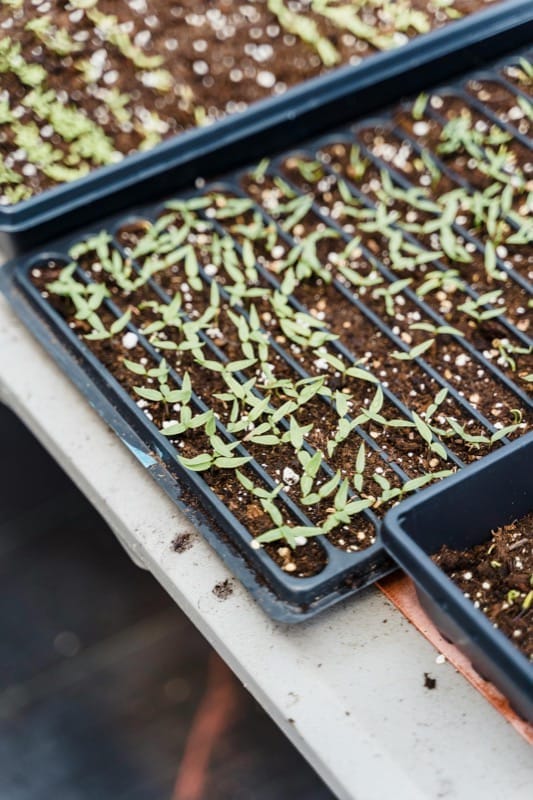
- Starting chilli, tomato, basil, marigold from seed. One disc per seed tray.
- Microgreens. One disc per tray.
- Reviving a sick plant. Drop a disc into a bowl, expand, replace half the old soil with fresh peat.
- Air-layering or propagating cuttings. Pack a disc into a polythene sleeve around a wounded stem.
If you grow fewer than fifteen things at home, discs are almost certainly the right format for you. Less mess, no leftover peat going stale in a bag.
When to Use a Block
Big, planned jobs:
- Repotting more than ten plants in one weekend.
- Building a base mix for a whole balcony, mixing 1 part block-peat to 1 part garden soil to 1 part compost.
- Raised beds, kitchen gardens, anything outdoor with serious soil volume.
- Bulk customers: nurseries, schools, hotels with rooftop gardens.
Soak a 5 kg block in a 30-litre bucket of warm water for 30 minutes. Break up the centre with your hands. Spread on a tarp to fluff. Once expanded, peat can be stored dry in a covered container for two years.
When to Use Loose
Top-up situations:
- Adding a layer of peat as mulch on top of existing pots.
- One-off small repot where soaking a disc feels like too much effort.
- Kits with seeds (our microgreens kit ships with loose peat pre-measured for the trays).
- Travel, gifting, classroom science projects.
Shelf Life and Storage
- Compressed discs and blocks: indefinite if kept dry. We have used 4-year-old discs that expanded fine.
- Loose, sealed bag: 2 years if kept dry.
- Loose, opened: 6 months. After that the dust attracts moisture and fungus.
- Already expanded and stored loose in a covered tub: 1 year.
Coco peat does not rot. It just gets dusty. Keep it dry and it lasts.
How to Expand Each Correctly
Disc
- Drop the disc in a wide bowl.
- Pour 500 ml of warm water over it.
- Wait 5 minutes. The disc breaks up into loose peat.
- Fluff with a spoon to release tight pockets.
Block
- Put the block in a 30-litre bucket.
- Pour 15 to 18 litres of warm water over it.
- Wait 30 minutes. Break up the centre with your hands or a trowel.
- Spread on a tarp or plastic sheet and let it air for 1 hour before using.
Loose
Open the bag. Use as is. If it has compacted from sitting, fluff with a spoon.
Common Mistakes
- Using pure coco peat for a full-grown plant. It is too light to anchor roots. Always mix with garden soil (1:1) or compost (3:1) for mature plants.
- Skipping the salt rinse. Some cheap blocks have high salt content (EC above 1.0). Rinse once with extra water and drain before first use. Better blocks (including ours) come pre-washed.
- Storing damp peat in a sealed bag. Mould city. Always dry-store.
- Using on succulents or cacti without mixing in sand. Pure coco peat holds too much water for these plants.
Frequently Asked
Is coco peat the same as peat moss?
No. Peat moss comes from bogs in cold climates, is acidic, and is unsustainable to harvest. Coco peat is the dust from coconut husk processing, is pH neutral, and is a renewable by-product. For Indian gardeners, coco peat is the right choice every time.
Can I reuse coco peat?
Yes. After a seedling moves out of the peat, mix the used peat 1:1 with fresh potting soil and use it for an established plant. Coco peat actually improves with one round of use, the soil microbes establish.
Do I need to fertilize coco peat?
Yes, for any plant beyond the seedling stage. Coco peat has almost no nutrients of its own. For seedlings, the seed's own reserves are enough for the first two weeks. After that, push in a fertilizer stick or feed with dilute liquid.
My disc did not fully expand. What went wrong?
Cold water (under 25°C) takes much longer. Use warm water. If you used warm water and it still did not expand, the disc was likely under-compressed at the factory. Break it up by hand and add water gradually.
Is the dust safe to breathe?
The dry dust is non-toxic but, like any fine particulate, mild irritant if inhaled. Wear a basic mask when handling a big block in a closed space. Once wet, no concern.
Read Next
Want to actually use a disc? Our chilli-from-seed guide and microgreens guide both walk through disc-based growing step by step.