Microgreens and sprouts are two different things sold under similar marketing. The confusion is so common in Indian kitchens that we get questions about which one to grow from customers who already have a moong sprout jar going. They are not interchangeable. Different equipment, different growing time, different food safety profile, different flavour. Knowing which one you actually want depends on what you intend to do with the harvest.
- Sprouts: 2-5 days, water only, eat the whole seedling
- Microgreens: 7-14 days, soil or cocopeat, eat stem and leaves only
The complaint we hear most often
Customers confuse the two when ordering seeds. We get queries like "how do I grow sprouts using the microgreens kit" or "do these seeds also work as sprouts" almost every week. The short answer is that the seed variety is often the same (radish, mustard, alfalfa all work as both) but the equipment, the growing method, and the result are different. Pick one based on what you want from the harvest, not the seed.
What sprouts are
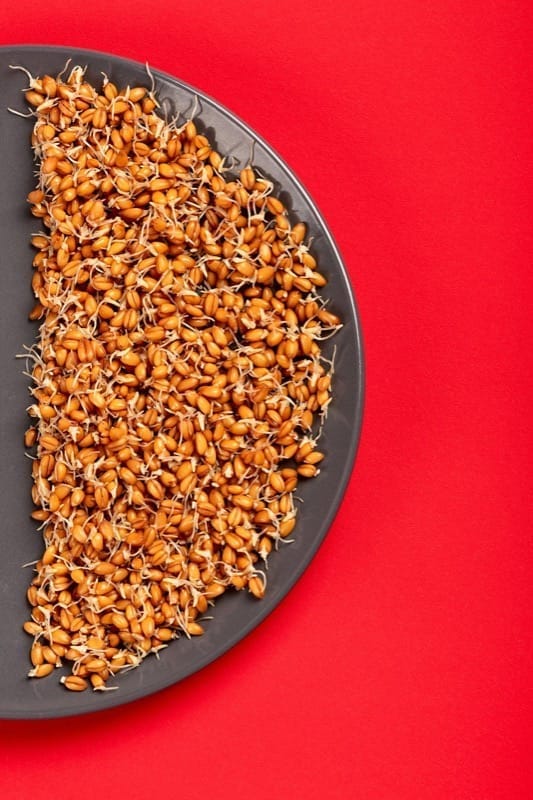
Sprouts are seeds in the very early germination stage. They are eaten whole, including the seed, the root, and a small shoot, usually after 2 to 5 days of soaking and rinsing. They grow in water in a jar or bag, without soil and without light.
Familiar examples: moong sprouts, alfalfa sprouts, chana sprouts, methi sprouts.
The harvest is essentially a swollen seed with a tiny tail. The texture is crunchy and watery. The flavour is mild and faintly grassy.
What microgreens are
Microgreens are baby vegetable plants grown in a thin layer of medium (cocopeat or soil), harvested when they have their first true leaves. Usually 7 to 14 days from sowing. You snip them just above the medium, leaving the root and seed behind. You eat the stem and the small leaves only.
The harvest looks like a tiny version of the adult plant: a stem with two or four small leaves. The texture is leafy with a small crunch. The flavour is concentrated and distinct per variety.
The differences that matter
| Dimension | Sprouts | Microgreens |
|---|---|---|
| Days to harvest | 2 to 5 | 7 to 14 |
| Growing medium | Water only | Coco peat or soil |
| Light | No light needed | Indirect bright light, from day 3 or 4 |
| What you eat | Seed, root, shoot | Stem and leaves only |
| Taste | Mild, watery | Concentrated, distinct per variety |
| Yield per kit | High, by weight | Lower, but denser in flavour |
| Salmonella risk | Higher (warm wet seed) | Lower (grown in cooler medium) |
| Reusability | Single batch per jar | Trays reusable hundreds of times |
Why the salmonella risk is different
Sprouts grow in a warm wet dark jar, which is exactly the environment bacteria like. There have been multiple Salmonella outbreaks linked to commercial sprouts (especially alfalfa) in the US, Europe, and Australia.
Home sprouting is mostly safe if you rinse twice a day and your jar is clean, but the risk is non-zero. Pregnant women, young children, and immunocompromised people are usually advised to cook sprouts before eating.
Microgreens grow in a thin layer of cocopeat with airflow and (after day 3) light. The conditions are less bacteria-friendly. There has never been a Salmonella outbreak linked to microgreens at the scale that has happened with sprouts.
Which one should you grow?
Sprouts win if:
- You want results in 2 to 3 days, not a week.
- You only have a jar and a kitchen counter.
- You like the milder, water-fresh taste.
- You want maximum yield by weight.
- You like the texture of crunchy sprouts in poha or salads.
Microgreens win if:
- You want concentrated flavour for garnishing dishes.
- You prefer the safer food profile.
- You have a tray and a kitchen window with light.
- You want the higher nutrient density (microgreens beat sprouts on most micronutrients except enzymes).
- You enjoy the visual effect of a small leafy garnish.
Sprouts and microgreens are not competing products. They are two different ingredients that happen to start from similar seeds. Most committed home growers eventually do both: sprouts for everyday breakfast, microgreens for plated dishes.
Can you do both?
Yes, easily. Different equipment, different week. Most home growers we know start with sprouts in a moong dal jar, get bored after a month, switch to microgreens for variety, and then keep both going.
A reasonable kitchen routine:
- One jar of moong sprouts running on a 3-day cycle.
- One tray of radish microgreens running on a 7-day cycle.
The two together cover most kitchen uses: sprouts in bhel and chaat, microgreens on dal and salads.
Seed varieties that work as both
Some seeds work well as both sprouts and microgreens:
- Alfalfa
- Radish
- Mustard
- Methi (fenugreek)
- Broccoli
- Mung (moong)
Seeds that work well only as sprouts:
- Chana (chickpea): too large and woody when grown beyond the sprout stage
- Whole wheat: typically eaten as sprouts only
Seeds that work well only as microgreens:
- Basil: sprout stage is too small to be useful
- Pea: pea sprouts exist but pea microgreens (shoots) are the more common form
- Sunflower: eaten as microgreens; sunflower sprouts have a different culinary use
Are sprouts and microgreens equally nutritious?
Microgreens generally win on micronutrients (vitamins, polyphenols, sulforaphane) because they have had more time to photosynthesise. Sprouts win on enzyme content because they are harvested earlier in the germination process. Both are significantly more nutrient-dense than the adult plant by weight.
Can I grow alfalfa as both sprouts and microgreens?
Yes. Alfalfa is one of the few seeds commonly grown as both. The taste is different: sprouts are milder and crunchier, microgreens are more concentrated and have a small grassy flavour. Many growers keep both going.
Can children eat raw sprouts?
Most paediatricians recommend cooking sprouts for young children due to bacterial risk. The Salmonella outbreaks linked to commercial sprouts have made caution standard practice. Microgreens are typically considered safer raw for kids.
Why do my sprouts smell sour?
Either not rinsed often enough, or kept too warm. Sprouts need rinsing twice a day minimum, and warm dark conditions accelerate bacterial growth. If the smell is strong or fermented, throw out the batch and clean the jar thoroughly before starting a new one.
Can I grow microgreens in a sprout jar?
No. Microgreens need a thin layer of cocopeat or soil and bright indirect light. A glass jar with no growing medium produces sprouts, not microgreens. The two methods are not interchangeable even if the seed is the same.
Sprouts and microgreens are two different ingredients with overlapping seed varieties. Pick by what you want to eat: sprouts for everyday crunchy texture in chaat and salads, microgreens for concentrated flavour as garnish. Do both if you have the routine for it; most committed home growers eventually do. Neither is better than the other, just different.