Adenium obesum (sold in India as desert rose or sometimes just "bonsai flowering plant", is a plant that rewards neglect and punishes care. Most plant deaths happen because someone cares too much: too much water, too much repotting, too much shade to protect it from heat. Adenium is from the arid zones of the Arabian Peninsula and East Africa. It evolved to survive harsh conditions. The way you kill it is by treating it like an ordinary houseplant.
In the right conditions, a south or west-facing terrace in a North Indian city, or any sunny spot in peninsular India, adenium grows into a sculptural, flowering plant with a swollen base called a caudex that becomes more dramatic every year.
The Caudex
The caudex is the swollen trunk base that stores water and nutrients for the plant to survive drought. A healthy caudex is firm, slightly waxy to the touch, and visibly plump. A rotting caudex is soft, discoloured, and smells slightly fermented. If your caudex feels soft in any section, the plant has root rot and requires immediate intervention.
The caudex becomes more impressive with age. Many growers remove the top inch or two of soil to expose the upper caudex, this accelerates its sculptural development and looks striking.
Varieties
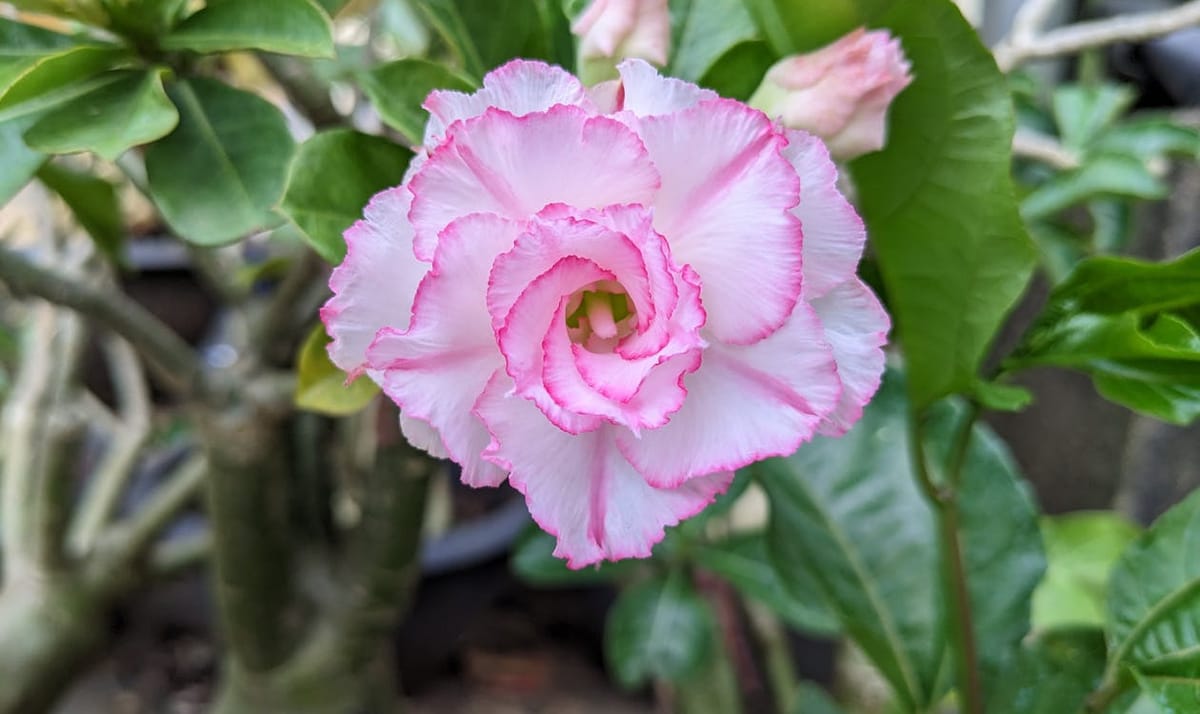
Standard Adenium obesum produces red or deep pink flowers in clusters at the branch tips. It is the most common and toughest variety sold in India. Thai hybrids come in an extraordinary range of colours: white, yellow, striped, bicolour, deep burgundy, and patterns that look painted. They are grafted plants. Grafted plants flower faster and more prolifically than seedlings. Adenium arabicum has a much wider, more compact caudex and is valued by collectors.
Sun
Adenium needs full, direct, intense sun. Six hours minimum, ideally the full afternoon sun of a west or south-facing position. A plant that receives morning sun only will grow and survive but will not flower as freely. The Indian summer does not harm adenium. This is the plant's natural flowering season, do not move it to shade during summer heat.
Water: The Critical Part
Water adenium thoroughly but infrequently. Allow the soil to dry out completely between waterings. In summer, in a terracotta pot in full sun in Delhi, this might mean watering every five to seven days. In winter, once every two to three weeks. During peak monsoon, the plant may need no watering at all for weeks.
Never let adenium sit in a saucer of standing water. Never water when the plant shows any sign of soil wetness. The caudex stores water for weeks. When in doubt, do not water.
Soil and Pot
Adenium needs the fastest-draining soil you can construct. A mix of fifty percent coarse river sand or perlite and fifty percent potting soil is the minimum. Terracotta pots are strongly preferred over plastic. A wide, shallow pot suits adenium better than a tall narrow one.
Dormancy in Indian Winters
Adenium grown in North India will drop most of its leaves in November and December and go dormant through the coldest months. This is normal. During dormancy, water very sparingly, once every three to four weeks at most, and only if the caudex looks slightly wrinkled rather than firm. Do not feed during dormancy. In peninsular India and coastal cities, adenium rarely goes fully dormant.
Common Problems
Soft, mushy caudex: Root rot from overwatering. If caught early, unpot the plant, cut away all the rotted tissue until you reach firm healthy flesh, dust the cuts with sulfur powder or cinnamon, allow to callus dry for 48 hours, and repot in completely fresh dry fast-draining mix. Do not water for two weeks.
No flowers despite good sun: Usually insufficient sun, recent repotting stress, or the plant is in dormancy. Check that it is genuinely receiving six-plus hours of direct sun.
Yellow leaves: In summer, normal if only a few. In monsoon or winter, often a sign of overwatering.
Frequently Asked Questions
Is adenium toxic?
Yes. All parts of the plant contain cardiac glycosides that are toxic if ingested. Keep away from children and pets, and wash hands after handling.
How long does it take to flower from seed?
Typically one to two years from seed to first flower. Grafted plants can flower within months of purchase.
Can adenium survive monsoon outdoors?
Yes, if it is under a roof overhang and the soil drains instantly. A covered terrace or balcony during peak monsoon weeks is safer than a fully exposed position.
Why is the flower described as "desert rose", is it a rose?
No. Adenium is in the Apocynaceae family, related to plumeria and oleander. The "rose" in the common name refers to the flower shape. It is not botanically related to roses.