Money plant is the most widely kept indoor plant in India, and the most consistently overwatered in monsoon. It survives both failure modes. But surviving is not the same as looking good, and most money plants in Indian homes are doing exactly that: surviving.
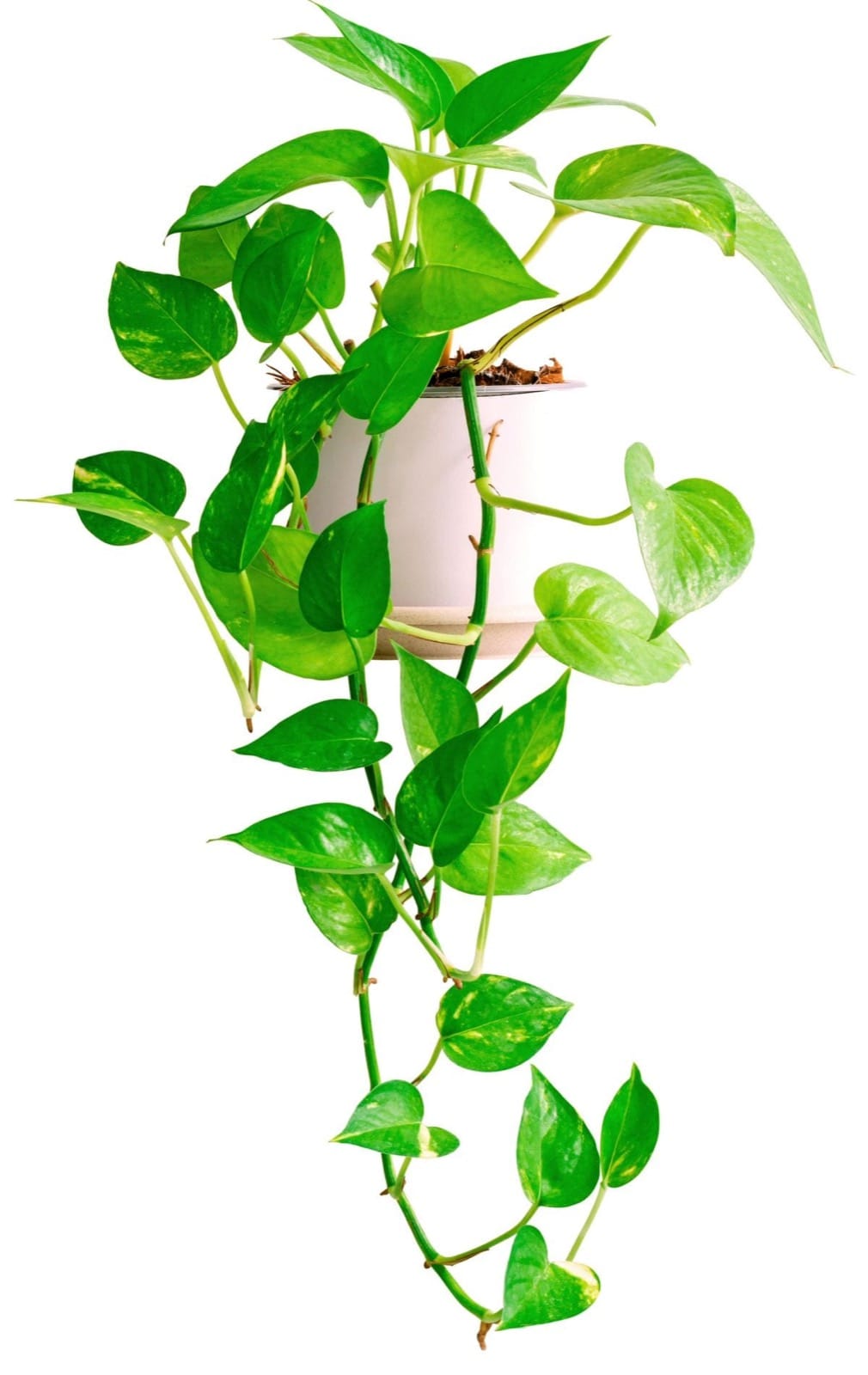
The money plant sold in nurseries across India is Epipremnum aureum, also known as Pothos or Devil's ivy. It tolerates conditions that would kill most other houseplants. That tolerance is real. But get the basics right and the same plant produces leaves twice the size, holds its variegation properly, and stays vigorous year round.
Light: Bright indirect for 4 to 6 hours. Survives low light but loses variegation
Water: Every 7 to 10 days in summer, every 14 to 18 days in winter
India hardiness: Cut watering frequency in half during monsoon. Soil stays wet much longer than it looks
Light and placement
Money plant tolerates low light, which is why it ends up in every dim corridor in the country. In genuinely dim spaces it downsizes. Each new leaf is smaller than the last, golden variegation fades to solid green, and new growth slows to almost nothing from November through February.
The plant grows best with bright indirect light for 4 to 6 hours a day. A north or east-facing window is ideal. A south or west window works if the plant sits a metre back from the glass or behind a sheer curtain. Direct afternoon sun scorches the leaves within a few days.
In Mayur Vihar, east-facing balconies get bright indirect light all day because the floor above shades out direct noon sun. Money plant on those balconies grows fast from March through October and handles the Delhi heat without the scorching you get on south-facing terraces.
Watering
The question we get most often about money plants is why the leaves are going yellow. Almost every time the soil is wet. The plant is not hungry or sick. It is sitting in water it cannot push through roots that are already stressed.
Water thoroughly until it drains from the bottom, then let the top 2 to 3 inches of soil dry before watering again. In summer this works out to roughly every 7 to 10 days. In monsoon, every 10 to 14 days or longer, because high humidity slows evaporation considerably. In winter, every 14 to 18 days.
Empty the saucer 30 minutes after watering. Standing water in the saucer defeats the purpose of the drainage hole.
Soil and potting mix
Standard potting soil works, but most commercial mixes in India compact over time and hold more water than money plant roots like. A better mix: 40% potting soil, 30% cocopeat, 20% perlite or coarse river sand, 10% compost. Cocopeat keeps the mix light and aerated between waterings.
Repot every one to two years, or when roots are growing out of the drainage hole. Go up one pot size at a time. Oversized pots hold more water than the roots can absorb, which increases the chance of rot.
Fertilising
Feed once a month from March through October. Stop from November through February. The plant grows slowly in winter and unused nutrients accumulate as salt deposits in the soil, which eventually burns roots.
A slow-release stick fertiliser works well for money plant because there is no risk of over-concentration. Push one stick into the soil near the edge of the pot, not against the stem, every 45 to 60 days through the growing season. Liquid feed at half the recommended dose every three to four weeks also works.
Common problems and fixes
Yellow leaves
Almost always overwatering. If the leaves are yellowing and the soil feels damp, stop watering and let it dry properly. If the soil has been wet for weeks, check the roots. Healthy roots are white or tan. Brown, mushy roots mean rot. Trim the damaged sections, let the remaining roots air dry for a few hours, and repot into fresh dry mix.
Variegation disappearing
Solid green leaves with no golden pattern mean insufficient light. Move the plant closer to a window. Old leaves will not revert, but new growth will show the pattern once the light is adequate.
Leggy stems with small leaves
Also a light problem. The plant is stretching toward what it cannot find. Move it to a brighter spot. Cut leggy stems back to a node to force bushy new growth lower on the stem.
Brown tips
Almost always low humidity from AC airflow. Keep the plant out of direct airflow and mist the leaves once or twice a week. Inconsistent watering, going bone dry then drenching, also produces brown tips.
Propagation
Take a cutting with at least one node and one leaf. Place the node end in clean water, changing it every week. Roots appear in two to four weeks. Once they reach 3 to 5 cm, pot the cutting into soil.
You can also push the cutting directly into moist potting mix and keep it in bright indirect light. Roots form in three to five weeks. Water propagation is easier for beginners because the root development is visible. Best time to propagate in India: April to May, when growth is fast.
Can money plant grow in a room with no windows?
It survives under fluorescent light for months but slowly declines without natural light. Leaves get smaller and variegation disappears entirely. If the only available space has no windows, rotate the plant monthly with one that gets brighter light to let it recover.
Why is my money plant turning yellow?
In almost every case, overwatering. Check the soil: if damp, stop watering and let it dry out completely before watering again. If wet for an extended period, check the roots for rot. Low light causes yellowing too, but the leaves tend to go pale rather than bright yellow, and the soil is usually dry.
How often should I water money plant in Delhi summer?
Every 7 to 10 days is a reasonable starting point. Check the top 2 to 3 inches of soil before watering. In April and May when temperatures cross 40 degrees, the soil dries faster and you may need to water every 6 to 7 days. In monsoon, cut back to every 10 to 14 days or longer.
Can I grow money plant in water permanently?
Yes. Change the water every 7 to 10 days to prevent bacteria and algae. Keep the container away from direct sun. Plants in water grow more slowly than those in soil and need a diluted liquid fertiliser every few weeks to compensate. Roots grown in water are more fragile, so handle carefully if you ever pot them into soil.
Why is my money plant losing its golden variegation?
Not enough light. The plant drops the energy-intensive patterning when light falls below what it needs to sustain it. Move it to a spot with 4 to 6 hours of bright indirect light. New leaves will show the pattern again. Old leaves that have already gone solid green will not change back.
What soil mix works best for money plant in Indian conditions?
40% potting soil, 30% cocopeat, 20% perlite or coarse river sand, 10% compost. This drains well enough that roots are not sitting in wet soil between waterings, which is the single biggest care problem with money plant in India.
Money plant rewards consistency over fuss. Get it into bright indirect light, water when the top of the soil is dry, and feed once a month through summer. Everything else follows from getting those three things right.