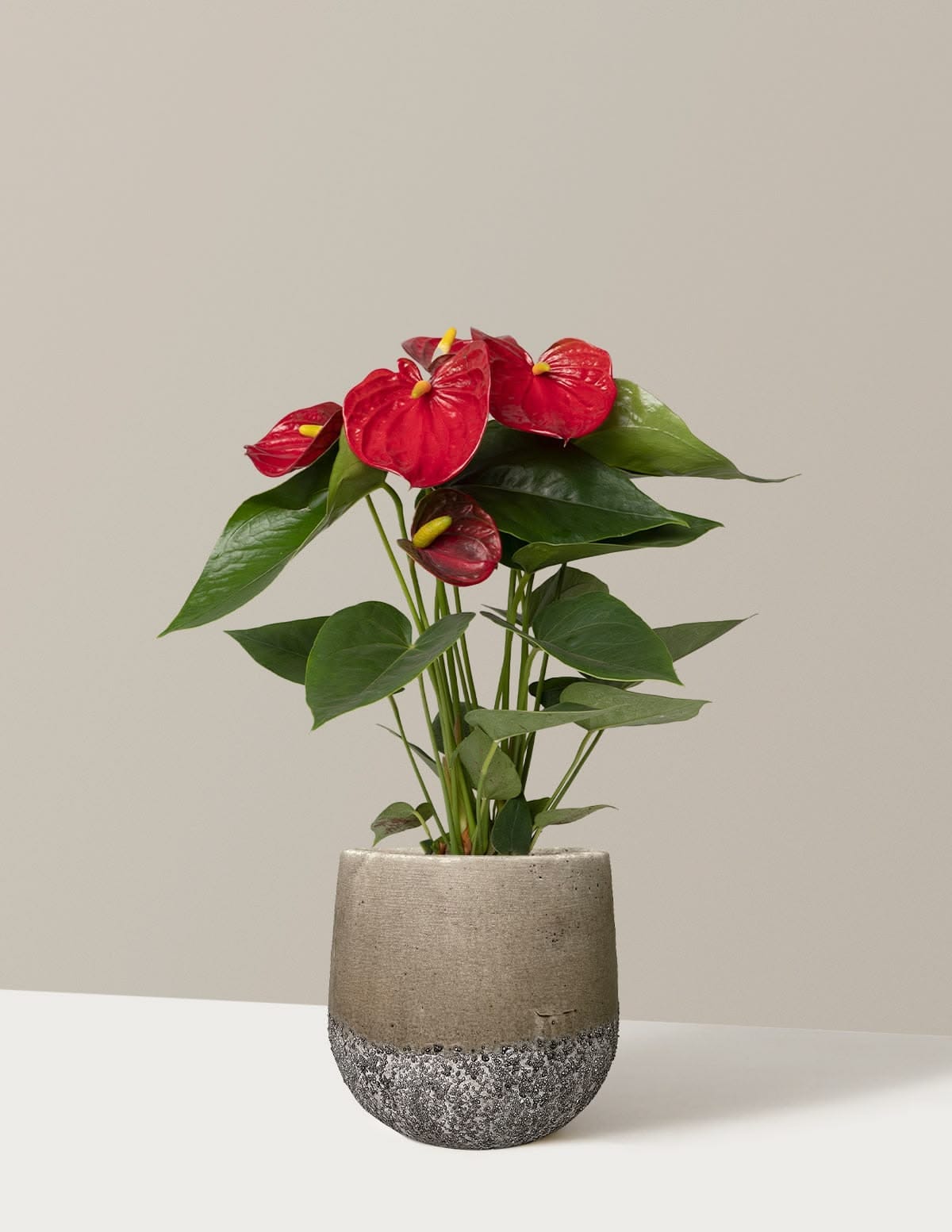
Anthurium andraeanum (flamingo flower or painted tongue) is one of the longest-lasting flowering plants sold in India. The bright red, pink, or white waxy spathe with its upright yellow spadix persists for six to eight weeks before fading. A well-managed anthurium produces new flowers every few months over most of the year. The question most people ask after the first flush is over: how do I get it to flower again?
What You Are Actually Looking At
The coloured waxy structure that people call the flower is the spathe, a modified leaf. The actual flowers are the tiny bumps along the yellow upright spadix in the centre. Anthurium does not produce petals in the conventional sense. The spathe is effectively a coloured bract. The spathe will age and turn green over six to eight weeks, then eventually dry. This is not the plant dying. It is the normal aging cycle of one bloom. Cut the faded spathe with its stem at the base and the plant will eventually produce another from a new growth point.
Light
Anthurium needs bright indirect light to flower consistently. It will survive in moderate indirect light but will produce flowers infrequently or not at all. Direct sun burns the leaves and the delicate spathe. A position within one to two metres of a window receiving good natural light is ideal. East or west-facing positions near the glass work better than north-facing windows in Indian flats.
Water
Allow the top inch of soil to dry between waterings. Anthurium is susceptible to root rot in consistently wet soil. In good light in a warm room in Indian summer, this usually means watering every five to seven days. Water quality affects anthurium similarly to calathea and peace lily, fluoride in tap water causes progressive leaf tip and edge browning. Filtered or RO water gives better long-term results.
Humidity
Anthurium appreciates humidity above 60 percent. In Indian monsoon conditions it is generally comfortable. In dry winters or air-conditioned rooms, brown edges and tip browning from dry air are common. A pebble tray of water beneath the pot provides consistent local humidity without changing the watering regime.
Why It Stopped Flowering
The most common reasons anthuriums stop flowering in Indian home conditions: insufficient light, insufficient feeding, or the plant is root-bound to the point of stress. Move it to a brighter indirect position first. Feed monthly with a balanced fertilizer if you have not been doing so. If the roots are visibly circling the pot bottom or emerging from drainage holes, repot up one size.
Soil and Repotting
Use a mix with excellent drainage and air porosity. Anthuriums are epiphytes in their natural habitat, growing on trees rather than in soil. A mix of potting soil, perlite, and orchid bark or coir chunks in roughly equal parts is ideal. Standard dense potting mix retains too much moisture and can cause root rot over time.
Common Problems
Brown leaf tips: Fluoride sensitivity or low humidity. Switch to filtered water and increase humidity.
Yellow leaves: Overwatering or direct sun exposure. Check both.
Spathe turning green: Normal aging process. Cut the faded bloom at the base and wait for the next one.
No new flowers for many months: Insufficient light, insufficient feeding, or needs repotting.
Frequently Asked Questions
How long does an anthurium flower last?
The spathe typically persists for six to eight weeks before fading. The flowering cycle from one spathe to the next, in good conditions, is two to three months.
Can anthurium grow in a bathroom?
If the bathroom has reasonable natural light from a window, the combination of light and bathroom humidity can be ideal.
Is anthurium toxic?
Yes. Calcium oxalate crystals in all parts cause irritation to mucous membranes. Keep away from children and pets.
What colours are available in India?
Red is the most common. Pink, white, salmon, and bicolour varieties are available from specialty nurseries. The care is identical across colours.