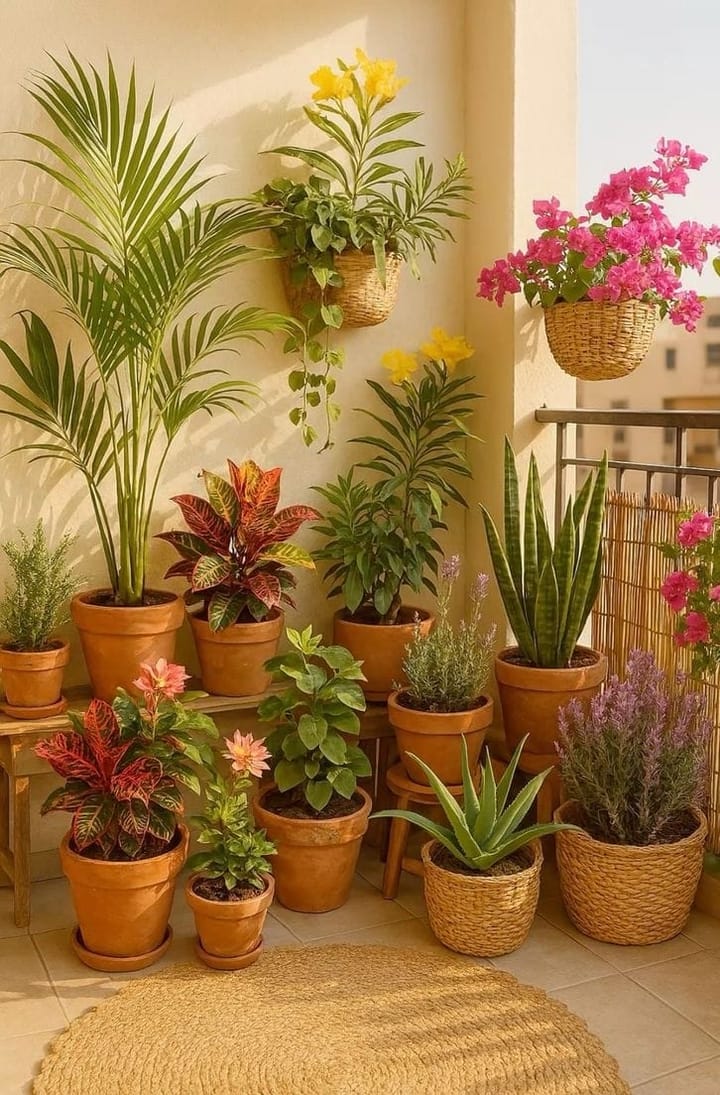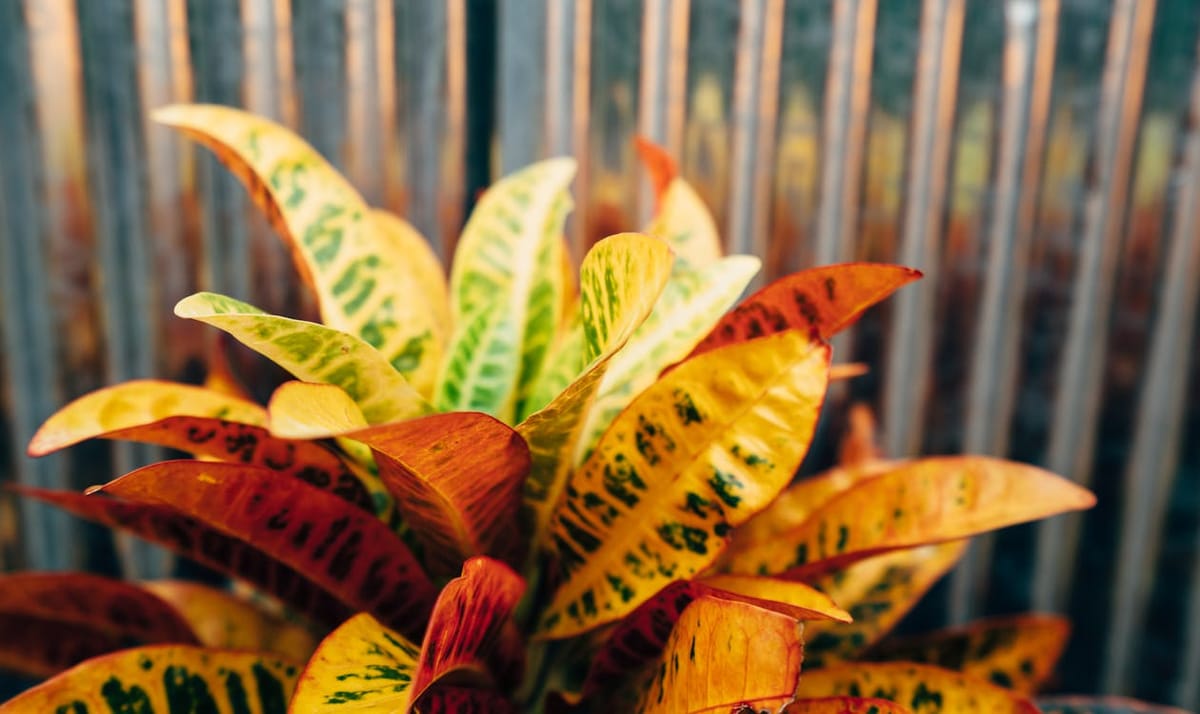
Codiaeum variegatum (commonly sold as croton or garden croton) is one of the most vivid plants in any Indian nursery. The leaves come in combinations of red, orange, yellow, and green, in patterns that look almost painted. It is also the plant most frequently purchased by new indoor plant buyers and most frequently killed within the same season.
The reason for the failure is nearly always the same: croton is not an indoor plant. It is an outdoor plant. It is sold indoors in Indian nurseries because it looks spectacular in the shop. In a bright sunny outdoor position, it is spectacular and nearly maintenance-free. Indoors, where the light is a fraction of what it needs, it drops leaves, loses colour, and slowly declines.
Why It Needs to Be Outside
Croton is native to tropical Asia and the western Pacific. To maintain its vivid leaf colour, it needs a minimum of four to six hours of direct sun. In an Indian flat without a balcony, this is simply not available. The plant will survive for several months on stored energy, then drop leaves, turn green, and eventually die. On a sunny south or west-facing balcony or terrace, croton thrives.
Colour and Light
The vivid colours in croton leaves are produced by carotenoid and anthocyanin pigments produced in response to sun exposure. A croton moved indoors will begin reverting its new leaves toward green within weeks because it stops producing the pigments it does not need in low light. This is not a nutrient deficiency. It is a light response. No amount of fertilizer will restore colour in an indoor croton. Moving it back to full sun will produce colourful new leaves within one or two growth cycles.
Water
Croton likes consistent moisture. Unlike succulents or desert plants, it does not appreciate the soil drying out completely between waterings. Water when the top inch of soil is dry, and water thoroughly. Inconsistent watering, alternating between letting the soil go bone dry and then drenching it, is a common cause of leaf drop. Consistent moisture prevents most of this.
Leaf Drop After Purchase
Almost every croton drops leaves after it is moved. Moving the plant from the nursery to your home constitutes a change in temperature, humidity, light level, and air movement. Croton responds to this by dropping its lower leaves. This is temporary. If you provide good light and consistent watering, it will stabilise and push new growth within three to four weeks.
Pests
Spider mites are the most common croton pest, particularly in dry conditions. They are tiny and live on the underside of leaves. The symptom is a stippled, bronzed texture on the upper leaf surface, often with fine webbing visible on the underside. Regular neem oil spray, five millilitres per litre, applied in the evening, prevents spider mite establishment.
Common Problems
Leaf colour fading to green: Insufficient light. Move to direct outdoor sun.
Leaf drop: Stress from relocation, inconsistent watering, low humidity, or cold drafts.
Brown, crispy leaf edges: Low humidity or cold air exposure.
Soft, yellowing stems at the base: Root rot from overwatering in poor-draining soil.
Frequently Asked Questions
Can croton be an indoor plant in India?
Only if you have a south-facing window that receives four or more hours of direct sun. Most Indian flat windows do not qualify. A balcony or terrace is a better fit for this plant.
Why is my croton dropping leaves after I brought it home?
Relocation stress. It is normal. Provide good light and consistent watering and it will stabilise within three to four weeks.
Is croton toxic?
Yes. The sap is a skin irritant and the seeds are toxic if ingested. Wear gloves when pruning.
What is the best croton variety for Indian conditions?
The standard Codiaeum variegatum in any of its hardier forms, Petra is one of the most robust, handles Indian outdoor conditions well.