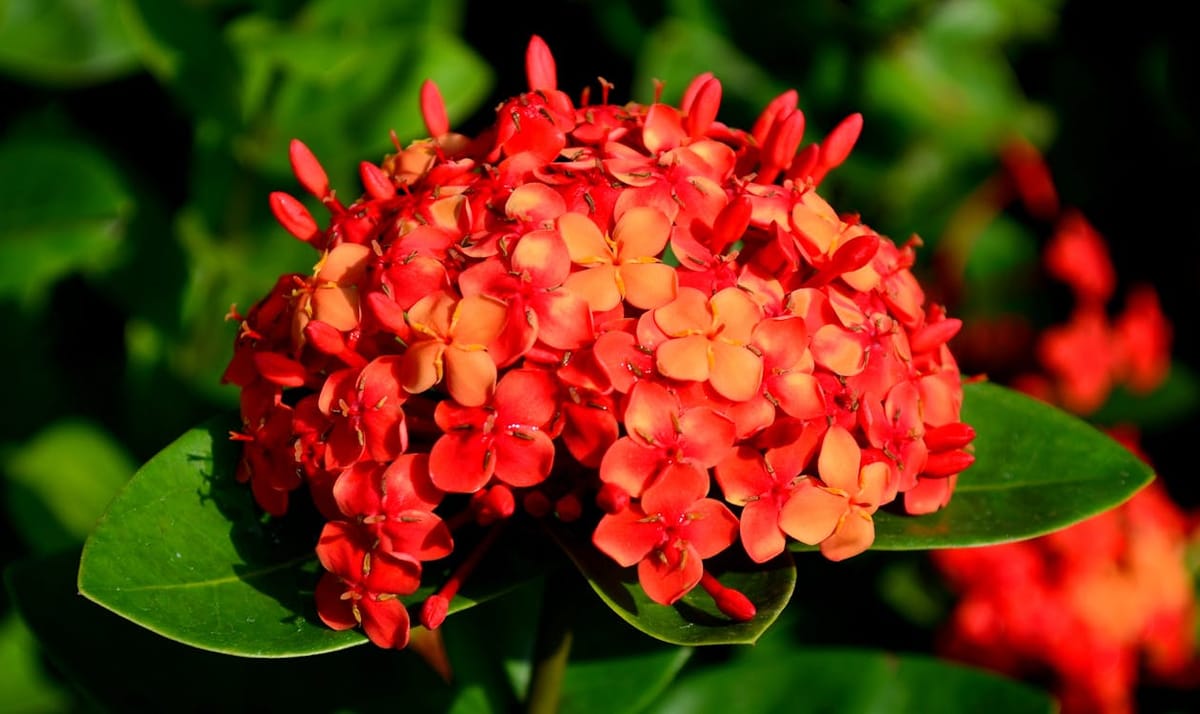
Ixora coccinea is the orange-red flowering shrub you see in every hospital compound, office garden, and highway divider across India. It grows easily enough that most people treat it as a zero-maintenance plant. It is not, quite. Left entirely to itself in the wrong soil, it produces green growth abundantly and flowers barely at all.
The diagnosis for almost every non-flowering ixora in India is the same: the soil pH has drifted too alkaline for the plant to absorb iron and manganese. Yellow leaves between green veins is the visible symptom. Flowers stop because the plant is spending its energy trying to survive rather than reproduce.
Understanding the pH Problem
Ixora is an acid-loving plant. It wants soil pH in the range of 5.0 to 6.0. Most Indian garden soils, and almost all municipal tap water, are alkaline. Tap water in Delhi typically tests at pH 7.5 to 8.0. Water the plant with this repeatedly and the soil pH gradually climbs. At pH above 6.5, ixora cannot take up iron efficiently even when iron is physically present in the soil. The leaves yellow. The flowers disappear.
The fix is acidifying the soil. Sulfur powder worked into the top few inches of soil will bring the pH down. For potted plants, watering occasionally with a diluted solution of white vinegar, approximately two tablespoons per litre of water, once a month, is a low-effort way to counteract alkaline tap water.
Varieties in India
The standard orange-red single-flowered ixora is the toughest variety and the one most commonly planted. It tolerates heat and partial shade better than the exotic types. Pink ixora is widely available and popular. White ixora is a different species with a strong fragrance and is a taller plant. Dwarf ixora grows to about 60 centimetres and is well-suited to container growing.
Sun and Position
Ixora produces the most flowers in full sun or very light partial shade. South-facing positions in Indian gardens work well. In containers on balconies it needs a minimum of four hours of direct sun.
Water
Ixora needs regular watering. It does not tolerate prolonged drought, the plant will drop leaves and buds if the soil dries out completely. On the other hand, it does not tolerate waterlogged soil. In monsoon, particularly in low-lying garden areas, ixora can suffer from root rot if the bed stays flooded.
Pruning
Ixora flowers at the tips of new growth. Pruning stimulates new growth, which produces new flowers. Without pruning, a mature ixora becomes a large woody shrub with flowers only at the periphery. A light pruning twice a year, once after the monsoon in October and once in February, keeps the plant compact and productive. Remove the spent flower clusters along with the top few inches of the stems that carried them.
Feeding
Feed ixora monthly during the growing season with an acid-forming fertilizer. Signs that the plant needs iron specifically: leaves turning yellow but the veins staying green. This interveinal chlorosis does not respond to nitrogen feeding. It needs iron chelate or acidic soil conditions to resolve.
Common Problems
Yellow leaves with green veins: Iron deficiency caused by alkaline soil. Acidify the soil, apply iron chelate, and consider switching to rainwater or RO water if your tap water is very alkaline.
Lots of green growth, no flowers: pH problem, or the plant is heavily shaded, or over-fed with nitrogen. Check sun first, then soil pH.
Leaf drop in summer: Heat stress combined with irregular watering. Maintain a mulch layer around the base to retain soil moisture through summer.
Frequently Asked Questions
Why is my ixora not flowering despite full sun and regular watering?
Test the soil pH if you can. If testing is not practical, try one round of soil acidification, sulfur powder worked into the top layer, and iron chelate drench, then wait six weeks. This resolves the majority of non-flowering ixora cases in Indian conditions.
Can ixora grow in a pot?
Yes. Dwarf varieties are well-suited to containers. Use acid-forming soil, ensure drainage, and monitor pH more closely than you would for in-ground plants.
How fast does ixora grow?
Moderate pace. An established plant in good conditions in South India can grow 30 to 40 centimetres per season. In North Indian winters it slows significantly or stops.
Does ixora attract bees?
Yes, quite effectively. The nectar-bearing flowers are attractive to bees, butterflies, and sunbirds.