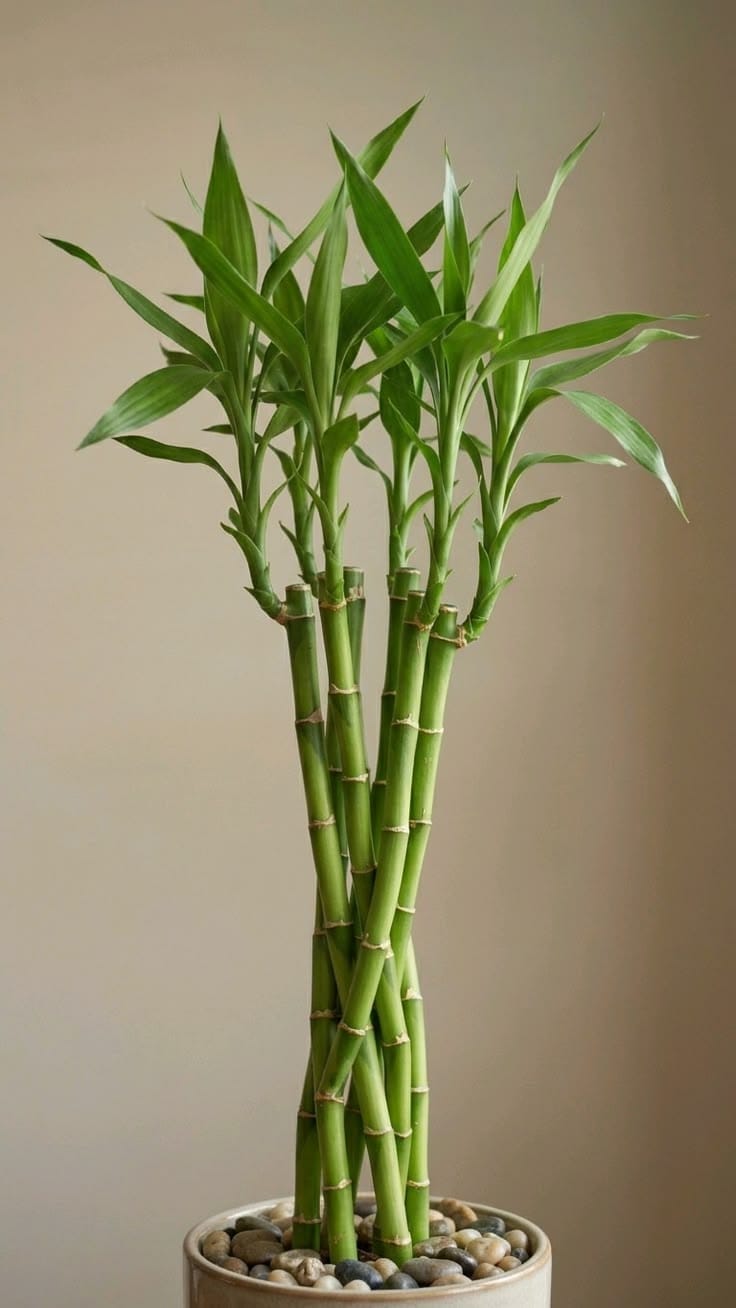
Lucky bamboo, sold in every gift shop, nursery, and temple corridor in India, is not bamboo at all. It is Dracaena sanderiana, a tropical African plant that happens to have bamboo-like segmented green stems. The real bamboo is a grass. Dracaena sanderiana is a distant relative of the aglaonema and snake plant.
The distinction matters mostly because the care of actual bamboo and lucky bamboo are entirely different. Lucky bamboo is easy to keep in water, tolerates low light, and requires only occasional attention. The yellow stems that eventually appear in most arrangements have a specific and preventable cause.
Water vs Soil Growing
Lucky bamboo is sold in both water arrangements and soil. Both work. In water: use a vase or container with decorative pebbles to hold the stems upright. Keep the roots submerged and the stems above water. Change the water every two weeks. Use filtered water, distilled water, or water that has been left standing for 24 hours. Do not use tap water directly from the tap without conditioning it, the chlorine and fluoride in municipal water is the primary cause of yellowing stems in water-grown lucky bamboo.
In soil: use a well-draining potting mix. Water when the top inch of soil is dry. Soil growing produces a more vigorous plant over time, as the roots have access to more nutrients than from water alone.
The Yellow Stem Problem
Yellow stems are the most common lucky bamboo complaint in India. The cause is almost always one of these three things: tap water containing fluoride, too much direct sun, or a stem that is already dead or diseased. If one stem in an arrangement turns fully yellow, it will not recover. Remove it promptly, a dead stem left in the water can introduce bacterial growth that affects the other stems.
Light
Bright indirect light is ideal. Lucky bamboo tolerates moderate indirect light, it is one of the more genuinely low-light tolerant plants. It will not tolerate direct sun. The leaves will yellow, bleach, and the stems will follow. Keep it away from south-facing windows that receive direct afternoon sun. In offices under fluorescent lighting, it manages well.
Fertilizer for Water-Grown Plants
Water alone does not provide nutrients. Water-grown lucky bamboo needs occasional fertilizer to stay healthy beyond the first year. Use a small amount of liquid fertilizer, very diluted, perhaps a tenth of the normal dose, every four to six weeks. Too much fertilizer in the water burns the roots and causes the same yellowing as fluoride. Less is genuinely more here.
Common Problems
Yellow leaves: Fluoride in water, too much direct sun, or over-fertilising. Change to filtered water and move to a lower-light position.
Yellow stems: One of the three causes above. If fully yellow, the stem is dead, remove it.
Algae in water container: Normal if the vase is in any light. Change water more frequently and keep the vase clean. Opaque vases reduce algae growth.
Roots turning brown: If the water is not being changed regularly, the roots can begin to decompose. Change the water and trim the affected roots.
Frequently Asked Questions
Is lucky bamboo actually lucky?
The plant is associated with feng shui and vastu practices. The plant itself does not produce luck, but it is a long-lived, low-maintenance indoor plant that looks good and requires minimal effort, which is a reasonable start.
Can lucky bamboo live forever in water?
With regular water changes and occasional fertilizing, it can live for many years in water. Many people replace the arrangement every few years rather than maintain the original indefinitely.
What number of stalks should I buy?
Whatever you find attractive. The numerological associations are culturally specific and functionally irrelevant to the plant's health.
Can I plant water-grown lucky bamboo in soil?
Yes. Wash the roots, pot in well-draining soil, and water moderately. The transition can cause some temporary stress and leaf drop but the plant will establish in soil within a few weeks.