Mogra (Jasminum sambac) is the reason some balconies in India are worth standing on at nine in the evening in May. The fragrance from a single flowering plant fills a room through an open window. It is used in gajra, in puja, in perfume, and in tea. It is also the plant people abandon most often after two years of no flowers, convinced they are doing something wrong.
Usually, they are doing one specific thing wrong. Sometimes they are doing nothing wrong and just need to wait. The difference is knowable.
Why Mogra Does Not Flower
Mogra flowers in response to two triggers: heat and root restriction. A mogra plant in a large pot with abundant root space will produce vegetative growth very happily and flowers rarely. A mogra plant that is slightly root-bound, receiving full sun, and slightly stressed by heat will flower prolifically. This is why mogra in the ground in a South Indian garden blooms almost continuously from March through October, and mogra in a spacious pot on a Delhi terrace sulks for two years before producing a handful of flowers.
The practical implication: do not repot mogra until it is clearly root-bound. The minor stress of being slightly pot-bound is productive.
Varieties Sold in India
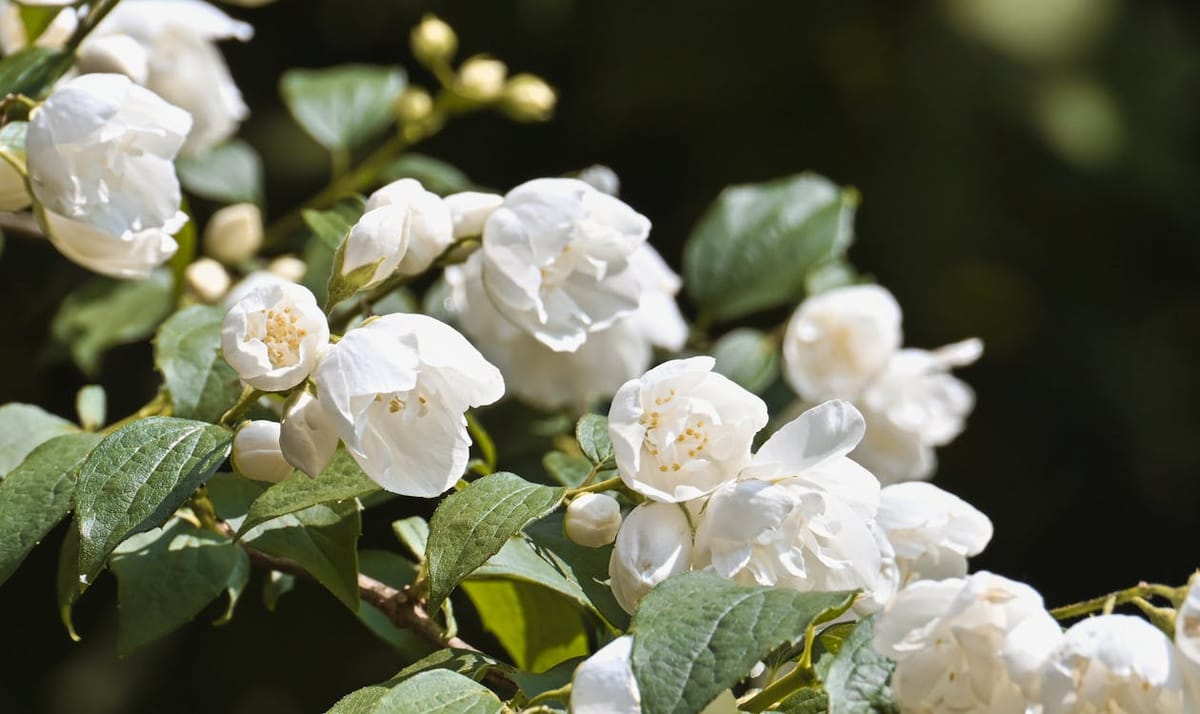
Jasminum sambac Single is the standard, the classic white flower with five or six petals. This is the variety used in gajra and the one most commonly sold. It is the most vigorous and flowers most freely.
Jasminum sambac Grand Duke of Tuscany is the double-flowered form, layers of petals in a rose-like arrangement. It is the most fragrant per flower and the most popular for puja. It is also more demanding: it needs better care to flower and is slower-growing. Find it at specialist nurseries rather than standard roadside sellers.
Sun
Mogra needs a minimum of six hours of direct sun to flower well. The more sun the better. West-facing balconies that bake in afternoon sun in May produce the most fragrant, heavily-flowering mogras. A mogra in shade or partial shade grows as a vine or straggling shrub and rarely flowers. If your plant has not flowered in two seasons despite regular care, relocate it to your sunniest spot before trying anything else.
Pot and Soil
Start mogra in a 10-inch pot. When it becomes clearly root-bound, move up one pot size only. Not two. The objective is to keep the plant just slightly constrained. Soil should drain well but retain moderate moisture. A mix of potting soil with twenty percent coarse sand or perlite works.
Water
During the flowering season, which in most of India runs from April through September, mogra needs regular watering. Check the soil daily in peak summer, the soil in a small pot in full sun can dry out completely between morning and evening during a Delhi May. Water when the top inch is dry. In winter, reduce watering significantly.
Feeding
Feed mogra from March through September. Monthly feeding with a balanced fertilizer keeps the plant in good health. A slow-release fertilizer stake per pot, replaced every six to eight weeks, is the simplest approach. Avoid fertilizers with very high nitrogen numbers if flowering is the goal, these push vegetative growth at the expense of flowers.
Pruning
Prune mogra after each flowering flush, not on a fixed calendar. When the plant finishes a flush of flowers and the stems that carried them are spent, cut them back to a pair of healthy leaves. This forces new growth from the node below and the next flush of flowers comes on those new stems.
A harder prune in February, before the season begins, removes all the old woody growth from the previous year and encourages a full season of productive new stems.
Common Problems
No flowers despite good sun: Most likely the plant is in too large a pot with too much root space. Try withholding water slightly for a week in April to stress it gently into flowering mode.
Leaves yellowing: Usually overwatering in winter, or an aphid infestation causing yellowing of new growth. Check under the leaves on new stems for aphid clusters.
Aphids on new growth: Very common on mogra. They specifically target the soft new stems where buds are forming. A neem oil spray at five millilitres per litre of water, applied in the evening twice a week until they clear, is effective.
Frequently Asked Questions
When does mogra flower in India?
The primary flowering season runs from April through August across most of India. The double-flowered varieties tend to flush in April, May, and again in July. In coastal and South Indian climates it flowers more continuously across the year.
Why does mogra flower for a few weeks and then stop?
Mogra flowers in flushes, not continuously. After a flush, it needs three to five weeks to develop the next set of buds. Deadheading spent flowers and cutting back the spent stems speeds up the next flush.
Can mogra be grown in a north-facing flat?
No. Mogra needs direct sun to flower. A north-facing position is not workable. It will survive as a green plant but you will not see flowers.
Does mogra need special soil?
No. The critical factors are sun, pruning after flowering, and keeping the plant slightly root-bound, not the soil composition.