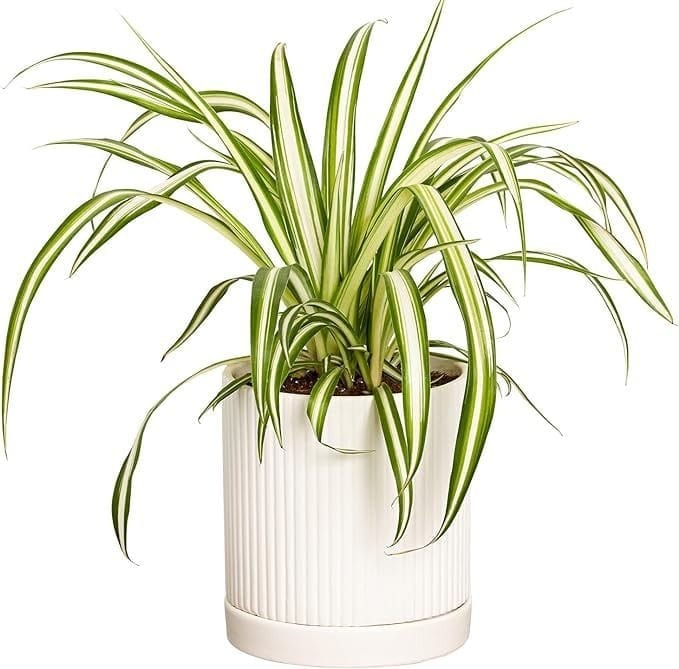
Chlorophytum comosum (spider plant) is probably the best first plant for someone who has never successfully grown anything indoors. It tolerates inconsistent watering, a wide range of light conditions, forgets to be repotted for years without dying, and produces miniature copies of itself on long arching stems that can be potted up and given away. It is also genuinely attractive, particularly the variegated green-and-cream varieties that are most commonly sold.
The brown tips that appear on most spider plants in Indian homes are cosmetically irritating but not a sign the plant is dying. They are a sign of one specific thing, and that thing is fixable.
The Brown Tips Problem
Spider plant leaves turn brown at the tips due to fluoride and chlorine in tap water, or to dry air, or to salt build-up from over-fertilising. In most Indian cities where tap water is alkaline and treated, it is usually the water. The plant is sensitive to fluoride specifically.
The fixes, in order of effort: switch to filtered or RO water for this plant. Or leave tap water in an open container overnight before watering. Or collect rainwater during monsoon. The existing brown tips will not recover, but new leaves will come in clean.
Light
Spider plant grows in a wide range of light conditions. It thrives in bright indirect light, does well in moderate indirect light, and survives in quite low light. Variegated varieties maintain brighter colour in better light. In dim conditions the cream stripes narrow and the plant becomes more uniformly green. Direct sun, particularly in summer, will bleach and scorch the leaves.
Water
Spider plant is forgiving about watering frequency. Allow the soil to dry out significantly between waterings. During the growing season this means watering approximately once a week in summer. In winter, every two weeks is usually sufficient. It will tolerate missing a watering for a week or two without significant harm. Chronic overwatering in a pot with poor drainage is more damaging than drought for this plant.
Propagation: The Babies
Spider plant produces long arching stems, stolons, with small plantlets at the tips. These plantlets root easily. While still attached to the parent: press the plantlet into a small pot of moist soil placed next to the parent. It will root into the new pot while still receiving nutrition from the parent stem. After three to four weeks, cut the stolon. After detaching: cut a plantlet from the stolon and place it in a glass of water. Roots will develop within two to three weeks. Once roots are two to three centimetres long, pot it in soil.
Repotting
Spider plant grows quickly and becomes root-bound relatively fast. When the roots are visibly emerging from the drainage holes or the plant is drying out very quickly after watering, it is time to repot. Move up one pot size. A root-bound spider plant will continue to produce babies but will eventually stop growing larger.
Common Problems
Brown tips: Water quality issue. Trim the brown tips with clean scissors at an angle for a neater appearance.
Pale, yellowing leaves: Overwatering or root rot. Check the soil and drainage.
No babies produced: Usually insufficient light, or the plant needs to be slightly root-bound to trigger reproductive growth. Move it to a brighter position.
Frequently Asked Questions
Is spider plant safe for cats?
Spider plant is mildly toxic to cats, it has a mild hallucinogenic effect that can cause vomiting if eaten in quantity. Keep it out of reach of cats that tend to chew plants.
Why is my spider plant not producing babies?
Most commonly insufficient light. Move it to a brighter position. Also, a very young plant or one that was recently repotted will not produce stolons until it is established.
Can spider plant grow outside in India?
Yes, in shade or dappled light. In North India it will need to be brought indoors or protected from frost in January.
How long does spider plant live?
It is a very long-lived plant. With basic care it will grow indefinitely, producing new plants from the babies each season.