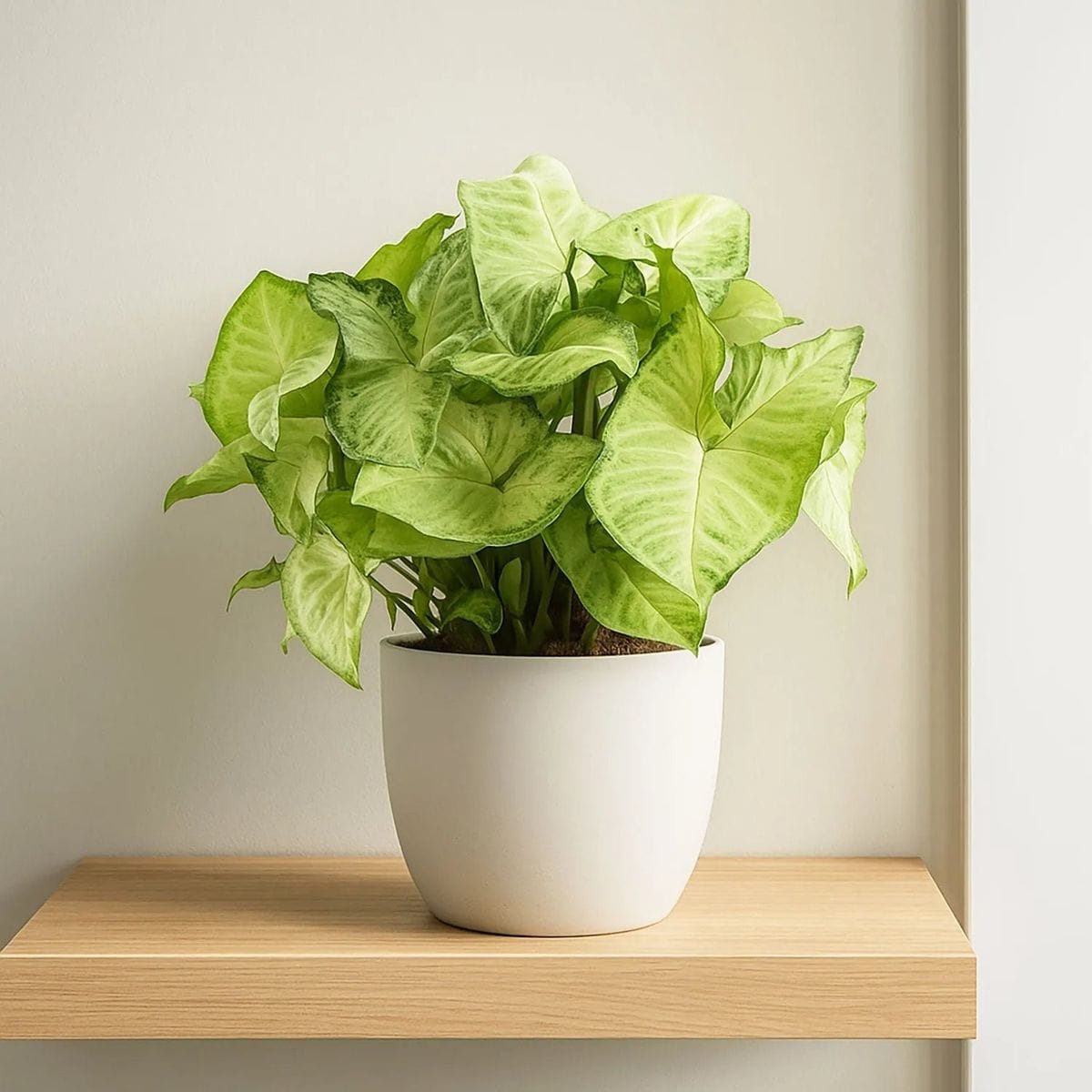
Syngonium podophyllum (also called arrowhead plant or arrowhead vine) is the fast-growing trailing or climbing plant that has become increasingly popular in Indian homes over the last few years. The reason is partly practical: it grows quickly, propagates easily, and tolerates the kind of inconsistent indoor care that more sensitive plants do not. The reason is partly visual: the young leaves have a neat arrowhead shape that shifts to a deeply-lobed multi-finger shape as the plant matures and climbs.
Most people buy the juvenile form and wonder later why the leaf shape changed. It did not go wrong. It grew up.
The Leaf Change
Young syngonium plants produce simple arrowhead-shaped leaves. As the plant ages and the stems elongate, the leaves develop more and more lobes until mature specimens have five or more distinct leaflets per leaf. This is a normal developmental process called metamorphosis, shared by several other aroids including monstera. If you want to maintain the neat juvenile arrowhead shape, keep the plant in a smaller pot and trim back any climbing stems. If you let it grow and climb on a moss pole or trellis, the mature leaf form is genuinely impressive.
Varieties
Green syngonium is the most common and toughest. Syngonium White Butterfly has cream-green variegation that is attractive and widely available. Syngonium Pink Splash and Neon Robusta have pink tones that require brighter indirect light to maintain, in low light they revert to green.
Light
Syngonium handles a range of indoor light conditions. Standard green and White Butterfly varieties tolerate moderate indirect light. Pink and highly variegated varieties need brighter indirect light to hold their colour. Direct sun burns the thin leaves. A bright windowsill with a sheer curtain, or a position a metre or two from a window receiving good natural daylight, is ideal for most varieties.
Water
Water when the top inch of soil is dry. Syngonium recovers well from missing a watering but suffers if left consistently overwatered in poorly draining soil. Yellow, mushy stems at the base indicate root rot from overwatering. Crispy brown edges on an otherwise healthy plant indicate dry air rather than underwatering.
Propagation
Syngonium is among the easiest plants to propagate in India. Cut a stem with at least one node. Remove the lower leaves. Place the cut end in a glass of water in bright indirect light. Roots develop within one to two weeks. Once roots are two to three centimetres long, pot in moist well-draining soil. Alternatively, cut a node section and push it directly into moist coir or perlite. Keep it humid by placing a plastic bag loosely over the pot. Roots will form within three weeks.
Common Problems
Yellow leaves: Overwatering. Let the soil dry more between waterings.
Brown edges with otherwise green leaves: Low humidity or dry air. Not damaging but cosmetically annoying.
Reverting to all-green in variegated varieties: Insufficient light. Move closer to a light source.
Mealybugs: Check leaf axils. Treat with neem oil spray.
Frequently Asked Questions
Can syngonium grow in water?
Yes, for months. It is one of the better plants for water propagation. For long-term health, eventually pot it in soil.
Is syngonium toxic?
Yes. Calcium oxalate crystals in all parts cause irritation if ingested. Keep away from pets and children.
How fast does syngonium grow?
In good indoor conditions in Indian summer, new leaves emerge every one to two weeks. It is one of the faster-growing indoor plants available here.
Should I use a moss pole?
Only if you want the mature leaf form. For the compact juvenile form, trailing in a hanging pot or pinching back climbing stems keeps it small.