Delhi summers are not a season, they are a stress test. Daytime temperatures cross 45°C for weeks at a stretch. The afternoon Loo wind feels like a hairdryer in your face. Indoor air conditioners run for eighteen hours a day, dropping the humidity to 20%. Most houseplants that thrive in Bangalore or Pune simply collapse here between mid-April and mid-July.
We have killed enough plants in our own Delhi flat to know which ones genuinely cope. Here are the eight that survive a real Delhi summer, and the routine that keeps them alive.
What 45°C Actually Does to a Houseplant
Three things happen at once when the mercury sits above 42 for days:
- Transpiration rate doubles. The plant loses water through its leaves faster than the roots can pull it from the pot.
- Soil dries from the surface down. The top 2 cm of soil can be bone dry while the bottom is still moist, which confuses your finger test.
- Chlorophyll breaks down faster than it is made. Leaves go pale, then yellow, then crisp at the edges.
On top of all this, indoor AC creates a second problem: cold dry air blasting at the leaves while the soil is hot. Plants get stress from both directions.
The Eight Survivors
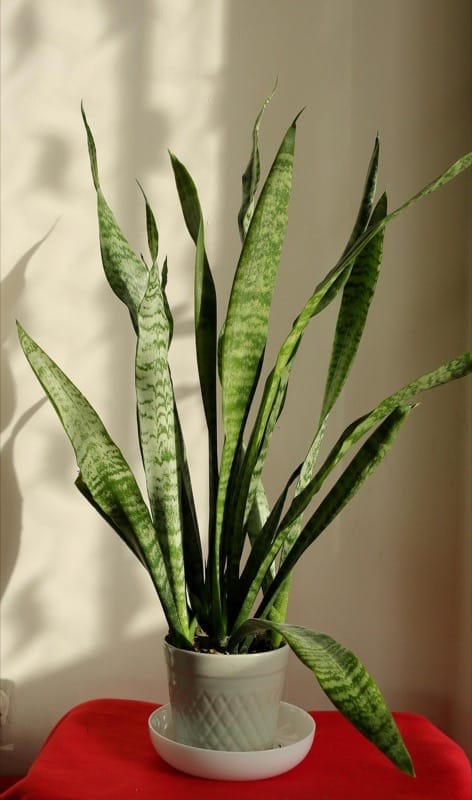
1. Snake Plant (Sansevieria trifasciata)
The toughest plant on this list. Tolerates 48°C, low humidity, deep shade, irregular watering. The waxy upright leaves hold their own water. Place anywhere except direct south-facing afternoon sun. Water once every three weeks.
2. ZZ Plant (Zamioculcas zamiifolia)
Stores water in fat underground rhizomes. Will survive a month of neglect. Glossy dark green leaves shed dust easily. Wants medium light. Water once every two weeks, less if the pot stays cool.
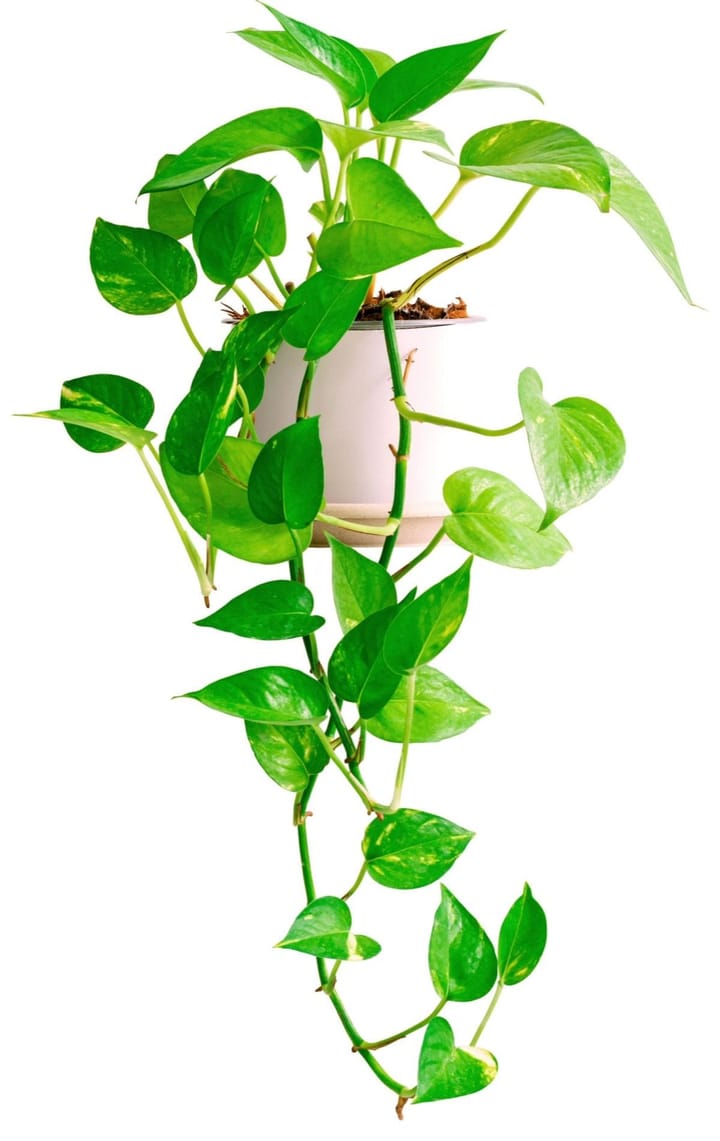
3. Money Plant (Epipremnum aureum)
Surprisingly heat-hardy if kept out of direct sun. The vines stretch but the plant lives. Keep on a north or east window. Water when the top inch is dry. Full money plant guide here.
4. Aglaonema (Chinese Evergreen)
Tolerates the low humidity better than most variegated plants. The red and pink hybrids do best because the lower chlorophyll content means less stress. Indirect light only. Direct sun burns it within an hour.
5. Areca Palm (Dypsis lutescens)
Survives if kept in bright indirect light and watered religiously. The tips will brown but the plant lives. Mist daily through May and June. Pull leaves apart at the base to allow air circulation.
6. Peperomia (Watermelon and Ripple varieties)
Small thick succulent leaves. Holds water. Indirect light. Underwater rather than overwater. Will sit happily on a north window for the whole summer with watering once every ten days.
7. Succulents (Echeveria, Sedum, Haworthia)
Counter-intuitive but true: most succulents tolerate the heat better than they tolerate Delhi monsoon. The problem in summer is direct south sun, which burns even cacti. Place on an east window. Water every two weeks. Stop watering entirely if leaves swell suspiciously, that is the early sign of root rot from a hot pot.
8. Pothos N'Joy and Marble Queen
Variegated pothos are slower-growing and slightly more delicate than plain money plant, but still survive. The cream patches scorch first if light is too direct. Indirect bright light, water when top inch is dry. Mist twice a week.
Where to Place Them
The window direction in your flat matters more than the plant variety. A rough guide:
| Window faces | What it gets | Best plants |
|---|---|---|
| North | Cool, soft, indirect light all day | ZZ, money plant, peperomia, pothos N'Joy |
| East | Bright morning sun (gentle), shade by noon | Aglaonema, areca palm, succulents |
| West | Brutal afternoon sun + the Loo | Only snake plant. Pull curtains in the afternoon. |
| South | Direct sun most of the day | Snake plant, cacti, only with a sheer curtain |
Watering: Less Than You Think
The most common summer killer is over-correcting. People see the plant droop, panic, and water twice a day. The pot stays permanently soggy, the roots boil in hot wet soil, and the plant dies of root rot in mid-June.
The right approach:
- Push your finger 2 cm into the soil before every watering. If it comes out moist, do not water.
- Water in the evening, not the morning. Evening watering gives the plant all night to absorb before the day-heat hits.
- Water deeply when you do, until 30% comes out the drainage hole. Then do not water again for three to seven days depending on plant.
- Skip the saucer in summer. Pots need to drain freely.
The AC Problem
Indoor AC is the second leg of Delhi summer stress. The cold dry blast directly on a plant has two effects: it dries out the leaf surface twice as fast, and the temperature shock between the cold AC zone and the hot non-AC zone (when the AC switches off) cracks the leaf tissue.
Move plants at least 1.5 metres from any AC vent. If a plant has to live near the vent (small flat, limited space), at minimum redirect the louvres away from the leaves. Mist plants in AC rooms twice as often as plants in non-AC rooms.
Two Things Never to Do in May
Two mistakes that we see kill more Delhi plants than anything else:
Do not repot in peak summer
Repotting cuts a percentage of the roots no matter how careful you are. The plant then has to recover from root damage in 45°C heat. Almost guaranteed to fail. Wait until late September or do it now in early May before the worst heat. Never repot in late May, June, or early July.
Do not heavy-fertilize
In peak summer the plant is in survival mode, not growth mode. Heavy fertilizer feed pushes growth the plant cannot support. Use half the normal dose, or switch to slow-release fertilizer sticks which release in tune with soil moisture (less during dry periods).
A Five-Minute Morning Routine
In Delhi summer the difference between surviving and thriving plants is the five minutes you give them before work each morning. Here is what works:
- Look at every plant. Drooping leaves before 9 AM means water. Drooping in the afternoon is normal heat reaction, do not water.
- Mist any leafy plant (areca, pothos, aglaonema). Skip succulents and snake plants.
- Move any plant near a west or south window 30 cm further inside, or pull a sheer curtain.
- Check for spider mites (tiny pinprick dots on the underside of leaves, especially areca palm). The hot dry air is their favourite.
- Empty any saucer that collected water from yesterday.
If a Plant Is Already Suffering
First aid for a heat-stressed plant:
- Move it immediately to the coolest indirect-light spot in the house. The bathroom often works.
- Cut off any fully crispy leaf with clean scissors. Leaves with half-brown tips can stay, the green half is still photosynthesising.
- Water deeply once, drain, then leave alone for 5 to 7 days.
- Mist twice a day for the next week.
- Apply one dose of our plant booster oil (or any seaweed extract) at quarter strength. The amino acids help the plant rebuild stressed tissue.
Most heat-stressed plants recover in 2 to 3 weeks if you stop fussing and let them rest.
Frequently Asked
Should I put plants outside in summer for fresh air?
No. Outdoor temperatures plus the Loo wind plus afternoon sun is the worst of all worlds. Indoor plants stay indoor through Delhi summer. The only exception is succulents, which tolerate a sheltered north-facing balcony.
How often should I mist?
Daily for leafy plants (areca, aglaonema, pothos) in May and June. Twice a week for the rest. Never mist succulents, snake plants, or ZZ plants, they hate it.
My snake plant is leaning to one side. Heat issue?
Probably not. Leaning snake plants are usually reaching for light. Rotate the pot 90 degrees every week so all sides see equal light.
Cooler outside or inside the house, where do plants do better?
Inside, in most Delhi flats, especially the rooms with curtains drawn through the afternoon. The 35°C indoor temperature is more survivable than the 45°C outdoor temperature, and the air is calmer.
Will a desert cooler help my plants?
Surprisingly yes for non-succulent plants. The cooler raises humidity, which most leafy plants want. Place plants in the airflow, not directly next to the cooler. Skip this for cacti and succulents, they want dry air.
Read Next
Once the rains hit in late June, the playbook flips completely. Read the pre-monsoon checklist in the second week of June. For the perpetual question of why leaves are yellowing, see yellow leaves troubleshooting.