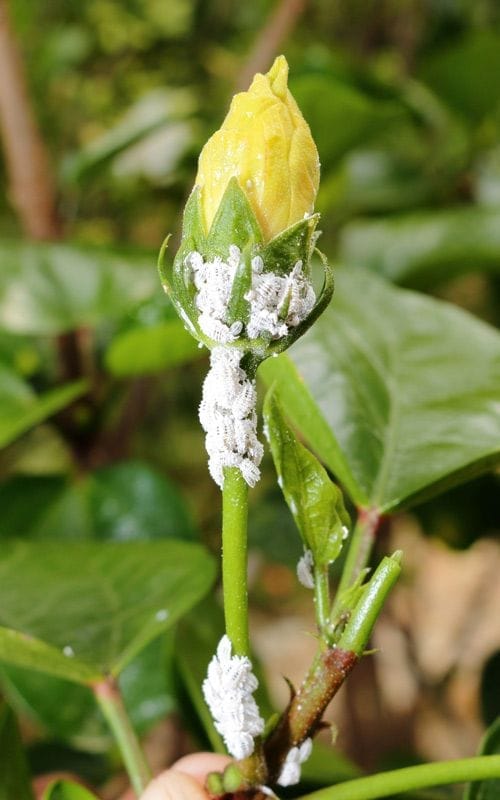
Mealybugs are the white cottony fluff you find at the joints between leaves and stems on hibiscus, money plants, jade, and most other indoor plants in India. They look harmless. They multiply slowly. Then suddenly the plant is covered in them, dropping leaves, and you wonder how it got so bad so fast.
Here's the 12-day plan we send people who message us with photos of infested plants.
What You're Dealing With
Mealybugs are small soft-bodied insects covered in a white waxy fluff. The fluff repels water, which is why a plain water spray doesn't dislodge them. They feed on plant sap, weaken the plant, and leave a sticky residue (called honeydew) on the leaves below.
Each female lays 300 to 600 eggs. The eggs hatch over 7 to 10 days. So if you only kill the visible bugs today, the next wave hatches in a week and the plant looks just as bad. The whole trick is to spray on a cycle that catches each hatch.
What You Need
- Our Plant Booster Oil or any cold-pressed neem oil.
- 1 litre of water at room temperature.
- One drop of liquid dish soap (Pril, Vim, anything).
- A spray bottle.
- A cotton bud and rubbing alcohol for the worst patches.
- An old toothbrush. Optional, useful.
Day 1: Quarantine and Manual Clean
- Move the infested plant away from the others. Mealybugs walk between pots. Isolate first.
- Look everywhere. Lift each leaf, check the underside, the leaf joints, the soil surface, the rim of the pot. They hide.
- Manual clean. Dip a cotton bud in rubbing alcohol or just water and dab every visible cluster. The alcohol melts the wax coat. Don't be gentle, you want every white blob gone.
- Toothbrush the joints. Mealybugs love the deep junctions where leaf meets stem. A soft toothbrush dipped in soapy water flushes them out.
Day 1 (Evening): First Neem Spray
- Mix 5 ml neem oil, 1 drop of dish soap, 1 litre of water. Stir hard for 20 seconds.
- Pour into a spray bottle.
- Spray every leaf, top and underside. Spray the stems. Spray the soil surface lightly.
- Do this after sunset or before 9 am. Never under direct sun.
- Let it dry on the plant. Don't wipe it off.
Day 4: Second Spray
Make a fresh batch. Old mix is past its life. Spray everything again. By now the original adults are dead or weak, and the first egg batch is hatching.
Day 8: Third Spray
Same routine. The second egg batch is hatching. Visible clusters should be much fewer by now.
Day 12: Final Spray
One last round to get any stragglers. After this, you should be clear.
Day 14 Onwards: Prevention
Move the plant back near the others only after a clean inspection. Then go to a 14-day preventive spray cycle (same dilution) for the next month, in case neighbours are still hosting bugs.
What People Get Wrong
"I Sprayed Once, They Came Back."
You killed the adults but not the eggs. The eggs hatched 5 days later. Always spray on the cycle.
"I Used Cheap Neem Oil From the Local Nursery."
It was probably hot-pressed. Heat destroys the active compound. The smell is similar but the pesticide effect is gone. Use cold-pressed.
"I Used a Stronger Dose to Be Safe."
10 ml per litre burns leaves. 5 ml is the right dose. Adding more makes things worse.
"I Sprayed Only the Visible Bugs."
Hidden ones survive and the cycle continues. Spray every surface, especially the underside of leaves.
"I Sprayed at Noon When I Had Time."
The mix scorches leaves under direct sun. Always early morning or after sunset.
When to Give up on a Plant
If the infestation is so heavy that more than half the leaves are gone and there's no new growth, it's often kinder to throw it out. Bad mealybug damage usually means root issues too. Buy a fresh plant. Don't keep a doomed one alive next to healthy ones, the bugs will spread.
Once you're clear, the bigger picture is to keep humidity slightly higher than dry indoor air, and inspect every plant on a weekly walk-through. Catching them early turns this 12-day plan into a 4-day one.
If you're new to neem oil, the basics post is neem oil for plants in India.
Read Next
For year-round neem use, see the neem oil guide. For other leaf symptoms that look like mealybug but aren't, the symptom diagnostic.