If your plant looks unhappy, the first thing to do is not buy something. The first thing is to diagnose. Most plant problems show up on the leaves, and the pattern of damage tells you what is wrong. Where on the plant, what colour, what shape, how fast it spread.
This is our complete symptom guide. We get these photos on WhatsApp every day and the diagnosis is usually one of about a dozen things.
How to Actually Diagnose
Before you read any further, pick up the plant and look at it carefully for sixty seconds. Note:
- Where on the plant is the damage? Oldest leaves at the base, newest at the tip, or random throughout?
- What is the colour? Yellow, brown, white, black, transparent patches?
- What is the pattern? Spots, stripes, halos, edges only, full leaf?
- How fast did it appear? Overnight, over a week, over a month?
- What changed recently? New pot, new spot, new fertilizer, season change, holiday with no watering?
The answer to the last question is the diagnosis 70% of the time.
Yellow Leaves: Five Causes Ranked by Likelihood
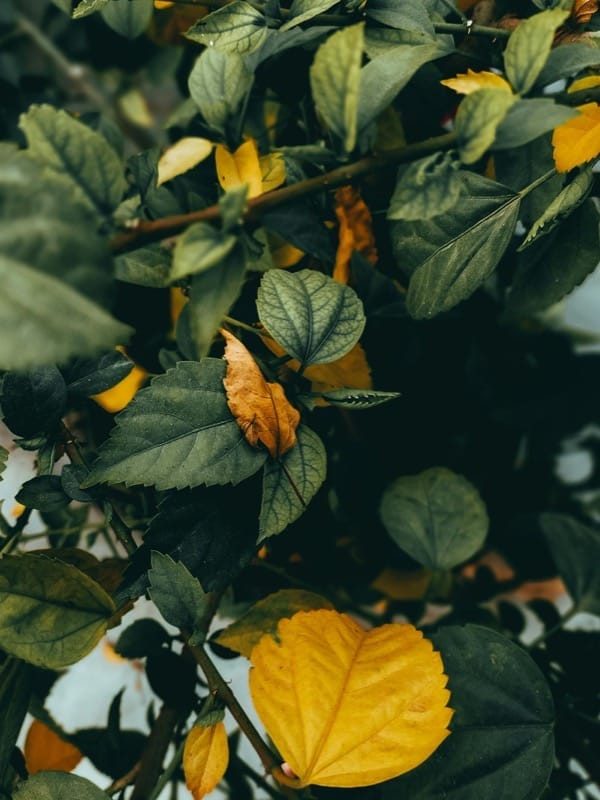
Yellow leaves are the most common plant problem and almost never an emergency. Here are the five causes in order of frequency:
1. Overwatering (60% of cases)
The single most common cause of yellow leaves. Soggy soil suffocates the roots. Roots cannot absorb water properly. The plant cannot get water to its leaves. Leaves yellow and drop.
Diagnosis: push your finger 2 cm into the soil. If it is wet, this is your problem. The yellowing usually starts at the lower leaves and works up.
Fix: stop watering. Move to a brighter spot to speed up drying. If the soil stays wet for more than five days, repot into fresh potting mix and trim any black mushy roots.
2. Old Leaf Drop (15%)
Every plant naturally drops its oldest leaves as new ones emerge. If just one or two leaves at the very base of the plant are yellow and the rest looks fine, this is normal.
Fix: nothing. Snip off the yellow leaf at the stem.
3. Underwatering (10%)
Less common than overwatering but real. Diagnosis: soil is bone dry, pot feels light, leaves are yellow AND limp. Often the yellow is more uniform across the whole plant.
Fix: water thoroughly. Soak the pot in a bucket of water for 30 minutes if the soil has gone hydrophobic (water beads on the surface instead of soaking in).
4. Nutrient Deficiency (10%)
After 6 to 12 months in the same pot, the plant has exhausted the soil. Yellow leaves with green veins specifically means iron or magnesium deficiency. Uniform yellow on younger leaves means nitrogen.
Fix: feed with a balanced fertilizer. Our sticks for set-and-forget, or any 19-19-19 liquid for fast recovery.
5. Cold Draft or Heat Shock (5%)
Plants near AC vents, drafty windows in winter, or moved abruptly from indoor to outdoor can yellow within 48 hours. The yellow is patchy and often only on one side of the plant.
Fix: move the plant. Recovery takes 2 to 3 weeks.
Brown Tips: Humidity, Salt, or Both
Brown crispy tips on otherwise healthy leaves
Caused by low humidity, which is the default state of any Indian flat with AC or heaters running. Common on areca palm, calathea, peace lily, spider plant.
Fix: mist daily, or move the plant to a more humid spot (the bathroom is genuinely useful here). Trim the brown tips off with clean scissors, following the natural leaf shape.
Brown edges with a yellow halo
Salt build-up from over-fertilizing or hard tap water. The salt damages cell walls at the leaf margin first.
Fix: flush the pot. Pour 3 pots' worth of plain water through the soil over a week to wash out salt. Reduce fertilizer to half dose. Use filtered water or rainwater if your tap water is very hard.
Brown crispy patches anywhere on the leaf
Sunburn from direct afternoon sun on a plant that prefers indirect light. The patches are stiff, papery, and irreversible.
Fix: move the plant away from direct sun. The burnt leaf will not recover but new leaves will be fine. Snip off badly burnt leaves at the stem.
White Spots: Three Very Different Things
Powdery white coating, easily wiped
Powdery mildew. A fungal disease that thrives in humid, low-airflow conditions. Most common in monsoon, on basil, tulsi, roses, and indoor plants behind curtains.
Fix: wipe affected leaves with a soft cloth, spray every leaf (both sides) with diluted neem oil weekly. Improve airflow. Cut back if more than 30% of the plant is affected.
Hard white crust on leaf edges or pot rim
Mineral build-up from hard water. Not dangerous but ugly. Indicates the soil is high in salts.
Fix: scrape off the rim crust. Flush the pot once a month with plain water. Switch to filtered or rainwater long-term.
Small white dots that move or have tails of fluff
Mealybug. A sap-sucking pest that lives in leaf joints and underside of leaves. Will kill the plant if left for 2-3 weeks.
Fix: isolate the plant from others immediately. Wipe every leaf joint with a cotton bud dipped in 70% isopropyl alcohol. Spray weekly with diluted neem oil. Full mealybug guide here.
Bonus Symptoms
Black spots on leaves
Black spot fungus. Common on rose, hibiscus, basil. Remove affected leaves entirely. Improve airflow. Spray with neem oil weekly. Never water from overhead.
Mushy black stems at soil level
Root rot, advanced stage. The plant may be unsavable. Try: pull the plant out, trim ALL black roots back to clean white tissue, repot in fresh dry potting mix, do not water for a week. Survival rate is about 30%.
Wilting despite moist soil
Root rot in early stage, or root binding. Tip the pot out and check. If roots are dark and smell sour, treat as root rot. If they are a tight spiral, repot to a wider pot.
Transparent or glassy patches
Frost damage, or sudden temperature drop. Common in December when the heater goes off overnight. Patches turn brown in 2-3 days. Remove damaged leaves. Move plant away from window glass.
Curling leaves (downward)
Water stress (too much OR too little, paradoxically). Check soil. Fix watering and the curl reverses in a week.
Curling leaves (upward, cupped)
Heat stress or aphid infestation. Look under the cupped leaf. Tiny green or black bugs = aphids. Spray with neem. No bugs = heat stress. Move to a cooler spot.
The Seven-Day Rule
After making a change (stop watering, move pot, start fertilizer), give the plant a full week before deciding it did not work. Plants are slow. The instinct to keep trying new things in week one usually kills the plant. Pick one intervention, wait seven days, observe, then decide the next move.
When to Repot vs When to Leave Alone
| Situation | Repot? |
|---|---|
| Soggy soil after 5 days of no watering | Yes, immediately |
| Roots spiralling at the bottom of the pot | Yes, in cool season |
| Yellow leaves but soil dries normally | No, fertilize instead |
| Brown tips, otherwise healthy | No, increase humidity |
| Black mushy stem | Yes, urgent, trim and replant |
| Pest infestation | No, treat the pest first |
When the Plant Is Past Saving
Sometimes the honest answer is the plant is dead and there is no recovering it. Signs:
- The main stem at soil level is mushy and pulls out with the lightest tug.
- All roots are black or grey and there is no white tissue anywhere.
- The whole plant is wilted, every leaf, and overnight watering did nothing.
- There is visible white fuzzy mould growing on the stem.
In any of these cases, save what you can: take a cutting from any green section, compost the rest, sterilise the pot with diluted bleach, start again. Plant death is part of growing. Even nursery owners lose plants every month.
Frequently Asked
Should I cut off all the yellow leaves?
Cut off the fully yellow leaves (they will not green up again). Leave any leaves that are half-yellow and half-green, the green part is still feeding the plant. Once a leaf is more than 70% yellow, snip it at the stem.
My plant has all five symptoms at once. What do I do?
It is probably overwatered with poor drainage. Stop watering for 7 days. Move to brighter indirect light. If still struggling, repot in fresh dry potting mix and trim any black roots. Do not feed for 3 weeks after.
Can yellow leaves come back to green?
No. Once chlorophyll is broken down it does not rebuild in that cell. Yellow leaves stay yellow until they drop. Your goal is healthy NEW growth.
How do I know if my plant has actually died vs is just dormant?
Scratch a fingernail across a stem. If you see green tissue underneath, the plant is alive. If it is brown all the way through, that stem is dead. Test multiple stems before declaring the whole plant gone.
Is it OK to wash leaves with soap and water?
Plain water yes, soap no. Use a soft damp cloth to wipe dust off leaves once a month. Plant leaves do not need soap. If you suspect pests, use diluted neem oil instead.
Read Next
For specific yellow-leaves on money plant, see the money plant yellow leaves guide. For mealybug specifically, the mealybug guide. For general feeding to prevent deficiencies, how often to fertilize.