Alocasias are the most photogenic and most dramatic plants on the Indian indoor scene right now. Arrow-shaped leaves with prominent veins, an upward-pointing posture, sizes ranging from the desk-sized Polly to the giant macrorrhiza that looks like it belongs in a Kerala backyard. They reward attention and punish neglect, but the rules are simple once you know them.
Most Alocasia anxiety in Indian homes comes from one of three things: confusing dormancy with death, missing the early signs of spider mites, or overwatering. This guide covers all three.
Which Alocasia Do You Have?
- Alocasia Macrorrhiza (Giant Taro, Elephant Ear): massive leaves, can reach 1.5 metres tall indoors and double that in the right outdoor spot. The plant that locals in Kerala and West Bengal grow next to ponds. Statement piece for big spaces.
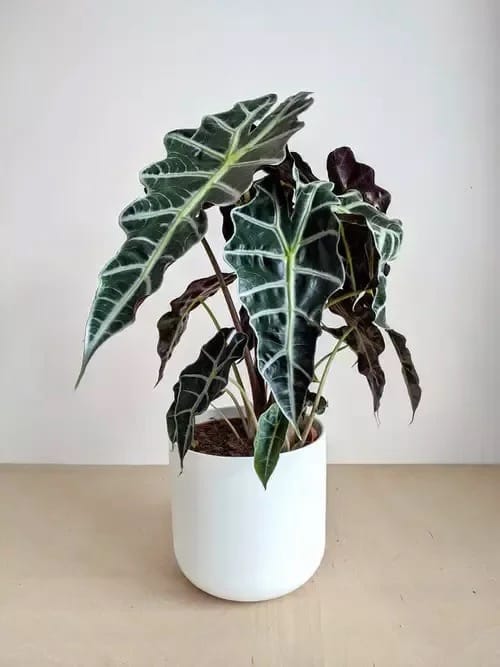
- Alocasia Polly (a hybrid): compact, 30-50 cm tall, dark glossy leaves with silver veins. The most common Alocasia sold in urban Indian nurseries. Fits living rooms easily.
- Alocasia Amazonica: similar to Polly but typically with sharper leaf points and more pronounced veining. Often sold under either name interchangeably.
- Alocasia Stingray: leaf shape mimics a stingray with a long tail tip. Specialty variety, harder to find, slightly more demanding.
- Alocasia Zebrina: smaller leaves but zebra-striped stems are the highlight. Very specific look, popular on Instagram.
For a first Alocasia, get Polly or Amazonica. They're the most forgiving and the size suits Indian apartments. Macrorrhiza is wonderful if you have a high-ceiling room or a balcony.
Light
Alocasias want bright, indirect light. They evolved as forest-floor plants under a canopy, so they get plenty of brightness but not direct tropical sun.
- East or north-east window: ideal. Morning sun is soft enough to be safe.
- Filtered south or west sun: works with a sheer curtain. Direct hot sun scorches the thin leaves within hours.
- North window with strong ambient light: fine in coastal cities, marginal in Delhi winters.
- Bathroom or kitchen with daylight: surprisingly good. The humidity helps.
- Dark corner: the plant will limp along, lose leaves, and eventually decline.
Water
Alocasias are bog plants that hate being soggy. The roots want consistent moisture but excellent drainage at the same time. Tricky to get right; once you have it, easy to maintain.
Check the top inch of soil. If it's dry to the touch, water. If it's still moist, wait.
- March–June: every 4-6 days. Active growth and warm temperatures both speed water uptake.
- July–September: every 7-10 days. Monsoon air slows drying, but the plant is still growing.
- October–February: every 12-18 days, sometimes longer. Most Alocasias enter partial or full dormancy.
Always water deeply and let drain. Never leave the pot sitting in a saucer of water.
The Dormancy Panic (And Why You Should Not Panic)
This is the biggest source of new Alocasia owners thinking their plant died. In autumn or winter, especially in North India where temperatures drop below 18°C, an Alocasia can do something dramatic: drop all its leaves over a few weeks, leaving just a bare stem or a corm in the soil.
It looks like the plant is dying. It usually isn't.
Alocasias grow from a corm (an underground storage organ, similar to a bulb). When conditions become unfavourable, they can sacrifice all their leaves and survive as a dormant corm for months. When warmth and longer days return in March, a new leaf pushes up and the plant restarts.
What to do if your Alocasia drops all its leaves in winter:
- Stop watering on the normal cadence. Water sparingly, every 3-4 weeks, just enough to keep the corm from desiccating.
- Keep the pot somewhere warm and bright but undisturbed.
- Resist the urge to dig up the corm to check on it.
- In March or April, resume normal watering. New growth appears within 2-6 weeks.
The plant comes back stronger almost every time. This is normal Alocasia behaviour, not failure.
Soil Mix
Chunky, well-draining, with good moisture retention:
- 30% coco peat (see our coco peat formats guide)
- 25% potting soil or compost
- 25% perlite or pumice
- 15% bark chips
- 5% activated charcoal (optional but helpful, prevents fungal growth)
The mix should feel chunky and aerated. A standard "indoor plant" mix from a nursery is usually too dense; add extra perlite and bark.
Repot annually for young Alocasias, every 2 years for mature ones. The corm produces baby corms that you can separate and pot individually.
Feeding
Heavy feeders in active growth, but very sensitive to fertilizer salt buildup. Use a balanced NPK (20-20-20) at quarter to half strength, every 2-3 weeks from March to October. See our NPK guide.
Stop feeding entirely from October. Even if the plant doesn't fully go dormant, growth slows and excess fertilizer will burn the roots.
Slow-release sticks are riskier with Alocasias than with most plants because the dose is fixed. If using sticks, use half what the package recommends and inspect for leaf-tip burn.
Why Yours Keeps Drooping
Drooping is Alocasia's main communication channel. The plant exaggerates discomfort to make sure you notice. The three causes, in order of likelihood:
1. Underwatering
If the pot is light and the soil is bone dry, this is your answer. A deep watering perks the plant up within 12-24 hours. Alocasias bounce back from underwatering dramatically.
2. Overwatering (Counterintuitively)
If the pot feels heavy and the soil is wet, you've gone the other way. Root rot is starting and the plant is drooping because the rotted roots can't deliver water. Stop watering for 2 weeks, ensure the pot drains freely, repot in fresh dry mix if it doesn't recover.
3. Shock From a Change
Just moved the plant? Just turned the AC on for the season? Just had a cold winter night? Alocasias hate change and droop in protest. Usually they recover within a week if conditions stabilise.
Spider Mites: The Real Threat
Alocasias attract spider mites the way magnets attract iron filings. AC-dry indoor air is their preferred breeding environment, and the thin Alocasia leaves are easy to feed on.
Signs:
- Tiny pale yellow speckles on the leaves, like a fine pepper dusting.
- Very fine webbing on the leaf undersides or where the leaf meets the stem.
- Leaves slowly losing colour and going crispy at the edges.
Treatment:
- Wash the entire plant under a gentle shower of lukewarm water, top and underside of every leaf. This physically removes most of the population.
- Spray weekly with a neem oil mix (5ml cold-pressed neem oil + 1ml dish soap per litre of water).
- Continue weekly sprays for 3-4 weeks to break the life cycle.
- Isolate the affected plant from your other Alocasias and Calatheas, which are equally susceptible.
If you catch them early, you save the plant. If you ignore them for a month, you lose it.
Other Common Problems
1. Yellow Leaves
Lower leaf yellowing one at a time is normal aging. Multiple leaves at once with wet soil is overwatering. With dry soil and droopiness, it's underwatering. See our leaf diagnostic.
2. Brown Edges and Crispy Tips
Low humidity (AC), tap water salts, or fertilizer burn. Switch to settled water, flush the pot, ease off the feed. Group with other plants to raise local humidity.
3. No New Growth for Weeks
Either winter dormancy (normal, wait it out) or light too low (move closer to a window). Check season first.
Where to Place It at Home
- Beside an east or north-east window in a living room or bedroom: Polly and Amazonica look like sculpted ornaments in this position.
- Bathroom with a window: the humidity is a real bonus for Alocasias.
- Kitchen counter near a window: same logic. Cooking steam helps.
- Covered balcony in monsoon: best season of the year for Alocasias outdoors.
- Macrorrhiza near a tall window or open atrium: the giant leaves need vertical and horizontal room.
Avoid:
- Direct AC blast (immediate brown edges).
- South window without curtain (leaf burn).
- Dark corners.
- Areas accessible to chewing pets.
Bottom Line
Alocasia is the most rewarding "intermediate" plant in the Indian houseplant world. Not as forgiving as a Snake Plant, not as demanding as a Calathea, dramatic in a way most other plants aren't. Polly is the entry point. Macrorrhiza is the ambition. The two things to remember: don't panic when leaves drop in winter, and check the underside of leaves regularly for spider mite webs. Everything else is light and water on the dry side.