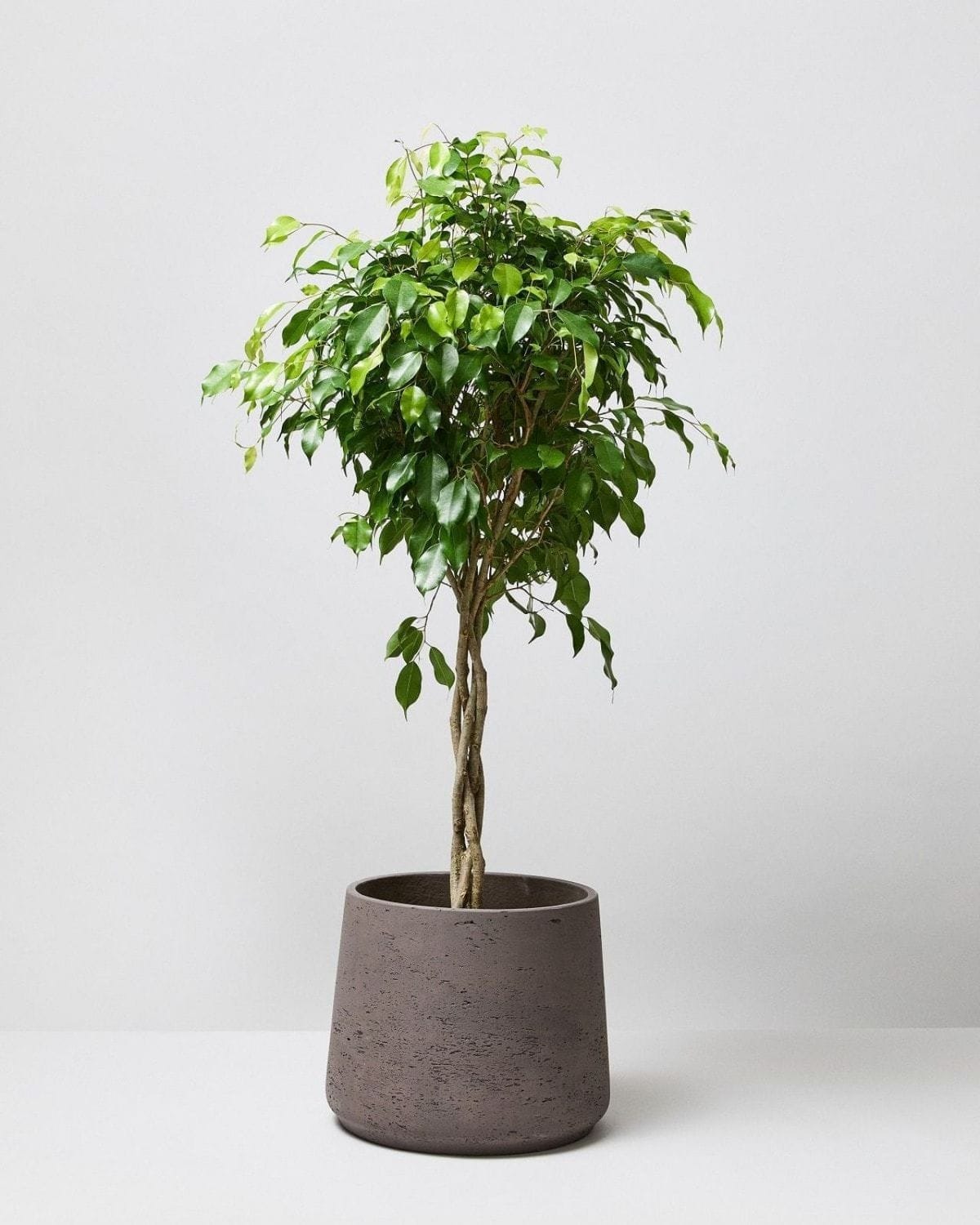
The Ficus Benjamina, or Weeping Fig, looks like a small ornamental tree dropped into your living room. Slim trunk (often braided), arching branches, small glossy oval leaves that move with any breeze. A well-grown Benjamina is one of the most elegant houseplants you can own in India. A badly-placed one is one of the most frustrating, because it expresses every grievance by dropping leaves.
This guide is about getting past year two. Year one is easy. Year two is where most Benjaminas hit a problem that owners can't diagnose.
The Leaf Drop Problem Explained
The single most common Benjamina complaint: "I moved the pot from one room to another and now half the leaves have fallen off."
This is normal. Ficus Benjamina is one of the most position-sensitive houseplants in existence. The plant acclimatises to its exact spot, including the specific direction and intensity of light. When you move it, the plant essentially reboots, and the reboot involves dropping leaves it had grown for the old light conditions before producing new leaves suited to the new light conditions.
Triggers that cause this leaf drop:
- Moving the plant to a new room.
- Turning the AC on for the summer season.
- Opening a new window or installing a new curtain that changes light.
- Rotating the pot 180 degrees.
- A sudden temperature drop of more than 5 degrees.
- Repotting.
The plant looks alarming for 4-8 weeks. It then recovers with new growth, assuming you don't keep changing things.
Braided vs Single Trunk
Indian nurseries sell both. The difference is mostly aesthetic, with one care implication.
- Single trunk: one straight stem with a leafy canopy on top. Looks like a small standard tree. Care is straightforward.
- Braided trunk (2, 3, or 5 stems woven together): multiple young trunks twined while flexible, eventually fusing. More decorative. Same care, but watch for the same braid-rot issue as braided Pachira: the centre of the braid stays damp and poorly ventilated, and can rot internally in humid weather.
For first-time owners, single trunk is the safer choice. For visual impact, braided wins.
Light
Benjamina wants bright indirect light, with some tolerance for direct morning sun. It is significantly more light-demanding than a Rubber Plant or a Ficus Audrey.
- East or south-east window: ideal. Two hours of direct morning sun, bright shade afterwards.
- South window with sheer curtain: works year-round in most of India. Curtain is needed to prevent leaf scorch in peak summer.
- West window: pull the plant back 1-2 metres from the glass.
- North window: usually too low except in Bangalore, Mumbai, Chennai where ambient light is strong.
- Interior corner: the plant drops leaves continuously, grows sparse and leggy, and slowly declines.
Water
Ficus Benjamina prefers consistent moisture without ever sitting wet. Closer to a Monstera than a Snake Plant on the watering spectrum.
Stick a finger 2 inches into the soil. Dry? Water. Damp? Wait.
- March–June: every 5-7 days.
- July–September: every 8-12 days. Watch carefully in monsoon; the small canopy doesn't lose water fast.
- October–February: every 12-16 days.
Water deeply, let drain, empty the saucer. Standing water for even one day starts the slow path to root rot.
Soil Mix
Standard well-draining mix:
- 35% coco peat (see our coco peat formats guide)
- 30% potting soil or compost
- 25% perlite or coarse sand
- 10% bark chips
Repot every 2-3 years, in spring (March-April) only. Avoid repotting in any other season; the post-repot leaf drop combines with seasonal stress and the plant takes much longer to recover.
Feeding
A balanced NPK at half strength every 3-4 weeks during March-October. See our NPK guide.
Slow-release sticks work well. One stick per 8-inch pot, replaced every 6-8 weeks during the growing season.
Don't feed November to February. The plant is barely growing and excess salts build up.
Sticky Leaves and Scale
If your Benjamina's leaves feel sticky and there are small brown bumps on the stems and leaf undersides, you have scale. This is the second most common Benjamina problem after leaf drop.
What scale is: tiny sap-sucking insects that protect themselves under a hard shell. They look like small brown or tan bumps stuck to the plant. As they feed, they excrete sugary "honeydew" that drops onto the leaves below, making them sticky.
Treatment:
- Physically remove visible scale insects with a cotton bud dipped in diluted alcohol or soapy water. Be thorough; missed individuals reinfest the plant.
- Spray the whole plant weekly with a neem oil mix (5ml cold-pressed neem oil + 1ml dish soap per litre of water).
- Continue for 3-4 weeks to break the life cycle.
- Wipe down the leaves with a damp cloth to remove the honeydew residue.
If you catch scale early, easy fix. If you let it spread for 2-3 months, the plant may not recover.
Pruning
Ficus Benjamina tolerates aggressive pruning and benefits from it. Without pruning, the plant grows lopsided and leggy. With regular shaping, it stays dense and well-formed.
Best pruning time: March-April, just before the spring growth surge.
Trim back any branches that have grown out of shape. Make cuts just above a leaf node. The plant bleeds white latex sap; wipe with a damp cloth and let the cut heal naturally.
For a tree-shape look, remove all stems below the desired canopy height. The trunk thickens once it doesn't have to support side branches.
Common Problems
1. Sudden Massive Leaf Drop
Almost always a position or environment change. Identify what changed and either reverse it or wait the plant out. New growth in 4-8 weeks if conditions are now stable.
2. Sticky Leaves
Scale infestation. See the section above.
3. Inner Leaves Yellowing
Common in dense canopies that don't get enough light to the inner branches. Thin the canopy with selective pruning so more light reaches the centre.
4. Curled or Crispy Leaves
Underwatering, low humidity, or AC blast. Check soil moisture first. If soil is dry, water deeply. If soil is damp, move away from direct AC airflow.
5. White Cottony Patches
Mealybugs. Less common than scale on Benjamina but possible. Same neem oil treatment as scale; also dab visible patches with a cotton bud dipped in 70% alcohol.
Where to Place It at Home
- Living room near a south or east window: the tree-like silhouette anchors a corner without dominating.
- Entrance lobby with daylight: looks intentional and welcoming.
- Office reception or meeting room with windows: holds up well in commercial settings, tolerates AC if not directly under a vent.
- Stairwell or atrium with vertical light: the height and elegant canopy suit the space.
Avoid:
- Any position where you might want to move the plant within 6 months. Commit or skip.
- Direct AC blast.
- Drafty doorways.
- Dark interior corners.
Bottom Line
The Ficus Benjamina is an elegant indoor tree that asks for one specific thing in return: stability. Pick a bright spot, commit to it, water on the dry side, and inspect the leaves regularly for scale. Skip those rules and you'll spend three years sweeping fallen leaves off the floor. Keep them, and you have a small tree that lives in your house for a decade.