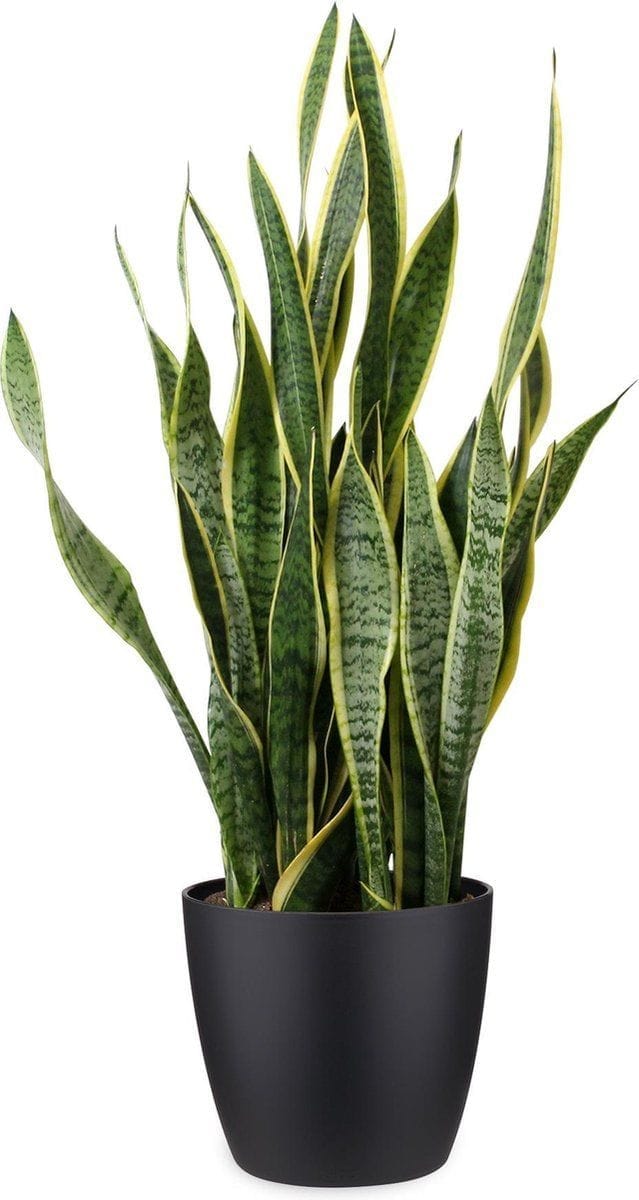
Almost everyone in India has a Snake Plant somewhere, on a desk, on a bathroom windowsill, in a corner. What most people don't know is that the same species, given a few years, becomes a 3-4 foot floor-standing statement plant. Sansevieria trifasciata 'Laurentii' is the variety with the yellow-edged sword-like leaves, and at full size it competes with a Dracaena or a Yucca for living-room presence.
It is, by a wide margin, the lowest-effort large indoor plant you can buy in India.
Why the Tall Laurentii is a Different Plant
A small Sansevieria in a 4-inch pot is a desk accessory. The same plant in a 12-inch pot with leaves at 90-110 cm tall is a piece of furniture. The shift happens once the rhizome network underneath has filled out, usually after 3-5 years of slow growth from a propagation, or directly if you buy a mature plant.
Mature Laurentiis in Indian nurseries sell for ₹1,500-₹4,000 depending on size. Many sellers undervalue them because they grow so slowly, but a tall Sansevieria has years of work behind it.
Light: It Tolerates Everything
Sansevieria is the most light-flexible large plant on this list.
- Direct south or west sun: fine, even in peak Delhi summer. The leaves may lighten slightly but won't burn.
- Bright indirect light from any window: ideal. Best growth happens here.
- Deep shade, several metres from a window: the plant survives but grows almost nothing. Acceptable for short-term placement.
- Windowless interior room: it lasts months but eventually declines. Better to rotate it to a brighter spot every few weeks if you want it in a dark corner.
This light tolerance is why Sansevieria is the default for hotel lobbies, office corners, and dark hallways. Few other plants tolerate that range.
Water: The Most Common Way People Kill It
Sansevieria is a succulent. Its thick leaves store water. The roots and rhizomes rot easily if kept wet. More Snake Plants die from overwatering than from any other cause, by a huge margin.
The rule: water deeply, then ignore for weeks.
- March–June: every 10-14 days.
- July–September: every 18-25 days. Monsoon kills Snake Plants. The soil holds moisture for ages.
- October–February: every 20-30 days. The plant is essentially dormant.
The simplest check: lift the pot. Heavy = wet, skip. Light = dry, water. Easier than the finger test on Sansevieria because the rhizomes hide the soil moisture.
Soil Mix
The single most important Snake Plant decision after watering. Use a gritty, fast-draining mix:
- 30% coco peat
- 30% potting soil or compost
- 30% coarse sand or perlite
- 10% small bark chips or fine gravel
A standard "indoor plant" mix from a nursery is usually too water-retentive for Sansevieria. Add extra perlite or sand. The mix should feel almost dry-loose in your hand.
Cactus or succulent mix from a garden centre also works well, sometimes mixed half-and-half with regular potting soil for a bit more nutrition.
Feeding: Less Than You Think
Sansevieria is a light feeder. Overfeeding causes more harm than underfeeding.
A weak balanced NPK (10-10-10 or 20-20-20 at quarter strength) every 6-8 weeks during March-October is plenty. See our NPK guide.
Skip feeding entirely from November to February.
One fertilizer stick per 10-inch pot, replaced just once or twice during the growing season, is enough.
Propagation: Leaf Cuttings vs Division
Two methods, both very forgiving.
Leaf Cuttings in Water
- Cut a healthy leaf at the base with a clean knife.
- Cut the leaf into 8-10 cm sections. Mark which end was the bottom (you'll forget, make a slanted cut at the top of each section).
- Let the cut ends dry for 24-48 hours to callus.
- Place the bottom end of each section in a glass of water, 2 cm submerged.
- Keep in bright indirect light. Change water weekly.
- White roots appear in 2-4 weeks; a small pup emerges from the rhizome base in 6-10 weeks.
Note: leaf cuttings of Laurentii lose the yellow variegation. The pups grow back as plain green Sansevieria trifasciata. To preserve the yellow stripe, use division instead.
Division
When the plant has filled its pot and pups have emerged at the base:
- Tip the whole plant out of the pot.
- Use a sharp knife to slice through the rhizome between the parent and a pup, keeping a chunk of rhizome with each pup.
- Pot the parent back in its original pot. Pot each pup separately in a small pot.
- Don't water for a week, let the cut surfaces heal.
This is the only way to propagate Laurentii and keep the yellow edges.
Common Problems
1. Leaves Falling Outward From the Centre
The plant has outgrown its pot, or the rhizomes have rotted at the centre. Tip it out. Healthy rhizome = white-tan and firm. Rotted = brown and soft. Cut away the rot, divide if needed, repot in fresh dry mix.
2. Leaves Curling Inward Lengthwise
Underwatering. The plant is dipping into its leaf-stored water. A deep watering will fix this within 2-3 days. If it doesn't, suspect spider mites, Sansevieria can get them in very dry air.
3. Brown Tips on the Leaves
Tap water with high fluoride or chlorine, or accumulated salts from over-feeding. Switch to settled water (24 hours in an open container) and flush the pot heavily once every couple of months.
4. Pale or Yellow Leaves
Almost always overwatering. The most common cause of Sansevieria death in India. Hold off water for a month and check rhizomes if symptoms persist.
The Air Purification Claim
You'll see Sansevieria sold as an "air-purifying plant that releases oxygen at night." The science behind this is the NASA clean air study from 1989, which measured air-cleaning in a sealed lab chamber, not a real room. A few small Sansevieria in a 200-square-foot bedroom do effectively nothing for air quality.
Buy it because it looks good and is impossible to kill, not because it cleans the air.
Where to Place It at Home
- Living-room corner, two-pot pair flanking a sofa or TV unit: symmetrical, sculptural, low effort.
- Bedroom corner: the night-oxygen claim is overstated, but the upright vertical leaves look good in a low-furniture room.
- Entrance lobby: survives low light better than most large plants, looks intentional.
- Office side-table: the medium Laurentii (45-70 cm) is the standard "big enough to notice, small enough not to dominate" plant.
- Anywhere with neglect: bathroom skylight, stairwell landing, guest room that's rarely used.
Avoid:
- Saucers that hold standing water.
- Pots without drainage holes (a common Sansevieria mistake, decorative pots without drainage become death traps).
- Outdoor exposure to heavy monsoon rain, even Sansevieria rots if soaked daily.
Bottom Line
The tall Laurentii Snake Plant is the indoor plant for anyone who has killed five other indoor plants. It tolerates dark corners, missed waterings, AC, neglect, and bad soil, and rewards even moderate care with one of the most architectural silhouettes in the houseplant world. The only way to kill it is to overwater it. Don't, and it outlives most of your other furniture.