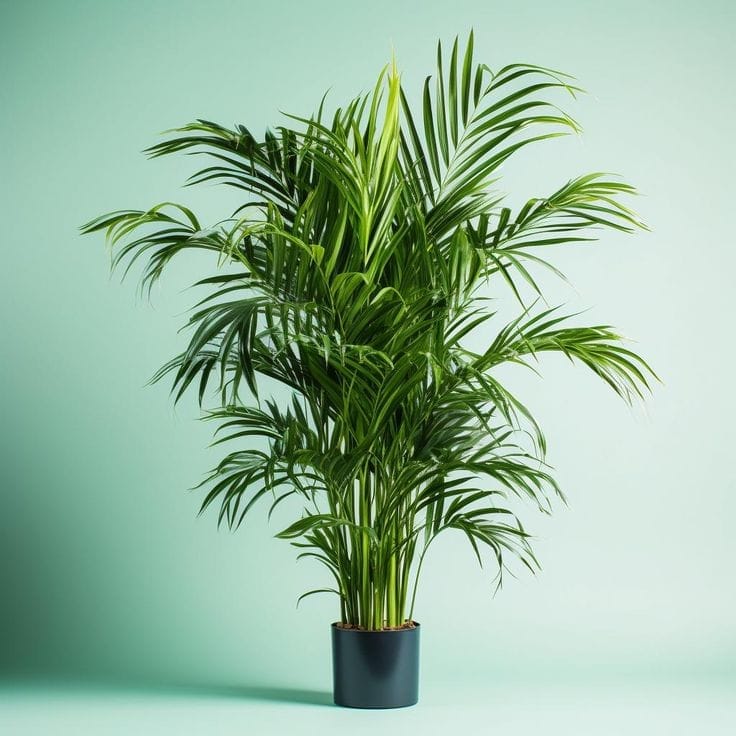
The Bamboo Palm is the indoor palm to buy when you've already tried an Areca and watched it die in a corner that doesn't get enough light. It tolerates conditions that other palms can't, stays a reasonable size, and creates a soft, feathery, multi-stemmed presence that fills a corner without dominating it. It's also the palm most heavily marketed as an "air-purifier," and that claim deserves some honest scrutiny.
Two species are sold under the Bamboo Palm name. The difference is significant.
Chamaedorea Seifrizii vs Chamaedorea Elegans
- Chamaedorea Seifrizii (Bamboo Palm): clumping growth habit with multiple thin cane-like stems, narrow feathery leaflets. Grows to 1.5-2 metres indoors. The "tall" Bamboo Palm.
- Chamaedorea Elegans (Parlour Palm, Neanthe Bella): similar feathery leaves but stays smaller, peaks at about 1 metre indoors. Single trunk rather than a clump. Often sold as a table-top or small floor plant.
Both are sold as "Bamboo Palm" in Indian nurseries, depending on what's in stock. For floor-plant size and presence, ask specifically for Chamaedorea Seifrizii. For a smaller version, Chamaedorea Elegans is the friendlier option.
Care is essentially identical for both. The rest of this guide covers both unless noted.
Light
Bamboo Palm is genuinely shade-tolerant in a way most palms aren't. This is the main reason to choose one over an Areca for a darker corner.
- Bright indirect light from any window: ideal. Active growth, dense canopy.
- Medium light, 2-3 metres from a window: fine. Bamboo Palm is one of the few palms that handles this happily.
- Filtered south or east sun via sheer curtain: works.
- North window in any Indian city: usually enough light. The plant survives well even in winter.
- Dark corner (under 100 lux for several hours a day): the plant slowly declines. Bamboo Palm is shade-tolerant, not shade-loving.
- Direct hot afternoon sun: the feathery leaves scorch. Avoid west-facing windows without curtains.
Water
Bamboo Palm prefers consistent moisture. Drier than a Calathea, wetter than a Snake Plant. Closer to a Monstera on the watering spectrum.
Stick a finger 2 inches into the soil. Dry? Water. Damp? Wait.
- March–June: every 5-7 days.
- July–September: every 8-12 days.
- October–February: every 10-14 days.
Water deeply, drain fully, empty the saucer. Bamboo Palm root systems are dense and prone to rot in standing water.
Tap Water and Brown Tips
Like Areca and most other palms, Bamboo Palm is sensitive to fluoride and chlorine in tap water. The narrow leaflets brown at the tips when exposed to municipal tap water over months.
Fix:
- Leave tap water open in a bucket for 24 hours before using.
- Better: harvested rainwater in monsoon, or RO reject water.
- Flush the pot heavily every couple of months to clear accumulated salts.
- Trim brown tips at an angle to mimic the natural leaf shape.
Soil Mix
Rich, well-draining mix with some moisture retention:
- 40% coco peat (see our coco peat formats guide)
- 30% potting soil or compost
- 20% perlite or coarse sand
- 10% well-rotted cow manure
Bamboo Palm has a dense clumping root system. Don't divide the multiple stems when repotting; they share roots and pulling them apart shocks the whole clump. Just shift the entire root mass into a larger pot every 2-3 years.
Feeding
Moderate feeder. A balanced NPK (15-15-15 or 20-20-20) at half strength every 4 weeks during March-October. See our NPK guide.
One fertilizer stick per 8-inch pot, replaced every 6-8 weeks during the growing season, is a good lower-effort alternative.
Like Areca, Bamboo Palm benefits from occasional magnesium. A teaspoon of Epsom salt watered in every 2 months prevents the uniform yellowing that comes from magnesium deficiency.
The Air Purifier Claim, Honestly
Bamboo Palm is widely sold in India as a top "air-purifying plant" based on the NASA Clean Air Study from 1989. The study did measure modest air-cleaning by various houseplants in a sealed chamber. Bamboo Palm scored above average for removing formaldehyde and benzene.
What gets left out:
- The chamber was a tightly sealed 30 cubic foot box. Your living room has thousands of cubic feet of air constantly exchanging with the outside.
- The air-cleaning effect was measured per leaf surface area, not per pot. To get meaningful purification in a 200 sq ft room, you'd need roughly 70-100 mature Bamboo Palms.
- Ventilation does more for indoor air quality than any plant. Opening a window for ten minutes beats any number of plants.
None of this makes Bamboo Palm a bad plant. It's a great plant. But buy it because it looks good and tolerates your dim corner, not because you expect measurable air quality improvement. The air-purifying claim was oversold in 1990s marketing and has stuck around ever since.
Common Problems
1. Brown Leaflet Tips
Tap water fluoride, low humidity, or accumulated fertilizer salts. Switch to settled water, flush the pot, move away from AC airflow.
2. Whole Fronds Yellowing
If the lowest fronds yellow one at a time, that's normal aging. Cut at the base.
If multiple fronds yellow at once with wet soil, overwatering. Hold off water and check drainage.
If new fronds emerge yellow with green veins, iron or magnesium deficiency. Epsom salt or chelated iron fixes it.
3. Spider Mites
The narrow leaflets are vulnerable. Tiny pale specks on the leaves with fine webbing on the undersides. Treat with weekly neem oil sprays for 3-4 weeks. Increase humidity around the plant to discourage them.
4. No New Growth for Months
Usually light too low. Bamboo Palm tolerates low light but doesn't grow in it. Move closer to a window for a season to encourage new canes.
Where to Place It at Home
- Living-room corner near a north or east window: the natural Bamboo Palm spot. Fills the corner softly without dominating.
- Interior room with side daylight: one of the few large plants that genuinely tolerates this position.
- Office reception or meeting room: holds up well in commercial settings with mixed natural and artificial light.
- Bathroom with daylight: thrives in the warmer humid environment.
- Homes with cats or dogs: the only large palm on this list that's safe if pets chew foliage.
Avoid:
- Direct AC blast.
- Direct hot afternoon sun.
- Truly dark corners (under 100 lux).
Bottom Line
Bamboo Palm is the palm to buy when you have a dim corner, pets that chew plants, or simply want something easier than an Areca. It's not magic for indoor air, but it is one of the most flexible large indoor plants for Indian flats. Chamaedorea Seifrizii for the tall version, Elegans for a smaller plant. Either way, soft and feathery and slow to die.