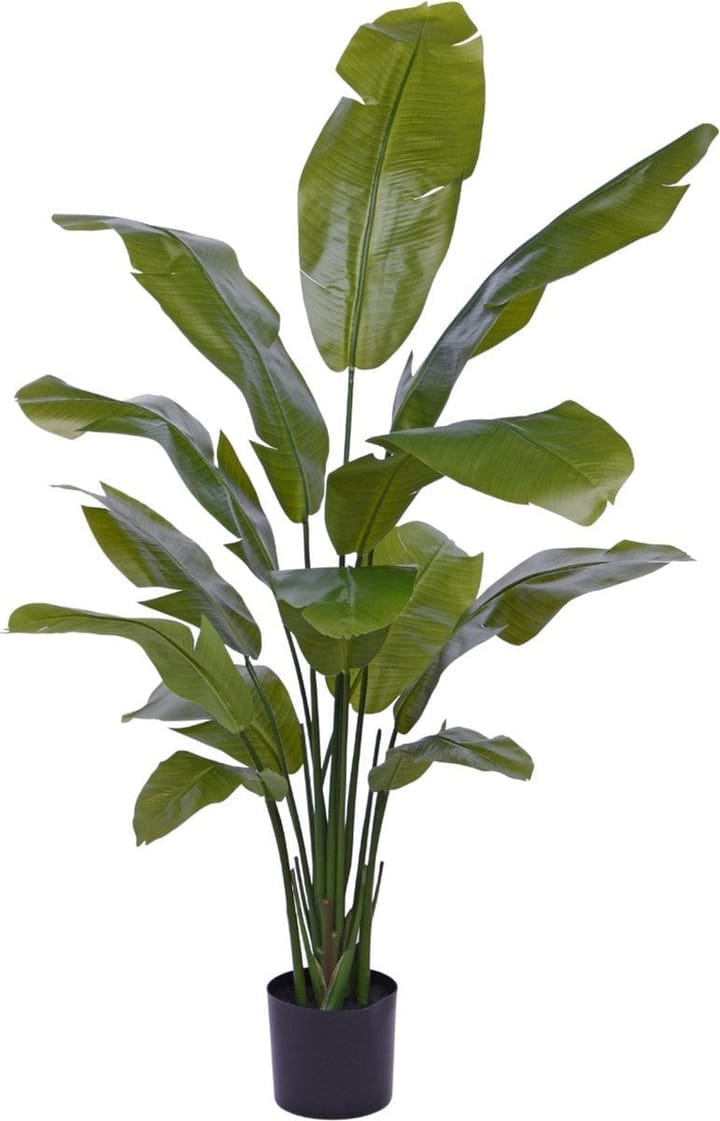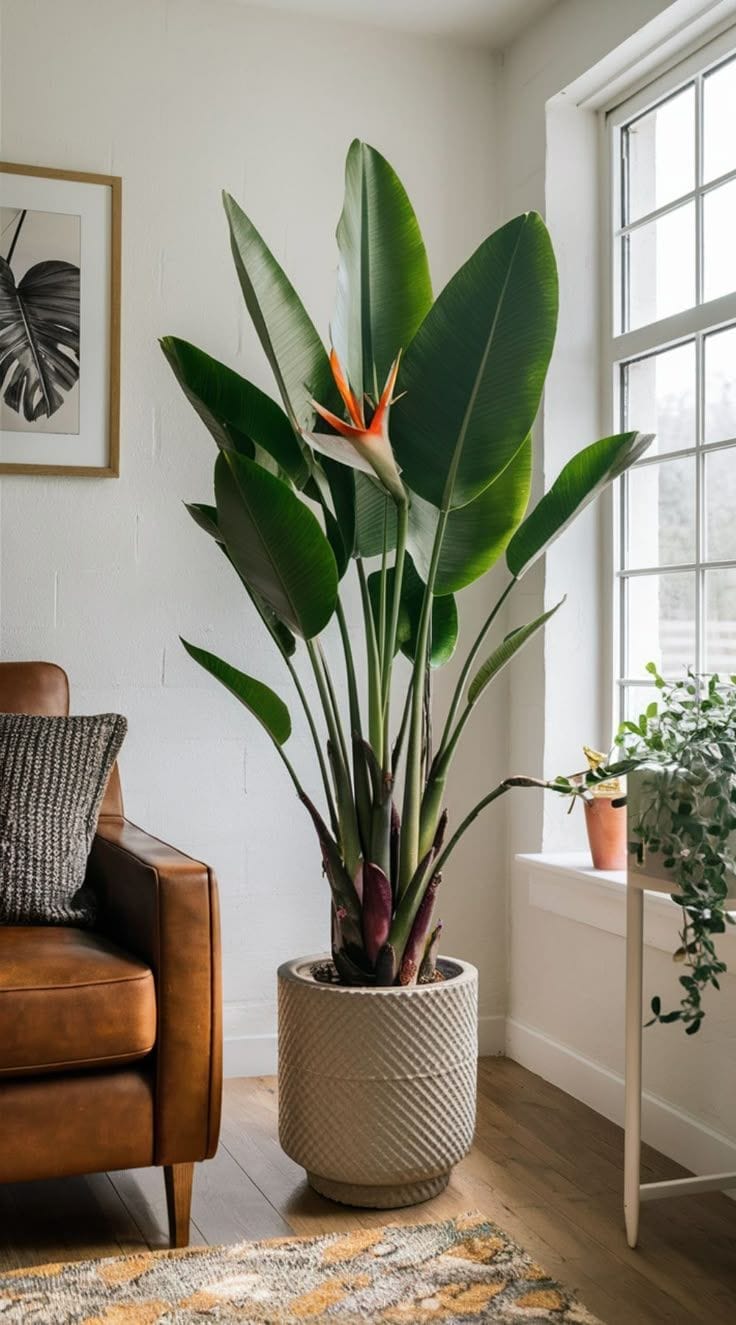
The Bird of Paradise, Strelitzia, is the plant that turns a living room into a hotel lobby. Tall, architectural, banana-leaf foliage that fans out from a clump of stems. In an Indian flat with a tall window, it is genuinely spectacular. In a Delhi flat with poor light and AC, it is a slow tragedy.
Two species are sold in India, and the choice matters more than most people realise.
Strelitzia Nicolai vs Strelitzia Reginae
- Strelitzia Nicolai (Giant White Bird of Paradise): large, banana-like leaves, grows 3-5 metres tall indoors over years, trunk-forming. White and blue flowers (rarely indoors in India). This is the one most "Bird of Paradise" sales in India actually refer to.
- Strelitzia Reginae (Orange Bird of Paradise): smaller, paddle-shaped leaves, grows to about 1.5 metres, clumping. The classic orange-and-blue crane-shaped flowers, but it needs full direct sun for years before flowering, which is almost impossible indoors in an Indian flat.
Indoors in India: buy Nicolai. It has the dramatic banana-leaf look people associate with Bird of Paradise, and it tolerates filtered indoor light better. Reginae is happier on a sunny balcony or in a garden than in a living room.
This guide covers Nicolai. Most of it applies to Reginae too, with the major exception that Reginae needs roughly twice as much direct sun.
Light: As Much As You Can Give It
Bird of Paradise is a full-sun plant adapted to indoor life only with compromises. It wants several hours of direct or strong filtered light every day.
- South-facing window in Bangalore/Mumbai/Chennai: ideal. Several hours of strong filtered light, no scorching heat.
- South-facing window in Delhi/Jaipur: good November-March. May-July, filter with a sheer curtain or pull back 1 metre, the leaves do burn above 45°C behind glass.
- East or west window: works. Plant grows slower and stays smaller.
- North window or interior: the plant will be alive but unhappy. New leaves come in smaller each time. Will not flower.
- Sunny balcony: best of all. Move outdoors during monsoon and winter; bring in or shade during peak summer if afternoons exceed 42°C.
Water
Strelitzia is tropical but not bog-loving. The roots are thick and rope-like and rot in soggy soil.
Stick a finger 2 inches into the soil. Dry? Water deeply. Damp? Wait.
- March–June: every 4-6 days. Active growth and heat both increase demand.
- July–September: every 8-12 days. Monsoon humidity slows drying.
- October–February: every 12-16 days. Plant is mostly dormant.
Water until it runs out the drainage hole, then empty the saucer. Bird of Paradise can sit in a slightly bigger pot than most plants because it likes a substantial root run, but the drainage must be uncompromising.
Why the Leaves Split (And Whether You Want That)
This is a Bird of Paradise oddity. The leaves emerge whole, like a banana leaf, then split along the veins as they age. This is natural: in the wild it's an adaptation that lets wind pass through the leaf without tearing it from the stem.
Indoors there's no wind, but the leaves split anyway, mostly due to:
- Air movement from fans, AC, or open windows.
- Brushing against furniture or walls as the leaf unfurls.
- Low humidity making the leaf brittle.
- Age, old leaves split eventually no matter what.
If you want pristine, un-split leaves, place the plant where nothing can touch the leaves and keep humidity above 50%. Realistically, in an Indian flat with a ceiling fan running, expect some splits. They are not a sign of poor health.
Soil Mix
Heavy feeder, deep root run. Use:
- 35% coco peat (see our coco peat formats guide)
- 35% rich potting soil or compost
- 20% perlite or coarse sand
- 10% well-rotted cow manure or vermicompost
Bird of Paradise has thick fleshy roots that need both moisture access and air pockets. A heavy waterlogged mix is the most common cause of slow decline.
Repot every 2-3 years, or when roots are visibly emerging from the drainage holes. The plant tolerates being slightly root-bound, that's actually how Reginae is encouraged to flower outdoors.
Feeding
Bird of Paradise is a heavy feeder during active growth. Underfed plants produce smaller, paler leaves.
Use a balanced NPK (20-20-20 or similar) at half strength every 3-4 weeks from March to October. For Reginae, switch to a higher-phosphorus mix (something like 10-30-20) in early summer if you're trying to coax flowering. See our NPK guide.
Slow-release fertilizer sticks work well, one stick per 10-inch pot, replaced every 6 weeks during the growing season.
Winter Dormancy in India
Bird of Paradise slows down dramatically when temperatures drop below 15°C. In North India (Delhi, Punjab, UP) the plant essentially stops growing from late November to mid-February.
During this period:
- Cut watering to once every 2-3 weeks.
- Stop feeding entirely.
- Move the plant away from cold window glass at night.
- Keep it out of the direct path of room heaters, dry hot air will crisp the leaf edges.
In peninsular India (Mumbai, Bangalore, Chennai, Hyderabad) the plant barely notices winter and you can maintain the year-round routine.
Why It Almost Never Flowers Indoors in India
The signature crane-shaped flower is the reason people buy Strelitzia Reginae. It almost never appears on an indoor plant in India. Reasons:
- Light intensity. Strelitzia needs roughly 6+ hours of direct sun per day for flowering. Even a south-facing Indian window provides maybe 4 hours, filtered.
- Maturity. Reginae takes 4-5 years to reach flowering size. Nicolai takes 7-10. Most Indian indoor specimens are sold at 2-3 years.
- Root binding. Slightly cramped roots trigger flowering, this only works if the plant is otherwise healthy, which most indoor Strelitzias aren't.
- Temperature swing. A cool winter rest (15-18°C nights) followed by warm spring helps trigger flower buds. North Indian winters can do this; AC-controlled rooms can't.
If flowering is important to you: keep the plant on a sunny balcony, give it a winter rest period, accept that you're playing a 5-year game.
Common Problems
1. Brown Crispy Leaf Edges
Low humidity or fluoride/chlorine in tap water. Switch to settled or filtered water. Move the plant away from AC vents. Group with other plants for a humidity micro-climate.
2. Yellow Lower Leaves
Either overwatering (if soil feels wet) or simply old age (if it's the bottom-most leaf and it's the only one yellow). Cut at the base with a clean sharp knife, the rest of the plant won't mind.
3. New Leaf Stuck in a Tight Roll
Common in dry air. The new leaf emerges already curled and can't unfurl. Help it along by gently misting just the new spear (not the rest of the plant) for a few days until it opens.
4. Scale or Mealybugs
White cottony patches on the leaf undersides or stems. Wipe off with a cotton bud dipped in diluted neem oil. Repeat weekly for 3 weeks to break the life cycle.
Where to Place It at Home
- Beside a south or east window in a high-ceiling room: the plant needs vertical space; the leaves arch up and out from the trunk.
- Open balcony with morning sun: the best possible indoor-adjacent spot in India.
- Corner of a large living room with a floor-to-ceiling window: the architectural plant for the architectural room.
- Hotel-lobby-style entrance with side light: its natural visual register.
Avoid:
- Low-ceiling rooms, the plant looks cramped.
- Tight corners where the leaves can't fan out.
- Direct AC blast zone.
- Anywhere within reach of curious pets.
Bottom Line
For most Indian homes, Strelitzia Nicolai is the right Bird of Paradise, buy it for the leaves, not the flowers, and put it in front of the brightest window in the house. Get the light wrong and it limps along for years. Get the light right and you have a 5-foot architectural statement that ages into a small indoor tree.