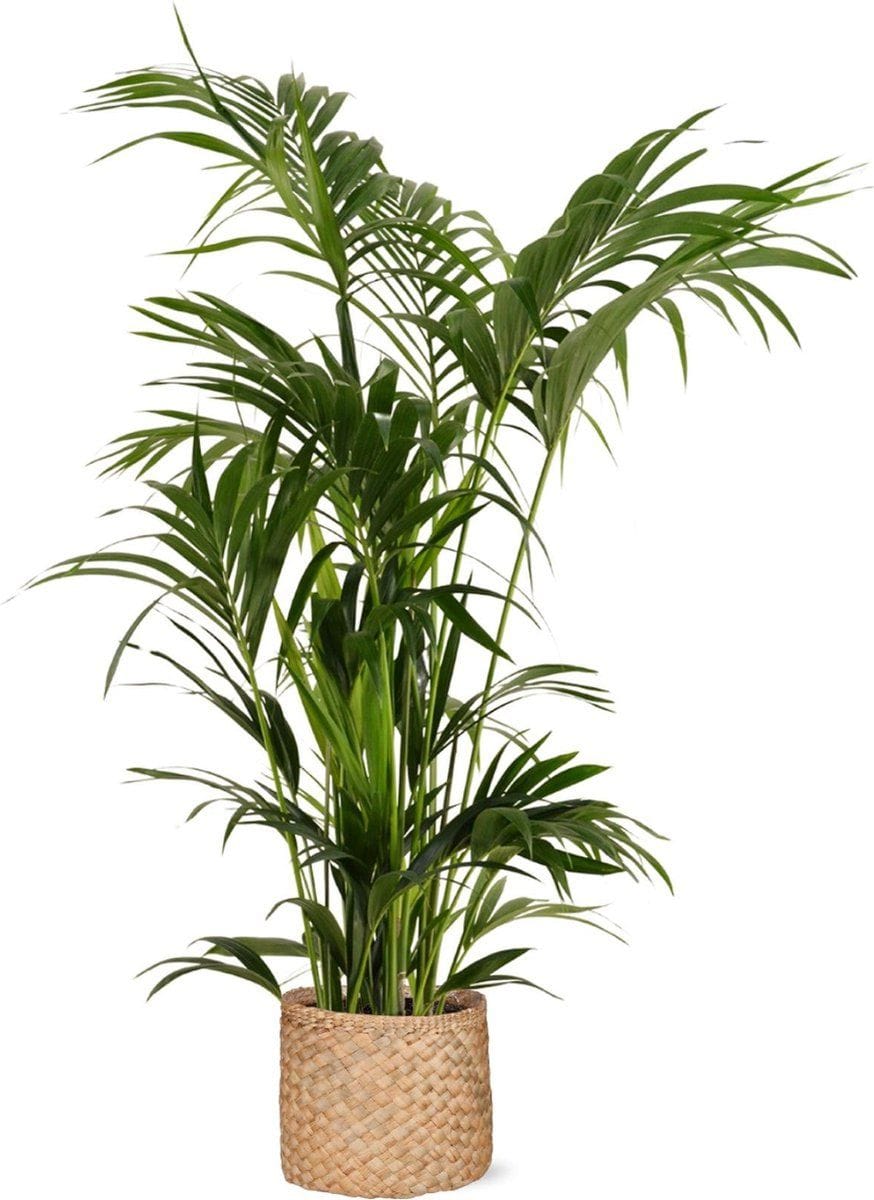
If the Areca is the default Indian indoor palm, the Kentia (Howea forsteriana) is the upgrade. It costs three to five times as much. It survives in conditions that kill Arecas. It has a more refined, arching, dark-green form that reads as more grown-up. And once you own one, you understand why every Edwardian English drawing-room had a Kentia in the corner: it survives anything indoors and asks for nothing.
Most Indian buyers don't know Kentia exists because Indian nurseries don't usually stock it. When you find one, it's worth the price.
What Makes Kentia Different
The Kentia comes from Lord Howe Island, a single small island off the Australian coast. The entire global supply is grown from seed harvested on that one island under a controlled licence. The plants are slow-growing for the first few years, which is the main reason they cost more.
Visually it looks similar to an Areca from a distance: feathery fronds, multiple stems in a clump. Up close the differences are obvious:
- Darker green leaves with a slight sheen.
- More arching, less upright posture. The fronds drape rather than stand stiff.
- Thicker, more substantial individual leaflets.
- Smaller clump (1-3 stems usually) rather than the dense 6-8 stem Areca cluster.
The Kentia simply looks more expensive, because it is.
Light: The Low-Light Tolerance Is Real
This is the practical reason to choose a Kentia over an Areca. Where an Areca needs bright indirect light to thrive, a Kentia genuinely tolerates lower light for years.
- Bright indirect light from any window: ideal. Fastest growth, fullest canopy.
- Filtered south or east sun via sheer curtain: works well.
- North window: fine in any Indian city, including Delhi winters.
- Medium-low light, 2-3 metres from a window: Kentia handles this much better than Areca. The plant stays healthy if growth slows.
- Hotel-lobby-style dim light with only side daylight: this is where Kentia earned its reputation. The plant survives for years even in genuinely dim spaces.
- Direct hot afternoon sun: scorches the fronds within a day. Avoid west-facing windows without curtains.
Water
Kentia prefers consistent moisture without ever sitting wet. Slightly drier than an Areca, similar to a Bamboo Palm.
Stick a finger 2 inches into the soil. Dry? Water. Damp? Wait.
- March–June: every 6-8 days.
- July–September: every 10-14 days.
- October–February: every 12-18 days.
Water deeply, drain fully, empty the saucer. Kentia roots are particularly sensitive to standing water.
Tap Water Sensitivity
Like Areca and most palms, Kentia is sensitive to fluoride and chlorine in tap water. The slim leaflets show browning at the tips when fed municipal tap water consistently.
Fix:
- Settle tap water in an open container for 24 hours.
- Use rainwater during monsoon, or RO reject water.
- Flush the pot heavily every 2 months.
- Trim brown tips at an angle.
Soil Mix
Rich, well-draining mix:
- 40% coco peat (see our coco peat formats guide)
- 30% potting soil or compost
- 20% perlite or coarse sand
- 10% well-rotted cow manure or vermicompost
Kentia hates being repotted and grows slowly anyway. Repot only every 3-4 years, or when roots have completely filled the pot. Even then, just shift up one pot size.
Feeding
Light to moderate feeder. A balanced NPK at half strength every 4-6 weeks during March-October. See our NPK guide.
One fertilizer stick per 10-inch pot, replaced every 8 weeks during the growing season.
Like Areca, Kentia benefits from occasional magnesium supplementation. A teaspoon of Epsom salt every 2-3 months prevents uniform yellowing.
Stop feeding November-February. Kentia barely grows in cool weather.
Slow-Grow Expectations
The most important thing to know about Kentia is that it grows slowly. A young Kentia might produce only 1-3 new fronds per year, where an Areca produces 6-10. The compensation is that what it grows is denser and longer-lived than what an Areca grows.
A mature Kentia reaches 2-3 metres indoors, but it takes 10-15 years. A 1.5-metre Kentia in an Indian nursery has already been growing for 6-8 years, which is why the price reflects the time investment.
If you buy a Kentia and grow impatient, you're going to be unhappy. Accept the slow pace and enjoy the plant's longevity instead.
Where to Buy in India
Kentia is not widely stocked. Most local nurseries either don't carry it or label any vaguely-similar palm as Kentia. To find a real Kentia in India:
- Specialty plant shops in major cities: Bangalore, Mumbai, and Delhi each have a handful of premium indoor-plant retailers that import or grow Kentia properly.
- High-end online plant retailers: a few Indian companies ship mature Kentias nationwide. Check feedback before ordering; a "Kentia" that arrives looking like an Areca is the most common scam.
- Specialty nurseries in Pune, Kerala, and Tamil Nadu: occasionally stock imported palms.
Expect to pay ₹4,000-₹15,000 for a young plant, and significantly more for a mature one. The price is reasonable given the growing time.
Common Problems
1. Brown Frond Tips
Tap water fluoride, low humidity, or fertilizer salt buildup. Same fixes as for Areca. Settled water, monthly flush, away from AC.
2. Yellow Fronds
Lower frond yellowing one at a time is normal aging. Cut at the base.
Multiple fronds yellowing at once with wet soil is overwatering. Hold off water for 2 weeks. Check pot drainage.
3. Almost No Growth for a Year
Could be normal Kentia pace, or light is too low for active growth. If you see no new growth across a whole growing season (March-October), move to brighter light.
4. Spider Mites
Less common on Kentia than Areca, but possible in very dry AC rooms. Treat with weekly neem oil sprays for 3 weeks. Increase ambient humidity by grouping plants.
Where to Place It at Home
- Living room dim corner: the spot most other large plants fail in. Kentia thrives here for years.
- Reception or lobby with side daylight: the classic Kentia placement, going back over a century.
- Stairwell with vertical light: the arching fronds suit the space.
- Bedroom corner: tolerant of low light and night temperatures.
- Office meeting room with mixed natural and artificial light: holds up well in commercial conditions.
Avoid:
- Direct hot afternoon sun.
- Direct AC blast (brown frond tips).
- Truly dark corners with no daylight at all.
- Frequent repotting or relocating.
Bottom Line
The Kentia is the indoor palm for the long term. Higher upfront cost, slower growth, but a plant that outlives most of your other furniture and survives in places where everything else fails. Worth the price if you can find one. If you can't or won't pay, a Bamboo Palm is the closest functional substitute. If you need a faster fill, accept the Areca's compromises instead.