The Yucca is the rare indoor plant in India that actually wants direct sun. Most large indoor plants are forest-floor or understory plants that prefer filtered light. Yucca evolved in the dry, sunlit edges of Central American scrublands. It loves a south-facing window, tolerates Delhi summer heat, and asks for less water than almost anything on this list.
For a sunny corner of an Indian flat where a Monstera would scorch and a Fiddle Leaf Fig would die, the Yucca is the obvious answer.
What Yucca Actually Is
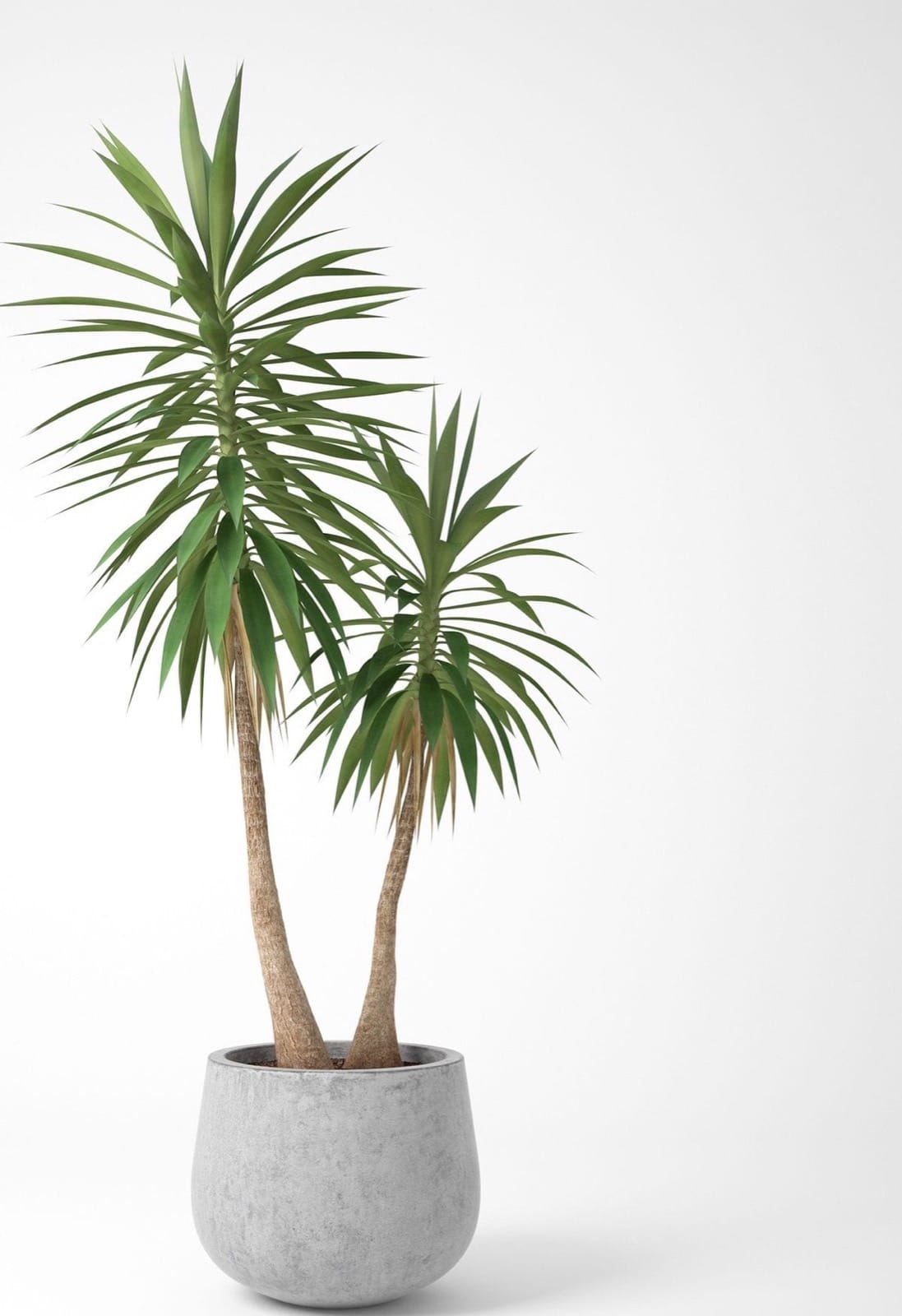
The "Yucca" sold in Indian nurseries is almost always Yucca Elephantipes (sometimes called Yucca Gigantea or the Spineless Yucca). One or several thick woody canes topped with rosettes of long, narrow, sword-shaped leaves. A single-cane Yucca looks like a small architectural tree. A multi-cane Yucca, with canes of different heights, looks like a sculpture.
Less commonly, you might see Yucca Aloifolia or Yucca Filamentosa, which are smaller and have sharper leaf tips. Care for all three is essentially the same.
Light
Yucca wants as much direct sun as you can give it. This is unusual among indoor plants in India and is the main reason Yucca survives where others fail.
- South-facing window with no curtain: ideal. Full sun for several hours a day. The plant grows fastest here.
- West window: works well. Hot afternoon sun doesn't bother Yucca even in May-June Delhi.
- East window: fine, though growth is slower than under direct south sun.
- North window: the plant survives but stretches toward the light and grows leggy.
- Open balcony or terrace: best of all. Yucca thrives outdoors year-round in most Indian climates and only needs to come in during cold North Indian winter nights.
- Interior corner: the plant declines. Yucca is the rare indoor plant where low light is a real problem.
Water: Almost None
Yucca is essentially a tree-form succulent. The thick cane stores water; the leaves are tough and waxy. The roots rot at the first sign of waterlogging.
Check by lifting the pot. Light? Water. Heavy? Wait, sometimes weeks.
- March–June: every 10-14 days.
- July–September: every 18-25 days. Monsoon is dangerous for Yucca; humidity slows soil drying drastically.
- October–February: every 20-30 days, sometimes longer in cool weather.
Always water deeply. Soak the soil until water runs out the drainage hole, then empty the saucer immediately. Never leave Yucca in standing water.
Soil Mix
Gritty, fast-draining, low organic matter:
- 30% coco peat (see our coco peat formats guide)
- 25% potting soil
- 35% coarse sand or perlite
- 10% small gravel or bark chips
Cactus or succulent mix from a garden centre, mixed half-and-half with regular potting soil, works well. The mix should feel loose and drain freely when you squeeze it.
Yucca tolerates being root-bound and doesn't need frequent repotting. Every 3-4 years is plenty.
Feeding
Very light feeder. A balanced NPK at quarter strength every 8-10 weeks during March-October is enough. See our NPK guide.
Or one fertilizer stick per 10-inch pot, replaced just twice a year, in spring and late summer.
Skip feeding November-February. Yucca grows so slowly in cool weather that any added fertilizer just builds up as soil salt.
The Cane-Cutting Trick: One Yucca into Three
Yucca is one of the easiest plants to propagate in the world. If you have a Yucca that's grown too tall or has gone leggy, this trick gives you two or three new plants in a few months.
- Choose a healthy Yucca with a thick cane at least 60 cm tall.
- Cut the cane horizontally at a height that gives you two or three sections of at least 20 cm each. Sharp pruning saw or sturdy knife.
- Mark which end of each section was the top before you separate them. Marking matters because canes only sprout from the original top end. A common trick is to make a slanted cut on the top end of each section.
- The bottom (rooted) section will resprout new shoots from below the cut within 4-8 weeks. Leave it in its pot, water sparingly.
- For each middle and top section, let the cut ends air-dry for 2-3 days so they callus. Then insert the bottom end into a pot of well-draining mix, about a third of the section buried.
- Water lightly once after planting. Don't water again until the soil is completely dry, typically 2-3 weeks later.
- New leaves emerge from the top within 4-12 weeks. Roots develop below ground over the same period.
Spring (March-April) is the best time. Cuts heal fastest then and the warm weather encourages new growth. The success rate in summer is over 90%; winter cuttings sometimes fail.
Common Problems
1. Yellow Leaves Dropping From the Bottom
If the lowest leaf yellows and drops one at a time over weeks, that's normal. Yucca's natural shape is a bare lower trunk with leaves at the top. Cut yellowed leaves off cleanly with sharp scissors at the cane.
If multiple leaves yellow at once across the plant with soft soggy soil, that's root rot from overwatering. Stop watering immediately. Tip the plant out, inspect the roots. Healthy = firm and white; rotted = brown and mushy. Cut away rotted sections, let dry 24-48 hours, repot in fresh dry mix.
2. Brown Leaf Tips
Usually tap-water fluoride or chlorine, or accumulated fertilizer salts. Switch to settled water for a few weeks. Flush the pot heavily once. Trim brown tips at an angle to mimic the natural leaf shape.
3. Soft Cane
The cane has rotted internally, usually from too much water reaching it through wet soil. This is serious. Cut away the soft section with a sharp knife back to firm tissue. The remaining healthy cane usually resprouts. If more than half the cane is soft, take a healthy top cutting and start over.
4. Leggy Stretched Cane With Sparse Leaves
Light too low. Move to brighter light. Consider cane-cutting the leggy section to force a fresh, compact crown.
5. White Cottony Patches at Leaf Bases
Mealybugs. Wipe off with a cotton bud dipped in 70% alcohol. Follow with weekly neem oil sprays for 3 weeks. Yucca's tough leaves tolerate both treatments well.
Where to Place It at Home
- South-facing living-room window: the spot where most other indoor plants don't survive. Yucca thrives.
- West-facing balcony or sunroom: ideal year-round in most Indian climates.
- Open balcony or terrace: full sun. Bring inside during the coldest North Indian winter nights below 5°C.
- Reception area with strong daylight: the architectural shape works well in commercial settings.
- Beside a tall window in a hallway or stairwell: only if the window gets several hours of direct sun.
Avoid:
- Interior corners and dim rooms.
- Bathrooms (usually too humid and too dim).
- Tight spots where the leaf tips can poke people walking past.
- Pots without drainage holes.
Bottom Line
The Yucca is the indoor plant for the sunny window everyone else's plants have died in. Architectural, drought-tolerant, easy to propagate, and weirdly underused in Indian living rooms despite being widely available. The only real way to kill one is to overwater it. Don't, give it direct sun, and the plant will outlive your renovation.