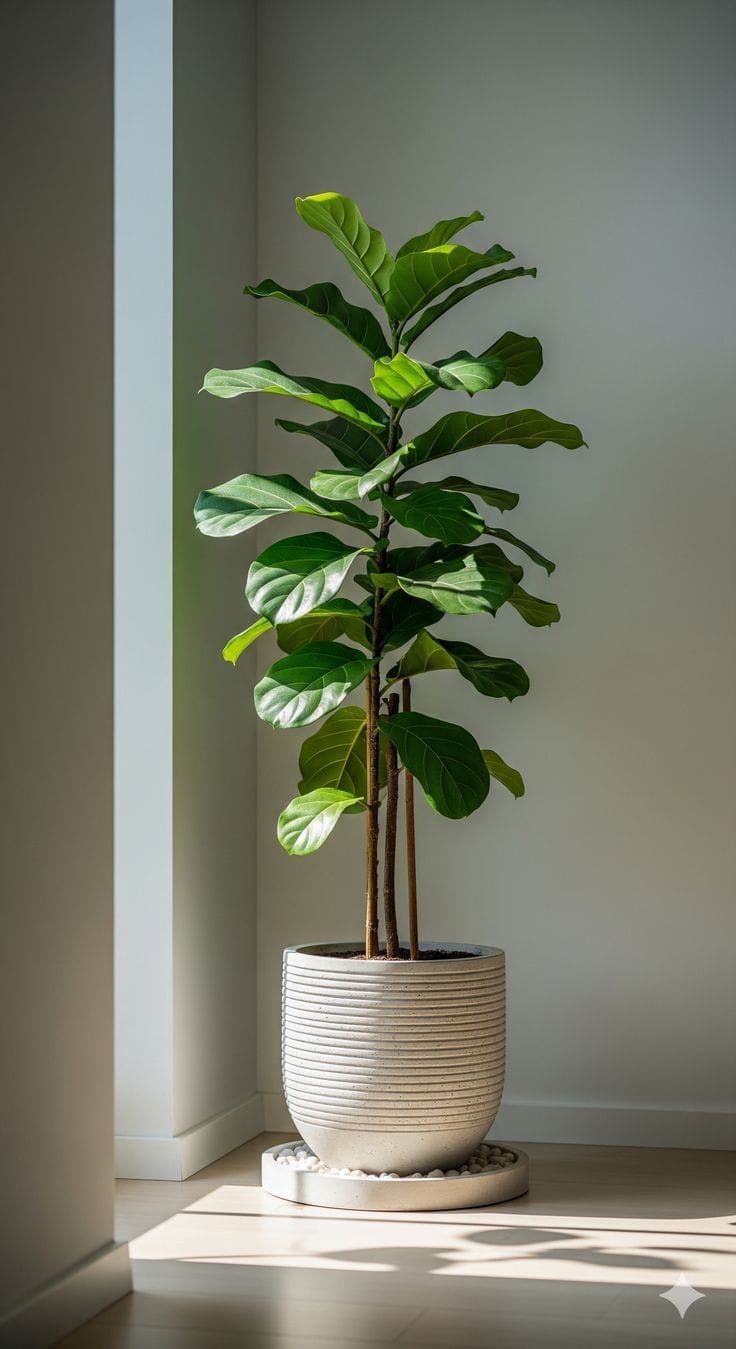
The Fiddle Leaf Fig, Ficus lyrata, is the most photogenic and most dramatic houseplant you can buy. It is also the one Indian buyers regret most often. The plant is fussy. Not impossible, but fussy. If you understand what it actually needs, it will live for decades. If you treat it like a Monstera or a Rubber Plant, it will be dead in six months.
This is the honest guide. No "the FLF is easy" optimism.
What Makes This Plant Difficult
Fiddle Leaf Figs are not difficult because they are delicate. They are difficult because they hate change. Move the pot, leaves drop. Change the watering rhythm, leaves brown. Open a window onto a cold breeze in February, leaves drop. The plant rewards a steady, boring routine, and punishes anything else.
If you move house twice a year or like rearranging furniture, get a Rubber Plant instead.
Light: The One-Window Rule
FLFs need a lot of bright, indirect light, more than almost any other indoor plant Indian nurseries sell. The single biggest cause of FLF failure is putting the plant in "a nice corner" three metres from the nearest window.
The one-window rule: your FLF should be within 1 metre of a window through which you can clearly see the sky. If you can't see the sky from where the plant sits, the light is too weak. Period.
- East-facing window: ideal. Direct morning sun for 1-2 hours, then bright shade.
- South or south-east window: works with a sheer curtain to filter the midday sun.
- West-facing window: pull the plant back 1-2 metres so afternoon sun doesn't scorch the leaves.
- North-facing window: borderline in Delhi/Punjab; usually fine in Bangalore/Mumbai/Chennai where ambient light is stronger.
- Interior corner: the plant will lose one leaf a month for six months and then die. There is no negotiating with a Fiddle Leaf Fig on light.
Water: A Strict Routine
FLFs want a consistent watering rhythm. Not too wet, not too dry, and, most importantly, not variable. Watering deeply once a week is better than light watering every two days.
The check: stick your finger 2 inches into the soil. Dry? Water deeply, until water runs out the drainage hole. Damp? Skip and check in two days.
In a typical Indian home:
- March–June: every 5-7 days.
- July–September: every 9-14 days. Watch carefully; monsoon humidity slows soil drying.
- October–February: every 10-14 days.
Always empty the saucer 20 minutes after watering. A Fiddle Leaf Fig sitting in standing water for a day is a Fiddle Leaf Fig with root rot starting.
Brown Spots vs Brown Edges: They Mean Different Things
This is the diagnostic everyone gets wrong.
- Dark brown to black spots in the middle of leaves, expanding outward: root rot from overwatering. The plant is showing damage in the leaves but the problem is in the soil. Check the roots immediately.
- Light brown crispy edges on otherwise green leaves: underwatering or low humidity. The plant is losing water faster than the roots can supply. Water more frequently and/or move away from AC airflow.
- Brown patches on leaves directly facing a window: sunburn. Move the plant back from the glass or add a sheer curtain.
- Yellow leaves dropping cleanly off the lower trunk: usually shock from a move, draft, or sudden temperature change. Annoying but not fatal if the rest of the plant looks healthy.
See our full leaf diagnostic for a deeper walkthrough.
Soil Mix
FLFs want a well-draining, slightly chunky mix that holds some moisture but never stays wet. Repot in:
- 35% coco peat
- 30% potting soil or quality compost
- 25% perlite or pumice (do not skip this)
- 10% bark chips or shredded coir
Repot only when truly necessary, every 2-3 years. FLFs hate root disturbance. When you do repot, go up one pot size only, never two. See our coco peat formats guide for what to buy.
Feeding
Feed monthly from March to October with a balanced liquid NPK (something around 3-1-2 ratio is ideal for FLFs, they want nitrogen for the big leaves). See our NPK ratio guide.
Use half the recommended dose. FLFs are sensitive to fertilizer burn. If lower leaves start yellowing soon after a feed, you're overfeeding.
Slow-release fertilizer sticks work well, one stick per 10-inch pot, every 6-8 weeks during the growing season.
Drafts: The Silent Killer
FLFs hate moving air. Hate it. The most common cause of sudden leaf drop in Indian flats is one of these:
- AC blast. Cold dry air on the leaves causes brown edges within days and leaf drop within weeks. Move the plant out of the airflow path.
- Ceiling fan above the plant on full speed all night. Constant air movement dries the leaves faster than the roots can keep up. Either move the plant or run the fan slower.
- Open window in February. A cold draft, even briefly, will drop 3-4 leaves overnight.
- Just-installed door that lets in outside air. Same mechanism.
If your FLF dropped leaves and you can't figure out why, look for a new air source. There's almost always one.
Cleaning the Leaves
FLFs have large, broad leaves that collect dust. Dusty leaves photosynthesise badly, which compounds the light problem.
Wipe each leaf with a soft, slightly damp cloth every 2-3 weeks. Support the underside of the leaf with one hand while wiping with the other, the joints where the leaf meets the stem are surprisingly fragile.
Do not use leaf-shine sprays. They clog the stomata (the breathing pores) and look unnatural close up. Plain water is better.
Common Problems
1. Leaves Dropping From the Bottom of the Plant
If they're yellow and drop on their own, usually shock from a recent change. Wait it out, don't change anything else for a month.
If they're green and crisp when they fall, that's actually unusual; check for a draft or root issue.
2. New Leaves Coming In Small
The plant is alive but underfed or under-lit. Either move closer to a window or start a regular feeding schedule. New leaves at full size are a 6-8 inch span; anything under 4 inches is a sign of an unhappy plant.
3. Trunk Leaning Toward the Window
Rotate the pot a quarter-turn every 2 weeks. If the trunk is already bent, stake it gently with a thin bamboo cane and a soft tie until it's straight again, usually 3-4 months.
Where to Place It at Home
Best spots:
- Within 1 metre of a south or east window in a living room with steady temperature.
- Beside a tall window in a stairwell that gets daylight all day.
- Bright study or reading nook where you sit for hours, the steady human presence usually means stable temperature and noticed problems.
Avoid:
- Any "decorative" corner more than 1 metre from a window.
- Hallways with through-draft.
- Rooms with the AC on overnight.
- The bathroom (the humidity argument doesn't compensate for the dim light).
Bottom Line
The Fiddle Leaf Fig is not a beginner plant despite what Instagram suggests. It is a plant for someone who can give it the right window, a steady routine, and the discipline to not "rescue" it by changing things every two weeks. Get the light and the routine right and it lasts decades. Skip either and you'll join the long list of Indian buyers who have written off ₹3,000-₹8,000 on a brown sculpture in a pot.