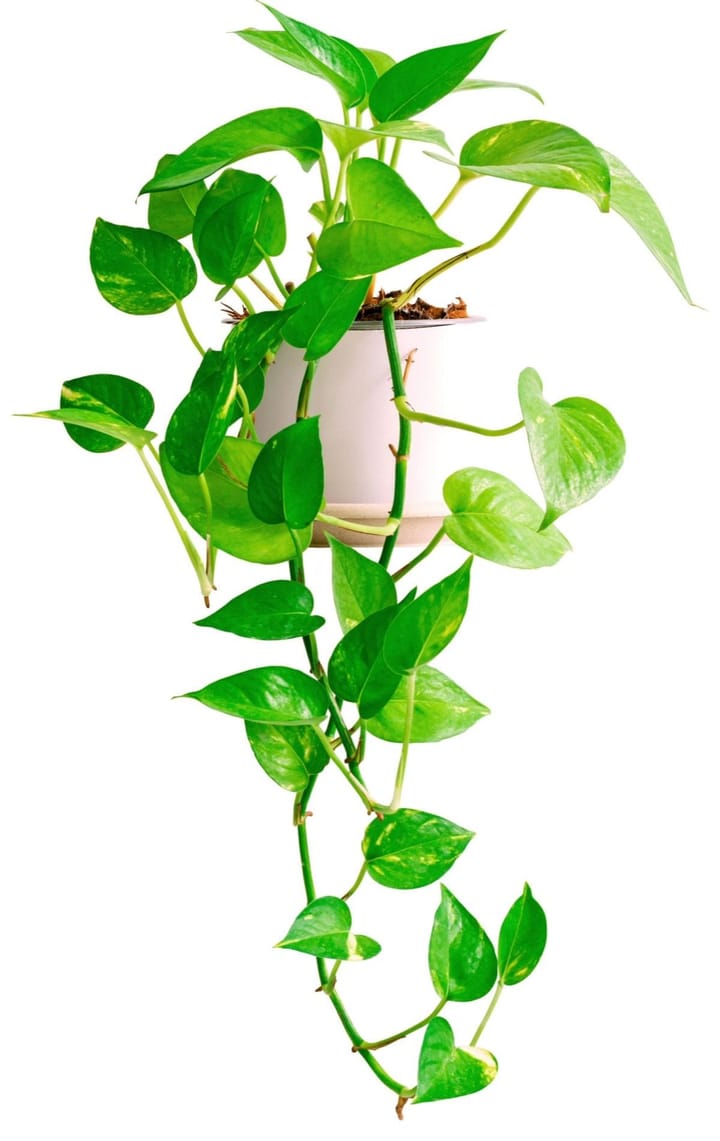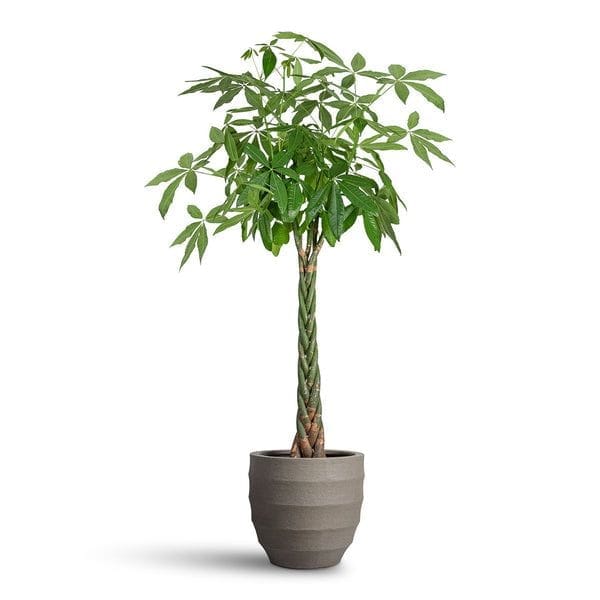
The Pachira Aquatica is sold across India as the Money Tree. It is not the same plant as the more familiar trailing Money Plant (Epipremnum aureum), different family, different look, different care. The Pachira is a small tropical tree with a thick trunk (or trunks, often braided) and palmate leaves that fan out from the top like a green parasol.
If you are reading this guide expecting Money Plant advice, you want our money plant care guide instead. This one is for the tree.
What Pachira Actually Is
Native to Central and South American swamps, Pachira aquatica is a tree that grows up to 18 metres in the wild, with edible fruit (the "Malabar chestnut") and flowers that look like fluorescent shaving brushes. Indoors, it stays at 1.5-2.5 metres, almost never flowers, and produces no fruit.
What you usually get in an Indian nursery is a young plant with 3 or 5 trunks braided together, a Taiwan-export tradition that became the global Pachira look. Single-trunk plants exist but are rarer.
The "Aquatica" Trap
The species name "aquatica" leads people to overwater. The plant comes from swamps, after all. The trap: in nature, Pachira grows with its roots in flowing, oxygenated water that moves nutrients past the roots constantly. In a pot, "lots of water" means standing water around suffocating roots, the exact opposite of the natural condition.
Indoors, Pachira wants its soil to almost dry out between waterings. Treat it like a Rubber Plant, not a swamp plant.
Light
Pachira tolerates a wide range, but does best in bright, indirect light.
- East or south-east window: ideal. Morning sun, bright shade afterwards.
- South window with sheer curtain: works year-round in most Indian cities.
- West window: pull back from the glass in May-June or filter with a curtain. Direct hot afternoon sun bleaches the leaves.
- North window: fine. Slower growth but the plant is content.
- Interior corner: the plant survives but grows lopsided toward the nearest light source. Rotate the pot weekly.
Water
Stick a finger 2 inches into the soil. Dry? Water. Damp? Wait.
- March–June: every 6-8 days.
- July–September: every 12-16 days. Monsoon humidity slows everything.
- October–February: every 14-18 days.
Water deeply, let drain fully, empty the saucer. Never leave the pot standing in water.
Pachira stores some water in its swollen trunk base, which means it tolerates underwatering better than overwatering. A thirsty Pachira droops; a rotted Pachira drops leaves silently while the trunk goes soft.
Why Braided Trunks Rot in the Middle
The braided trunk is decorative, not natural. Three to five young Pachira saplings are wound together while flexible and bound with tape until the trunks fuse. Over years, the centre of the braid stays damp and poorly ventilated. If the surrounding air is humid (Mumbai, Kerala, Bangalore monsoon), fungus can take hold inside the braid and the centre trunk rots.
What to do:
- Inspect the braid monthly. Push gently on each trunk, they should all feel firm. If one feels soft or hollow, that trunk is rotting.
- If you find a soft trunk, cut it out cleanly at the base with a sharp knife. The remaining trunks fill the gap visually within a year.
- Don't water into the centre of the braid. Water the soil around the base only.
- Improve airflow, keep the plant near (not under) a slow-moving ceiling fan rather than in a still corner.
Soil Mix
Well-draining mix with moderate water retention:
- 35% coco peat (see our coco peat formats guide)
- 30% potting soil or compost
- 25% perlite or coarse sand
- 10% well-rotted cow manure
The braided trunks especially appreciate aerated soil, compacted soil around a braided base traps moisture exactly where the plant is most vulnerable to rot.
Feeding
Balanced NPK at half strength, every 3-4 weeks during March-October. See our NPK guide.
One fertilizer stick per 8-inch pot, replaced every 6 weeks during the growing season, is the lower-effort alternative.
Pachira is not a heavy feeder. More fertilizer does not mean more growth, just salt build-up.
Pruning and Shape
Pachira tolerates pruning well. If your plant has grown tall and leggy, cut the top off about 30-50 cm below the canopy. New shoots will emerge from below the cut within 4-8 weeks, giving you a bushier crown.
Make cuts just above a leaf node (the joint where a leaf or scar is). The cut bleeds a small amount of clear sap; seal with cinnamon powder to prevent infection.
Spring (March-April) is the best pruning time, the plant heals fastest then.
Vastu and Placement
Pachira is widely treated as a feng shui plant in East Asia and as a Vastu-friendly plant in India. The traditional advice:
- Place in the south-east corner of a room or house: the "wealth corner" in both feng shui and many Vastu systems.
- 5 trunks braided is auspicious, 3 is acceptable, even numbers are sometimes avoided.
- Healthy plant is essential: a sickly or dying Pachira is considered bad luck in the same systems. If yours is struggling, fix it or replace it.
Practical placement aside from belief:
- Living-room corner near a south or east window.
- Entrance area where the canopy is at face height, the leaves are at their most decorative there.
- Home office or study, the steady human presence helps catch problems early.
Common Problems
1. Yellow Leaves
Overwatering, in 90% of cases. Hold off water for 10-14 days, check the trunks for softness, repot in fresh dry mix if soil smells sour. See our leaf symptom diagnostic for the full ranking.
2. Leaves Drooping All at Once
Underwatering. The plant has finally emptied its trunk reserves. A deep watering perks it up within 12-24 hours. If droopiness persists with damp soil, suspect root rot.
3. Brown Crispy Leaf Edges
Low humidity (AC) or tap-water salts. Switch to settled water for 24 hours before use. Move the plant away from direct AC airflow.
4. Long Bare Stems Reaching Toward Window
Light too low. Move closer to a brighter window. Prune the leggy stems back to encourage bushier growth.
Propagation
Pachira propagates from stem cuttings, though it's slower than Monstera or Rubber Plant.
- Cut a 15-20 cm section of healthy stem with at least 3-4 leaves.
- Remove the lower leaves, keeping only the top 2-3.
- Dip the cut end in rooting hormone (recommended for Pachira, without it, success is hit-or-miss).
- Pot in moist (not wet) coco peat with perlite, or root in a glass of water.
- Keep warm and bright-indirect. Roots in 4-8 weeks.
Spring cuttings root fastest. Winter cuttings often fail.
Where to Place It at Home
- South-east corner of the living room: Vastu-friendly, usually well-lit, gives the plant room to canopy.
- Beside an east or south window: the leaves catch the light and the trunk reads as architectural.
- Reception or office entrance: the trained braided form looks intentional and decorative.
- Pair with a Snake Plant or ZZ on either side of an entrance: for a layered, finished look.
Avoid:
- Bathrooms, usually too dim despite the humidity.
- Cramped corners where the canopy hits a wall.
- Direct AC airflow.
- Areas of sustained high humidity without airflow, risk of trunk rot.
Bottom Line
The Pachira is an underrated Indian houseplant. Striking braided trunk, lush parasol of leaves, easier than a Fiddle Leaf Fig, more architectural than a Money Plant. The two things to watch are watering (less than you think) and trunk rot in the braid (inspect monthly). Get those right and you have a 5-foot indoor tree that doubles as a Vastu talisman.